Rejoignez-nous pour un voyage dans le monde des livres!
Ajouter ce livre à l'électronique
Grey
Ecrivez un nouveau commentaire Default profile 50px
Grey
Abonnez-vous pour lire le livre complet ou lisez les premières pages gratuitement!
All characters reduced
The Picture of Dorian Gray - A Darkly Seductive Classic of Beauty Morality and the Price of the Soul - cover

The Picture of Dorian Gray - A Darkly Seductive Classic of Beauty Morality and the Price of the Soul

Oscar Wilde, Zenith Maple Leaf Press

Maison d'édition: Zenith Maple Leaf Press

  • 0
  • 0
  • 0

Synopsis

What if eternal youth came with a terrifying price?
In The Picture of Dorian Gray, Oscar Wilde masterfully explores the dark corners of vanity, desire, and moral decay—wrapped in dazzling prose and chilling suspense.

Set in the decadent heart of Victorian London, this philosophical novel follows the young and handsome Dorian Gray, whose portrait bears the weight of his sins while he remains outwardly untouched by time. As Dorian plunges into a life of hedonism and corruption, Wilde challenges readers to reflect on the true cost of beauty, the power of influence, and the dangerous pursuit of pleasure without consequence.

A brilliant blend of gothic horror and social satire, this timeless tale still resonates today—raising questions about identity, art, and what it truly means to live without limits.

"The Picture of Dorian Gray is a dark jewel... haunting, provocative, and utterly unforgettable."
– The Guardian

"Oscar Wilde's only novel is a masterpiece of moral ambiguity and aesthetic elegance."
– The New York Times

Whether you're a fan of classic literature or exploring Wilde for the first time, this edition is the perfect introduction to one of the most iconic novels of the 19th century.

✅ Why Readers Love It:
🌟 Over 50,000 5-star reviews worldwide

💬 Widely studied in literature courses

📚 Praised by readers for its wit, depth, and timeless themes

🎯 Click 'Buy Now' to discover why this masterpiece continues to captivate readers over a century later. Let the portrait unveil its secrets…
Disponible depuis: 07/08/2025.
Longueur d'impression: 217 pages.

D'autres livres qui pourraient vous intéresser

  • Annabel Lee - cover

    Annabel Lee

    Edgar Allan Poe

    • 0
    • 0
    • 0
    Annabel Lee is the last complete poem by Edgar Allan Poe. Like many of Poe's poems, it explores the theme of the death of a beautiful woman. 
    The narrator, who fell in love with Annabel Lee when they were young, has a love for her so strong that even angels are jealous. He retains his love for her even after her death. 
    There has been debate over who - if anyone - was the inspiration for Annabel Lee. Though many women have been suggested, Poe's wife Virginia Eliza Clemm Poe is one of the more credible candidates. 
    ©2009 Listen & Live Audio, Inc.; (P)2009 Listen & Live Audio, Inc.
    Voir livre
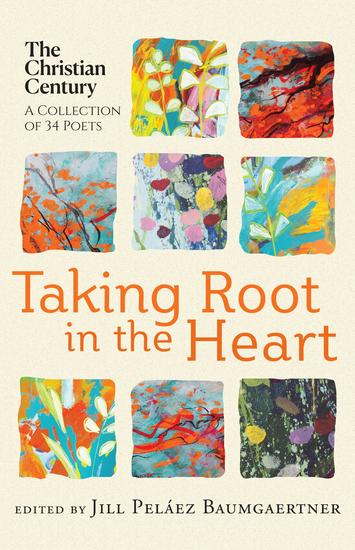
  • Taking Root in the Heart - A Collection of Thirty-Four Poets from "The Christian Century" - cover

    Taking Root in the Heart - A...

    Jill Peláez Baumgaertner

    • 0
    • 0
    • 0
    A new collection from the best and most prolific poets published in the Christian Century over the past twenty-five years. 
    
    The 34 poets whose work appears defy the narcissistic tendencies of so much contemporary poetry. They do not necessarily express a particular orthodoxy, but they do connect with something larger than the self. Theirs is poetry that attempts to revitalize language, especially theological language. It is poetry that attempts to upset the usual modes of expression and offers up new angles of vision, especially in regard to biblical stories. For most of the poets—though not all by any means—Jesus is the Word made flesh, and the Incarnation is the paradigm as poets attempt to enflesh the abstract, make the spirit tangible, and put into words the unsayable. Poets have a way of taking on what utterly cannot be done. And those are the poems that should appear in a journal of religious news and reflection.
    The poetic approaches and styles of the work of these poets are immensely varied, from the masterful narratives of Sydney Lea to the finely wrought lyrics of Charles Hughes to the always edgy and surprising poems of Bill Stadick to the most imagistic and prolific work of Luci Shaw to the provocative poems of Christian Wiman. Then there are the superb sonnets of Gracia Grindal and Angela Alaimo O'Donnell and the compelling explorations of the deep spirituality of the everyday that comprise Tania Runyan's vision.
    The poems in the journal often explore biblical themes, doctrinal issues, or theological conundrums. But many of the poems that appear in the Christian Century present human experience or encounters with the natural world that do not seem on the surface "religious" but reveal a deep humanity at the core. What defines all of these poems is a commitment to communicating with readers seeking truth, beauty, and authenticity.
    Watch the Book Trailer HERE!
    Voir livre
  • Four Arthurian Romances - cover

    Four Arthurian Romances

    Chrétien de Troyes

    • 0
    • 0
    • 0
    Four twelfth-century epic poems detailing the quests of the knights of King Arthur, as well as their loves.Erec and Enide: One of King Arthur’s knights, Erec, is assigned to keep Guinevere and her maiden company when a strange group of visitors arrive. Guinevere orders Erec to follow one of them, and his journey leads him to the fair Enide . . . Cligès: The tale of Cligès begins with his father, Alexander, who leaves his home in Greece to serve King Arthur. In England, he marries Arthur’s niece, and together they have a son, Cligès. Alexander and his family return to Greece where his son becomes a man and falls for a married woman . . . Yvain, the Knight of the Lion: In his search for revenge, Yvain finds love with a beautiful widow. But when Gawain encourages him to pursue a chivalric quest, it places their relationship in jeopardy . . . Lancelot, the Knight of the Cart: This epic story details the knight Lancelot’s trials in his rescue of the beautiful Guinevere from the hands of Meleagant, son of Bademagu, King of Gorre . . . Four Arthurian Romances collects some of the greatest works of medieval literature. Chrétien de Troyes is credited with inventing the Arthurian romance genre and originating the character of Lancelot. The adventure and romance contained in these epic poems is sure to delight readers.
    Voir livre
  • Dear Yusef - Essays Letters and Poems For and About One Mr Komunyakaa - cover

    Dear Yusef - Essays Letters and...

    Nicole Sealey, John Murillo

    • 0
    • 0
    • 0
    This carefully and generously curated mosaic of essays, letters, and poems reveals the profound impact that poet Yusef Komunyakaa has had on poets, educators, and readers worldwide. The anthology brings together creative and critical offerings from fellow poets, former students, literary entities, and other admirers. There are emerging and established voices—from previously unpublished writers to Pulitzer Prize winning poets. Together these pieces honor one of the most influential writers of the last half century, one, it turns out, who is as beloved for his teaching as he is celebrated for his creative work. Contributors include Terrance Hayes, Sharon Olds, Carolyn Forché, Toi Derricotte, and Martín Espada, among others. Dear Yusef affirms Komunyakaa's transformative influence, showcasing how his mentoring has ignited creativity, nurtured passion, and fostered a sense of belonging among countless individuals. Through the artistry of these testimonials, we witness the transformative power of poetry and the enduring legacy of a true literary icon.Please note that the hardcover edition is unjacketed.
    Voir livre
  • On Hearing That Constantinople Was Swallowed Up By An Earthquake - Poem by a 18th Century female author who was also an abolitionist pioneer - cover

    On Hearing That Constantinople...

    Amelia Opie

    • 0
    • 0
    • 0
    Amelia Alderson, an only child, was born on the 12th November 1769 in Norwich, England. 
    After the death of her mother on New Year’s Eve 1784 she became her father's housekeeper and hostess. 
    The young Amelia was energetic, attractive, and an admirer of fashion.  She spent much of her youth writing poetry and plays and putting on local amateur theatricals.  At 18 she had published anonymously ‘The Dangers of Coquetry’. 
    Amelia married in the spring of 1798 to the artist John Opie at the Church of St Marylebone, in Westminster, and together they lived in Berners Street where Amelia was already living. 
    Her next novel in 1801 ‘Father and Daughter’, was very popular even though it dealt with such themes as illegitimacy, a socially difficult subject for its times.  From this point on published works were far more regular.  The following year her volume ‘Poems’ appeared and was again very popular.  Novels continued to flow and she never once abandoned her social activism and her call for better treatment of women and the dispossessed in her works.  She was also keenly involved in a love of society and its attendant frills. 
    Encouraged by her husband to write more she published Adeline Mowbray in 1804, an exploration of women's education, marriage, and the abolition of slavery.  
    Her husband died in 1807 and she paused from writing for a few years before resuming with further novels and poems.  Of particular interest was her short poem ‘The Black Man's Lament’ in 1826.  Her life now was in the main spent travelling and working for charities and against slavery.  She even helped create a Ladies Anti-Slavery Society in Norwich which organised a parliamentary petition of 187,000 names of which hers was the first name. 
    After a visit to Cromer, a seaside resort on the North Norfolk coast, she caught a chill and retired to her bedroom.  
    Amelia Opie died on the 2nd December 1853 in Norwich.  She was 84.
    Voir livre
  • Coda - cover

    Coda

    Steven Seidenberg

    • 0
    • 0
    • 0
    The nameless narrator of Steven Seidenberg's latest work, Coda, attempts to trace the origins of linguistic and perceptual differentiation—of experience through the cipher of the subject, broadly understood—by advancing the linguistic experiments of contemporary lyric and narrative forms, moving between extravagant prosody and obsessive disquisition to reconfigure the conceptual imperatives common to many throughlines in philosophy and theology. Continuing the focus on the structure of memory and the decadence of body he began in his book Anon, Seidenberg here describes the epistemological regress of desire, intention, knowledge, and discernment, coupling the language and concerns of authors as diverse as Spinoza, Kant, Hegel, and Wittgenstein with a raucous humor in the tradition of Rabelais, Beckett, Lispector, and Sterne. 
    An unnamed narrator, possibly afloat, adrift, possibly asleep, or dreaming, or already dead, or as good as, being an exile, or a condemned fool on a ship of fools, takes the opportunity of this voyage of sorts, to try and make sense of their life and mental state. Through a dizzying, meandering syntax, and farcical flourish, the adventure takes us through philosophical events with dogs, how to tell one’s tale, plead one’s case, how to walk through doors, lose one’s limbs, if not one’s mind, how to make a liveable self in the world, while puffing out smokes of language to fight off the existential crisis at play: “I am waiting for something to wait for”. It might take a little while to adjust to this spinning language feast, adapted from bygone literary models, from Rabelais to Sterne, but once you’re in, you will find yourself unable to put down the addictive, comical and strangely urgent twists and turns of Seidenberg’s latest proposition. —Caroline Bergvall, author of Drift, Alisoun Sings, and Meddle English
    Voir livre