Join us on a literary world trip!
Add this book to bookshelf
Grey
Write a new comment Default profile 50px
Grey
Subscribe to read the full book or read the first pages for free!
All characters reduced
Four Arthurian Romances - cover

Four Arthurian Romances

Chrétien de Troyes

Publisher: Open Road Media

  • 0
  • 0
  • 0

Summary

Four twelfth-century epic poems detailing the quests of the knights of King Arthur, as well as their loves.Erec and Enide: One of King Arthur’s knights, Erec, is assigned to keep Guinevere and her maiden company when a strange group of visitors arrive. Guinevere orders Erec to follow one of them, and his journey leads him to the fair Enide . . . Cligès: The tale of Cligès begins with his father, Alexander, who leaves his home in Greece to serve King Arthur. In England, he marries Arthur’s niece, and together they have a son, Cligès. Alexander and his family return to Greece where his son becomes a man and falls for a married woman . . . Yvain, the Knight of the Lion: In his search for revenge, Yvain finds love with a beautiful widow. But when Gawain encourages him to pursue a chivalric quest, it places their relationship in jeopardy . . . Lancelot, the Knight of the Cart: This epic story details the knight Lancelot’s trials in his rescue of the beautiful Guinevere from the hands of Meleagant, son of Bademagu, King of Gorre . . . Four Arthurian Romances collects some of the greatest works of medieval literature. Chrétien de Troyes is credited with inventing the Arthurian romance genre and originating the character of Lancelot. The adventure and romance contained in these epic poems is sure to delight readers.
Available since: 11/29/2022.
Print length: 745 pages.

Other books that might interest you

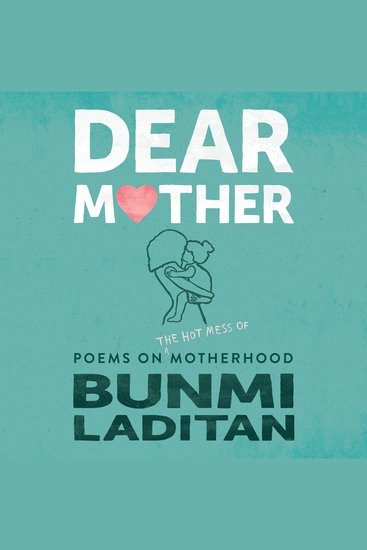
  • Dear Mother - Poems on the hot mess of motherhood - cover

    Dear Mother - Poems on the hot...

    Bunmi Laditan

    • 0
    • 0
    • 0
    The first collection of poetry from Bunmi Laditan, bestselling author of Confessions of a Domestic Failure and creator of The Honest Toddler, capturing the honesty, rawness, sheer joy and total madness of motherhood. With the compassion and wit that have made her a social media sensation among mothers around the world, Bunmi Laditan puts into evocative and relatable words what so many of us feel but can’t quite express. For mothers who love their children with a fiery fierceness but know what it is to feel crushed at the end of those long days, Dear Mother is like a warm hug that says, “I get it.”
    Show book
  • Rubáiyát of Omar Khayyám The (Fitzgerald version) - cover

    Rubáiyát of Omar Khayyám The...

    Omar Khayyám

    • 0
    • 0
    • 0
    The Rubáiyát of Omar Khayyám is the title that Edward Fitz-Gerald gave to his translation of a selection of poems, originally written in Persian and of which there are about a thousand, attributed to Omar Khayyám (1048–1131), a Persian poet, mathematician and astronomer. A Persian ruba'i is a two-line stanza with two parts (or hemis-techs) per line, hence the word "Rubáiyát" (derived from the Arabic root word for "four"), meaning "quatrains". 
     
    The translations that are best known in English are those of about a hundred of the verses by Edward FitzGerald (1809–1883). Of the five editions published, four were published under the authorial control of FitzGerald. The fifth edition, which contained only minor changes from the fourth, was edited after his death on the basis of manuscript revisions FitzGerald had left. FitzGerald also produced Latin translations of certain rubaiyat. 
     
    As a work of English literature FitzGerald's version is a high point of the 19th century and has been greatly influential. Indeed, The term "Rubaiyat" by itself has come to be used to describe the quatrain rhyme scheme that FitzGerald used in his translations: AABA. However, as a translation of Omar Khayyam's quatrains, it is not noted for its fidelity. Many of the verses are paraphrased, and some of them cannot be confidently traced to any one of Khayyam's quatrains at all. Some critics informally refer to the FitzGerald's English versions as "The Rubaiyat of FitzOmar", a nickname that both recognizes the liberties FitzGerald inflicted on his purported source and also credits FitzGerald for the considerable portion of the "translation" that is his own creation. In fact, FitzGerald himself referred to his work as "transmogrification". "My translation will interest you from its form, and also in many respects in its detail: very unliteral as it is. Many quatrains are mashed together: and something lost, I doubt, of Omar's simplicity, which is so much a virtue in him" (letter to E. B. Cowell, 9/3/58). (Introduction from Wikipedia) 
     
    This recording includes readings of all five editions by Edward Fitzgerald as well as the introduction to the third edition. (Note by Algy Pug)
    Show book
  • Tapping At Glass - cover

    Tapping At Glass

    Tim Tim Cheng

    • 0
    • 0
    • 0
    Tapping At Glass charts girlhood, multilingualism, and psychogeography from Hong Kong to Scotland. Myths, meditations on the arts and mass media, and migration stories entwine. Through protest-stricken urban spaces, love hotels, farming as activism, frog watching, alternative therapies, and seascapes where racial and social memories flow in all directions, the working class subjects in Cheng's poems reflect on what it means to exist in one locale and dream of elsewhere, where the past and future, interconnectedness and othering, are in perpetual negotiation. Tapping into various moods, Cheng's poems question the making of a self and a city, and the languages one uses to translate microhistories.
    Tapping At Glass is Tim Tim's debut pamphlet collection.
    "Tim Tim Cheng is a wonderful new voice in the poetry landscape. Playful, serious, complicating any attempt to pin her down – even in the short span of a pamphlet she dances through images and ideas. Already so accomplished, she is definitely a poet who is going places." – Niall Campbell
    Show book
  • Leaves of Grass - cover

    Leaves of Grass

    Walt Whitman

    • 0
    • 0
    • 0
    American poet Walt Whitman’s Leaves of Grass, is a collection of poems notable for its frank delight in and praise of the senses, during a time when such candid displays were considered immoral. Where much previous poetry, especially English, relied on symbolism, allegory, and meditation on the religious and spiritual, Leaves of Grass exalted the body and the material world.    Whitman was inspired to begin Leaves of Grass after reading an essay by Ralph Waldo Emerson which expressed a need for a uniquely American poet. When the book was first published, Whitman sent a copy to Emerson, whose praiseful letter of response helped launch the book to success. Whitman’s hero, Abraham Lincoln, read and enjoyed an early version of Leaves of Grass. Despite such high recommendations, Whitman faced charges of obscenity and immorality for his work, but this only led to increased popularity of the book.    Whitman continually revised and republished Leaves of Grass throughout his lifetime, notably adding the “Drum-Taps” section after Lincoln’s assassination. The book grew from 12 poems in its first publication, which Whitman paid for and typeset himself, to nearly 400 poems in its final, “Death Bed Edition.” This recording is of the final edition.    (Summary adapted from wikipedia.org by Annie Coleman)
    Show book
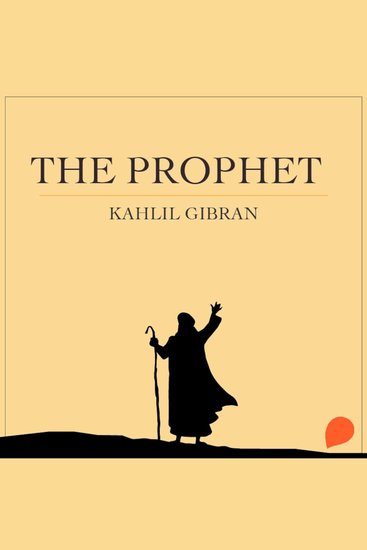
  • The Prophet - cover

    The Prophet

    Kahlil Gibran

    • 0
    • 0
    • 0
    The Prophet is a book of prose poetry that made its Lebanese-American author Kahlil Gibran famous.
    Originally published in 1923, the book begins with a man named Almustafa living on an island called Orphalese. Locals consider him something of a sage, but he is from elsewhere and has waited twelve years for the right ship to take him home. From a hill above the town, he sees his ship coming into the harbor, and realizes his sadness at leaving the people he has come to know. The elders of the city ask him not to leave. He is asked to tell of his philosophy of life before he goes, to speak his truth to the crowds gathered. What he has to say forms the basis of the book.
    Show book
  • The Contingency Plan (2022 edition) (NHB Modern Plays) - Two plays - cover

    The Contingency Plan (2022...

    Steve Waters

    • 0
    • 0
    • 0
    A double bill of plays from the frontline of climate change – an epic portrait of Britain in the grip of unprecedented and catastrophic floods.
    In On the Beach, glaciologist Will has followed in his father's footsteps, dedicating himself to studying climate change. Back from Antarctica, he visits his parents on the Norfolk coast. With catastrophic flooding growing more likely by the day, he has news that forces long-submerged secrets to rise to the surface.
    In Resilience, Will, freshly appointed as a scientific advisor, is in Westminster and he's out of his depth. Surrounded by ministers manoeuvring to impress, and with the threat of environmental disaster, can he get them to listen before it's too late?
    Impressive in scale and chilling as a prediction of our immediate future, the two plays are complementary but can also stand alone.
    Steve Waters' The Contingency Plan was first performed at the Bush Theatre, London, in 2009, and shortlisted for the John Whiting Award. It was revived, in this fully revised and updated version, at Sheffield Theatres in 2022, directed by Caroline Steinbeis and Chelsea Walker.
    'An urgent wake-up call... for sheer emotional intensity, has no rival on the London stage... Waters' massive achievement is to have made the most important issue of our times into engrossing theatre' - Guardian
    'A triumph' - Evening Standard
    'Thrilling... masterly... a stunning theatrical knock-out' - Daily Telegraph
    'The first and best British play on climate change' - Time Out
    Show book