Begleiten Sie uns auf eine literarische Weltreise!
Buch zum Bücherregal hinzufügen
Grey
Einen neuen Kommentar schreiben Default profile 50px
Grey
Jetzt das ganze Buch im Abo oder die ersten Seiten gratis lesen!
All characters reduced
The Dream of a Ridiculous Man - cover

The Dream of a Ridiculous Man

Fyodor Dostoevsky

Übersetzer Constance Garnett

Verlag: The Ebook Emporium

  • 0
  • 0
  • 0

Beschreibung

"I am a ridiculous man. Now they call me a madman... but I am not offended."

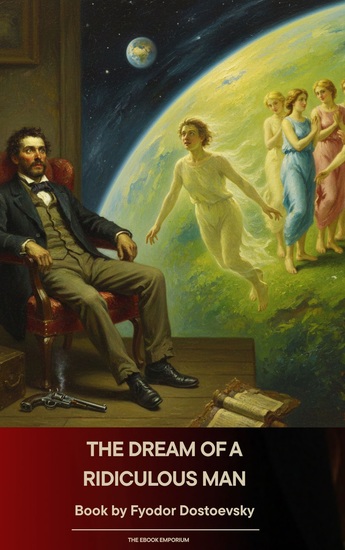
Determined that nothing in the world matters and resolved to end his life, a lonely man falls into a deep sleep and embarks on an extraordinary celestial journey. He is transported to a "Second Earth"—a paradise inhabited by humans who have not yet "fallen," living in a state of perfect love and harmony. But the Ridiculous Man brings a dark infection with him: the knowledge of lies, shame, and atomization. This searingly beautiful story is Dostoevsky's most direct exploration of the Golden Age, the nature of sin, and the possibility of a world redeemed by love.

A Battle Against the Void: The story begins in the quintessential Dostoevskian "Underground"—a state of total indifference where the protagonist believes that "it is all the same." The encounter with a distressed little girl on a rainy St. Petersburg night serves as the catalyst for his dream, proving that even in the most hardened nihilist, the spark of human pity cannot be fully extinguished.

The Prophecy of Active Love: Upon waking, the Ridiculous Man is transformed. He becomes a "preacher" of a truth that the rational world finds insane. Dostoevsky uses this narrative to argue that the "Golden Age" is not a historical myth but a psychological possibility. It is a powerful antidote to the cynical philosophies of the 19th century, asserting that to love others as oneself is the only "logic" that can save humanity.

Experience the ultimate vision of hope. Purchase "The Dream of a Ridiculous Man" today and discover Dostoevsky's most profound short masterpiece.
Verfügbar seit: 07.01.2026.
Drucklänge: 34 Seiten.
Weitere Bücher, die Sie mögen werden

  • Northanger Abbey - cover

    Northanger Abbey

    Jane Austen

    • 0
    • 0
    • 0
    Northanger Abbey was the first of Jane Austen's novels to be completed for publication, in 1803. However, it was not published until after her death in 1817, along with another novel of hers, Persuasion. Northanger Abbey is a satire of Gothic novels, which were quite popular at the time, in 1798-99. This coming-of-age story revolves around Catherine Morland, a young and naïve "heroine", who entertains the reader on her journey to a better understanding of the world and those around her. In the course of the novel, she discovers that she differs from those other women who crave wealth or social acceptance, as instead she wishes only to have happiness supported by genuine morality.
    Seventeen-year-old Catherine Morland is one of ten children of a country clergyman. Although a tomboy in her childhood, by the age of 17 she is "in training for a heroine" and is excessively fond of reading Gothic novels, among which Ann Radcliffe's Mysteries of Udolpho is a favourite.
    Zum Buch
  • The Mill on the Floss - cover

    The Mill on the Floss

    George Eliot

    • 0
    • 0
    • 0
    George Eliot's classic explores the complex lives of Maggie and Tom Tulliver, siblings growing up in rural England. Bound by a deep familial bond, they navigate societal expectations, personal desires, and the challenges of their time. Maggie, intelligent and spirited, struggles against the constraints of her role in society, while Tom, more pragmatic, strives to protect his family. 
    The story begins with the Tulliver family living at Dorlcote Mill, where Mr. Tulliver dreams of a better future for his son, Tom, by sending him to a prestigious school. Maggie, the spirited and intelligent younger sister, struggles with societal norms and her own desires, often clashing with Tom's more conservative views. Their lives take a tragic turn when Mr. Tulliver loses a lawsuit, leading to the family's financial ruin and the eventual loss of the mill.
    Zum Buch
  • Great Expectations - cover

    Great Expectations

    Charles Dickens

    • 0
    • 0
    • 0
    Great Expectations is the thirteenth novel by Charles Dickens and his penultimate completed novel. It depicts the education of an orphan nicknamed Pip (the book is a bildungsroman, a coming-of-age story). It is Dickens's second novel, after David Copperfield, to be fully narrated in the first person. The novel was first published as a serial in Dickens's weekly periodical All the Year Round, from 1 December 1860 to August 1861. In October 1861, Chapman and Hall published the novel in three volumes.
    The novel is set in Kent and London in the early to mid-19th century and contains some of Dickens's most celebrated scenes, starting in a graveyard, where the young Pip is accosted by the escaped convict Abel Magwitch. Great Expectations is full of extreme imagery - poverty, prison ships and chains, and fights to the death - and has a colourful cast of characters who have entered popular culture. These include the eccentric Miss Havisham, the beautiful but cold Estella, and Joe, the unsophisticated and kind blacksmith. Dickens's themes include wealth and poverty, love and rejection, and the eventual triumph of good over evil. Great Expectations, which is popular both with readers and literary critics, has been translated into many languages and adapted numerous times into various media.
    Zum Buch
  • A Book of Ghosts: 1 - cover

    A Book of Ghosts: 1

    D. H. Lawrence, Edith Nesbit, E....

    • 0
    • 0
    • 0
    "The Dead Do Not Sleep Soundly in the West Country."
    
    Sabine Baring-Gould was one of the most versatile minds of the 19th century, but it was in the realm of the supernatural that his imagination truly flickered with a dark, cold light. A Book of Ghosts is a cornerstone of Victorian weird fiction, moving away from simple "jump scares" to explore the lingering, uncomfortable presence of those who refuse to leave this world behind.
    
    The Master of the Folkloric Fright: Baring-Gould's ghosts are not mere optical illusions; they are manifestations of history, guilt, and the rugged landscape itself. Drawing on his deep knowledge of English folklore and antiquarian history, he crafts stories where the supernatural feels as tangible as the ancient stone walls and foggy marshes of Devon and Cornwall. His work excels at the "slow burn" of dread—where a simple domestic object or a misunderstood local legend becomes the herald of something truly unsettling.
    
    A contemporary of M.R. James and Bram Stoker, Baring-Gould offers a more grounded, yet equally terrifying, vision of the afterlife. This volume is an essential cornerstone for any library of classic ghost stories, Victorian Gothic, and supernatural fiction.
    
    Step into the shadows of the past. Buy "A Book of Ghosts" today and discover why some doors are better left locked.
    Zum Buch
  • Kings of Thrones - Short Stories - cover

    Kings of Thrones - Short Stories

    Lord Dunsany

    • 0
    • 0
    • 0
    Irish writer Lord Dunsany was considered a major influence on the work of J. R. R. Tolkien, H. P. Lovecraft, and Ursula K. Le Guin. 
     
    Story List: 
     
    The Sword of Welleran 
    The Fall of Babbulkund 
    The Kith of the Elf Folk, Ch 1 
    The Kith of the Elf Folk, Ch 2
    Zum Buch
  • Schalken the Painter - cover

    Schalken the Painter

    Joseph Sheridan Le Fanu

    • 0
    • 0
    • 0
    "He was not a man of this world, and the gold he paid with had a cold, ancient gleam."
    
    In the workshops of 17th-century Leyden, the young and talented artist Godfried Schalken falls in love with Rose, the beautiful niece of his master, Gerard Douw. But their romance is shattered by the arrival of a mysterious suitor: Minheer Vanderhausen. Blue-skinned, breathless, and draped in magnificent but outdated finery, Vanderhausen offers a chest of gold so immense that Douw cannot refuse. Rose is bartered away to this living corpse, disappearing into a nightmare from which there is no return. Years later, Schalken is granted one final, terrifying glimpse of his lost love—and the horrific entity she now serves in the shadows.
    
    The Horror of the Visual: Le Fanu, himself an admirer of art, uses the techniques of the Dutch masters to tell his story. He describes scenes as if they were paintings, utilizing chiaroscuro—the intense contrast between deep shadows and bright light—to hide the grotesque features of the supernatural antagonist. The result is a story that feels as textured and atmospheric as an oil painting come to life.
    
    A Tale of Moral Decay: At its heart, the story is a critique of avarice. Gerard Douw's willingness to sell his niece for a chest of gold is the "true" horror that invites the supernatural in. Le Fanu explores the idea that human greed can be more monstrous than any phantom, leading to a tragedy that haunts the protagonist until his dying day.
    
    The Legacy of the "Demon Lover": Schalken the Painter is a foundational text in the "demon lover" tradition of Gothic fiction. It avoids the typical "clanking chains" of 18th-century ghosts, opting instead for a quiet, physical, and deeply uncanny presence. The final image of the story—the "living" painting—remains one of the most famous and frightening endings in horror literature.
    
    Don't look too closely at the shadows. Purchase this masterpiece of the macabre today.
    Zum Buch