Join us on a literary world trip!
Add this book to bookshelf
Grey
Write a new comment Default profile 50px
Grey
Subscribe to read the full book or read the first pages for free!
All characters reduced
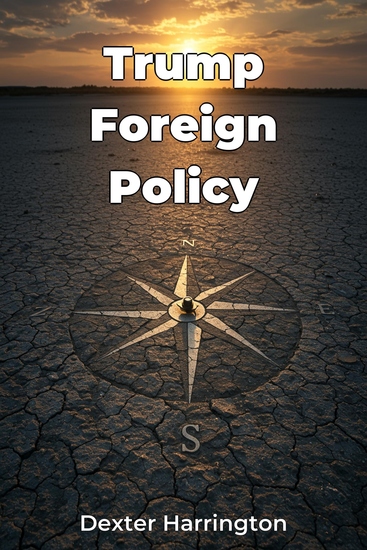
Trump Foreign Policy - cover

Trump Foreign Policy

Dexter Harrington

Translator A AI

Publisher: Publifye

  • 0
  • 0
  • 0

Summary

Trump Foreign Policy examines the significant changes in international relations under the Trump administration, characterized by unpredictability, transactional diplomacy, and a strategic focus on the Pacific region. The book analyzes how these shifts challenged established diplomatic norms and impacted individual nations. For example, the "America First" approach, while intended to prioritize U.S. interests, created diplomatic uncertainty for allies and adversaries alike. One intriguing aspect explored is how nations like Norway adapted their foreign policy in response to these changes. 

 
The book progresses by first outlining the core principles of Trump's foreign policy, then exploring their implementation through specific diplomatic and trade interactions. A substantial portion analyzes the effects on Norway, providing a detailed perspective on a nation navigating this new geopolitical landscape. By focusing on a specific country, the book offers a nuanced understanding of the challenges and opportunities presented by this era, making it a valuable resource for anyone interested in current events and the shifting dynamics of international relations.
Available since: 03/12/2025.
Print length: 61 pages.

Other books that might interest you

  • Populism and Democracy - How Populist Movements Challenge Established Political Norms - cover

    Populism and Democracy - How...

    Arlo Holders

    • 0
    • 0
    • 0
    Populism, as a political phenomenon, has seen a significant resurgence in recent decades, challenging both traditional political structures and the established norms of democratic governance. It is a term often used to describe political movements or leaders who claim to represent "the people" against a corrupt or out-of-touch elite. The central tenet of populism lies in its rhetoric, which typically divides society into two antagonistic groups: the virtuous, ordinary people and the corrupt, self-serving elite. These populist movements tap into widespread dissatisfaction with the status quo, offering simple, direct solutions to complex political and economic issues. The appeal of populism is particularly potent in times of economic instability, social division, or perceived political disillusionment, providing a voice to those who feel marginalized or neglected by traditional political parties. 
    Democracy, on the other hand, is founded on principles of inclusivity, pluralism, and the protection of rights. The democratic system is built upon checks and balances, where power is distributed across various institutions to prevent any one entity from gaining too much control. The rule of law and respect for civil liberties are central to the functioning of democratic societies. While democracy inherently embraces political diversity and disagreement, it relies on established norms and values, such as the protection of minority rights, the independence of the judiciary, and the free exchange of ideas.
    Show book
  • Psychological Warfare - Using Psychological Tactics to Undermine or Control - cover

    Psychological Warfare - Using...

    Cito Harder

    • 0
    • 0
    • 0
    Psychological warfare is the deliberate use of tactics designed to influence, manipulate, and control the thoughts, emotions, and behaviors of individuals or groups. It involves the strategic deployment of psychological tactics to achieve specific objectives, often with the goal of weakening the will, confidence, and decision-making abilities of an opponent. Unlike physical warfare, which relies on the use of force and violence, psychological warfare focuses on undermining an adversary’s mental state, creating doubt, confusion, fear, or anxiety. The concept of psychological warfare spans across military, political, social, and personal domains, and its methods are utilized to achieve both large-scale and individual objectives. 
    At its core, psychological warfare operates by exploiting the weaknesses of human perception, beliefs, and emotions. It seeks to manipulate how people think, feel, and act, often in ways that are subtle and hard to detect. Through the strategic use of information, misinformation, fear, and emotional appeals, psychological warfare can alter the course of events and influence outcomes in a way that physical force alone cannot achieve. This manipulation can be direct, as in the use of propaganda, or more covert, as in the use of gaslighting to distort reality and create confusion. 
    Psychological warfare can be seen in many contexts, from international conflict and military operations to corporate competition, political campaigns, and even personal relationships. For example, in warfare, psychological tactics are employed to break the enemy’s morale, instill fear, and create division within their ranks. In the political arena, psychological warfare is often used to manipulate public opinion, spread propaganda, and discredit opponents.
    Show book
  • A Conspiratorial Life - Robert Welch the John Birch Society and the Revolution of American Conservatism - cover

    A Conspiratorial Life - Robert...

    Edward H. Miller

    • 0
    • 0
    • 0
    The first full-scale biography of Robert Welch, who founded the John Birch Society and planted some of modern conservatism’s most insidious seeds. 
      
    Though you may not know his name, Robert Welch (1899-1985)—founder of the John Birch Society—is easily one of the most significant architects of our current political moment. In A Conspiratorial Life, the first full-scale biography of Welch, Edward H. Miller delves deep into the life of an overlooked figure whose ideas nevertheless reshaped the American right. 
     
    A child prodigy who entered college at age 12, Welch became an unlikely candy magnate, founding the company that created Sugar Daddies, Junior Mints, and other famed confections. In 1958, he funneled his wealth into establishing the organization that would define his legacy and change the face of American politics: the John Birch Society. Though the group’s paranoiac right-wing nativism was dismissed by conservative thinkers like William F. Buckley, its ideas gradually moved from the far-right fringe into the mainstream. By exploring the development of Welch’s political worldview, A Conspiratorial Life shows how the John Birch Society’s rabid libertarianism—and its highly effective grassroots networking—became a profound, yet often ignored or derided influence on the modern Republican Party. Miller convincingly connects the accusatory conservatism of the midcentury John Birch Society to the inflammatory rhetoric of the Tea Party, the Trump administration, Q, and more. As this book makes clear, whether or not you know his name or what he accomplished, it’s hard to deny that we’re living in Robert Welch’s America.
    Show book
  • Digital Liberty - Power Wealth and the Influence Machine - cover

    Digital Liberty - Power Wealth...

    Matt Stroud

    • 1
    • 1
    • 0
    Digital Liberty explores the imminent convergence of three pivotal themes: data, artificial intelligence and society's intricate social graph, and wars of a looming crisis that threatens to challenge the very foundations of liberal democracies.
    Show book
  • The Contest for the Indian Ocean - And the Making of a New World Order - cover

    The Contest for the Indian Ocean...

    Darshana M. Baruah

    • 0
    • 0
    • 0
    A major new examination of the Indian Ocean, revealing how the region has become a hotly contested geopolitical flashpoint 


    Throughout history, the Indian Ocean has been an essential space for trade, commerce, and culture. Every European power has sought to dominate it. Now, after a lull in the postwar period, control of major shipping routes has once again become a critical aspect of every rising state's ambition to be a global power. 


    Darshana M. Baruah shows how governments from Washington, DC, to Nairobi and Canberra are expanding their interests in the region. The Indian Ocean is resource rich, strategically placed, and home to over two billion people. Island nations have become more important than ever, with Madagascar forming ties with Russia and the Comoros with Saudi Arabia. It is also through the region that China engages with Africa and the Middle East. This is a compelling account of the geopolitical significance of the Indian Ocean—showing how the region has taken center stage in a new global contest.
    Show book
  • What is Property? - cover

    What is Property?

    Pierre-Joseph Proudhon

    • 0
    • 0
    • 0
    "What is Property?" is a book written by Pierre Joseph Proudhon, a French philosopher and political theorist. The book is a critique of property rights and capitalist economic systems, and it argues for a more egalitarian and democratic society. 
    Proudhon's central thesis is that property rights are inherently unjust and that they allow the rich to exploit the poor. He argues that property should be abolished and replaced with a system of communal ownership, in which individuals share and cooperate in the use and distribution of resources. 
    In the book, Proudhon also explores the origins and development of property rights, tracing their history from the earliest human societies to the modern capitalist era. He criticizes the idea that property rights are based on natural law or divine mandate, arguing instead that they are a product of historical and social conditions. 
    Overall, "What is Property?" is a radical critique of capitalism and property rights that has had a significant impact on political theory and social movements. It is considered a foundational text of anarchist and socialist thought and remains a key reference for anyone interested in the history and development of economic and political systems
    Show book