Unisciti a noi in un viaggio nel mondo dei libri!
Aggiungi questo libro allo scaffale
Grey
Scrivi un nuovo commento Default profile 50px
Grey
Iscriviti per leggere l'intero libro o leggi le prime pagine gratuitamente!
All characters reduced
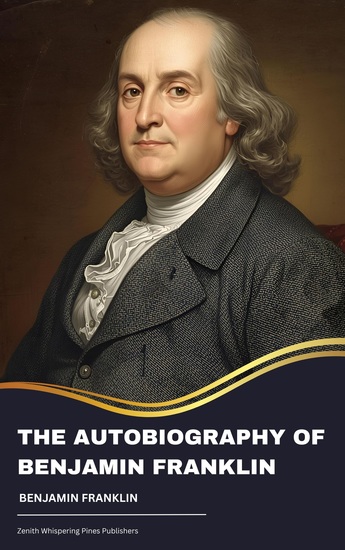
The Autobiography of Benjamin Franklin - cover

The Autobiography of Benjamin Franklin

Benjamin Franklin

Casa editrice: Zenith Whispering Pines Publishers

  • 0
  • 0
  • 0

Sinossi

The story of a runaway apprentice who became a world-changing thinker—and helped shape a nation.
In this candid and remarkable autobiography, Benjamin Franklin shares how discipline, curiosity, and unwavering ambition transformed his life. From humble beginnings to becoming a renowned scientist, writer, diplomat, and Founding Father, Franklin offers timeless lessons on self-improvement, leadership, and personal success. His wisdom on habits, character, and practical achievement still inspires readers centuries later.

Praised as "the most important autobiography in American history," this classic reveals the mindset of a man whose ideas shaped the modern world—and whose life proves that greatness is built, not born.

If you want motivation, insight, and a guide to living with purpose, Franklin's journey will light your path.

Start reading today—and learn from a life defined by invention, determination, and vision.
Disponibile da: 04/12/2025.
Lunghezza di stampa: 195 pagine.


Altri libri che potrebbero interessarti

  • What's Right With America - And How We Can Keep It That Way! - cover

    What's Right With America - And...

    Hon. Paul Johnson, Larry Aldrich

    • 0
    • 0
    • 0
    Is America's future as bright as its past? What's Right With America argues that not only is the answer "Yes," but the nation's most incredible days are yet to come. Despite the challenges and divisions we face, America's true strength lies in its core principles and the resilient spirit of its people. 


    From the vision of our Founding Fathers to the resilience and determination that have shaped our history, What's Right With America explores what makes the country uniquely capable of thriving in times of change. With inspiring stories and thought-provoking analysis, authors Paul Johnson and Larry Aldrich reveal how America's prosperity is rooted in more than just economic might—it's grounded in values like freedom, individual empowerment, and deep commitment to justice and liberty. 


    Johnson and Aldrich have identified five defining characteristics that have propelled the United States to greatness, showing how these ideals can guide us through current and future challenges. Whether you're concerned about politics, society, or the economy, What's Right With America offers a powerful reminder that America's strength is more than just its leadership—it's in every citizen who believes in the promise of a better future.
    Mostra libro
  • Undermining the US Constitution - How the communist manifesto of 1848 blueprints the actions of the democratic party - cover

    Undermining the US Constitution...

    Diane S. Vann

    • 0
    • 0
    • 0
    As a nurse I have been in situations where patients learned very bad news about the state of their health, news that was not received well by them, their families, or even their medical team. When preparing this book, my feelings were much the same as when I was in those situations. 
    The bad news about the health of our nation is, like cancer in a patient's body, communism (also known as "Marxism") has grown in the United States. Like cancer, it started with an unnoticed seed and grew insidiously with little sign or symptom. Now like cancer, communism is on the brink of overwhelming us. 
    Because I know that knowledge of their cancer is essential to my patient's first step towards survival, I believe that knowledge of our communism is essential to the United States of America's first step towards survival. So within this book, I describe: how I learned about the symptoms (The Real Communist Threat Witnessed); the disease (the Introduction and Sections 1, 2, 3 and 4 of the Communist Manifesto); the signs and symptoms and the treatment and cure (Constitution versus Communist Manifesto: The War within America). 
    Extremist Socialists, also known as Communists, like Extremist/Radical Islamists believe their ends justify their means (that is: lying, cheating, stealing, and killing). Beware of their joint product, Interfaith Dialogue.
    Mostra libro
  • Economic Recovery Program - cover

    Economic Recovery Program

    Ronald Reagan

    • 0
    • 0
    • 0
    On February 18, 1981, Reagan laid out his economic recovery program before a Joint Session of Congress. Reagan had previously outlined his recovery program in an Oval Office address on February 5, 1981, in which he displayed a dollar bill and 36 cents to show how inflation had reduced the value of a dollar since 1960.  
    Reagan made a further plea for enactment of his recovery program on April 28, 1981, following the assassination attempt on his life. Many economists credit this recovery program for reducing the inflation rate and igniting one of the longest and most robust economic expansions in U.S. history. 
    Reagan paints a grim picture of inflation, the national debt, and lagging productivity plaguing the economy. $41.4 billion of reduced spending is proposed with no reduction for “the poverty stricken, the disabled, the elderly, [and] all those with true need”. Subsidies of the synthetic fuel program, the Export-Import Bank, and the Economic Development Administration are targeted.  
    Block grants to states are proposed, along with changes to Medicaid, the space program, the Postal Service, and the Department of Energy. To counter the Soviet Union’s military build-up, defense is the one department with an increased budget. 
    A 10-percent tax cut for individual taxpayers is proposed for each of the next 3 years, along with increased depreciation allowances to allow business the capital needed to modernize.  
    We “must come to grips with inefficient and burdensome regulations, eliminate those we can and reform the others.”  
    To reduce inflation and interest rates, we need to slow the growth of our money supply. 
    This is our proposal for America’s new beginning. “I'm here tonight to ask you to join me in making it our plan.” Government “must not be used to regulate the economy or bring about social change.” 
    Audio recording courtesy of the Ronald Reagan Presidential Library. 
    AspenLeafMedia.com
    Mostra libro
  • Underground Empire - How America Weaponized the World Economy - cover

    Underground Empire - How America...

    Henry Farrell, Abraham Newman

    • 0
    • 0
    • 0
    A deeply researched investigation that reveals how the United States is like a spider at the heart of an international web of surveillance and control, which it weaves in the form of globe-spanning networks such as fiber optic cables and obscure payment systemsAmerica’s security state first started to weaponize these channels after 9/11, when they seemed like necessities to combat terrorism—but now they’re a matter of course. Multinational companies like AT&T and Citicorp build hubs, which they use to make money, but which the government can also deploy as choke points. Today’s headlines about trade wars, sanctions, and technology disputes are merely tremors hinting at far greater seismic shifts beneath the surface.Slowly but surely, Washington has turned the most vital pathways of the world economy into tools of domination over foreign businesses and countries, whether they are rivals or allies, allowing the U.S. to maintain global supremacy. In the process, we have sleepwalked into a new struggle for empire. Using true stories, field-defining findings, and original reporting, Henry Farrell and Abraham Newman show how the most ordinary aspects of the post–Cold War economy have become realms of subterfuge and coercion, and what we must do to ensure that this new arms race doesn’t spiral out of control.A Macmillan Audio production from Henry Holt & Company.
    Mostra libro
  • Resistance from the Right - Conservatives and the Campus Wars in Modern America - cover

    Resistance from the Right -...

    Lauren Lassabe Shepherd

    • 0
    • 0
    • 0
    Pivoting from studies that emphasize the dominance of progressivism on American college campuses during the late sixties and early seventies, Lauren Lassabe Shepherd positions conservative critiques of, and agendas in, American colleges and universities as an essential dimension of a broader conversation of conservative backlash against liberal education. 


    This book explores the story of how stakeholders in American higher education organized and reacted to challenges to their power from the New Left and Black Power student resistance movements of the late 1960s. By examining the range of conservative student organizations and coalition building, Shepherd shows how wealthy donors and conservative intellectuals trained future GOP leaders such as Karl Rove, Bill Barr, Jeff Sessions, Pat Buchanan, and others in conservative politics, providing them with tactics to consciously drive American politics and culture further to the authoritarian right and to "reclaim" American higher education.
    Mostra libro
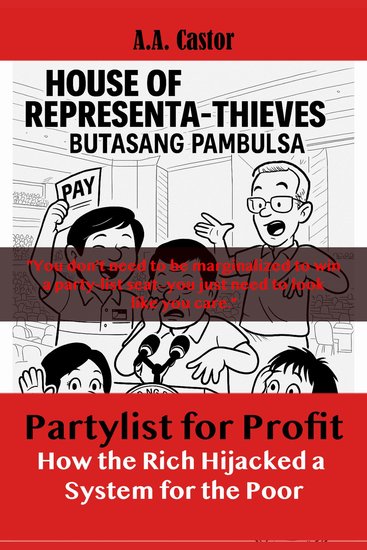
  • Partylist for Profit: How the Rich Hijacked a System for the Poor - cover

    Partylist for Profit: How the...

    A.A. Castor

    • 0
    • 0
    • 0
    Once designed to amplify the voices of farmers, laborers, and the underrepresented, the Philippine party-list system has now become the ultimate low-risk, high-reward investment for the well-connected. In Partylist for Profit: How the Rich Hijacked a System for the Poor, A.A. Castor peels back the glossy surface of legislative charity to expose the machinery of legalized profiteering, dynastic expansion, and quiet political laundering. 
    With deadpan seriousness and a dose of dark humor, this book walks readers through the insider's playbook of how to build, fund, and quietly control a party-list with as little accountability—and as much profit—as possible. From choosing a vague advocacy ("OFWs" or "transport workers," anyone?) to securing alphabet-friendly names for ballot advantage, to recycling nominees across election cycles and repackaging greed as governance, this is not a how-to—this is a how-it's-done. 
    Perfect for political junkies, aspiring operators, or just disillusioned citizens looking to finally understand why nothing ever changes, Partylist for Profit isn't just a book—it's a public service announcement disguised as satire. 
    Learn how power is bought, maintained, and quietly passed down—not through revolution, but registration. After all, in today's politics, you don't need a platform. You just need a seat.
    Mostra libro