Begleiten Sie uns auf eine literarische Weltreise!
Buch zum Bücherregal hinzufügen
Grey
Einen neuen Kommentar schreiben Default profile 50px
Grey
Jetzt das ganze Buch im Abo oder die ersten Seiten gratis lesen!
All characters reduced
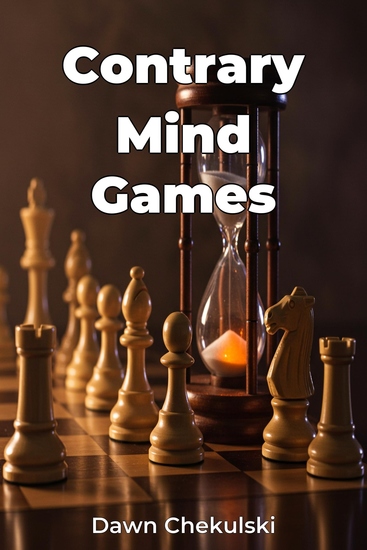
Contrary Mind Games - cover

Contrary Mind Games

Dawn Chekulski

Übersetzer A AI

Verlag: Publifye

  • 0
  • 0
  • 0

Beschreibung

Contrary Mind Games explores the art of tactical opposition, offering strategies to influence outcomes subtly while maintaining positive relationships. It examines indirect influence as a valuable communication skill, particularly in negotiation, leadership, and conflict resolution. The book highlights how calibrated disagreement and strategic questioning can guide others towards desired conclusions without direct confrontation. Understanding cognitive biases and decision-making processes is crucial for implementing these techniques effectively. The book uniquely connects communication strategy with cognitive psychology and negotiation theory, providing a holistic view of influence. For example, framing inquiries strategically can prompt self-reflection, leading individuals to embrace solutions autonomously. The narrative non-fiction style uses real-world examples to make complex concepts accessible. It emphasizes ethical considerations, advocating for transparency and respect in all interactions. The book progresses logically, starting with core concepts and ethical considerations. It then dissects calibrated disagreement and strategic questioning, providing techniques and examples. Finally, it illustrates how to combine these strategies for a comprehensive approach to indirect influence, empowering readers to improve communication skills and foster a sense of ownership in others.
Verfügbar seit: 27.02.2025.
Drucklänge: 107 Seiten.

Weitere Bücher, die Sie mögen werden

  • Let's save democracy! - Or do you really like to live differently? - cover

    Let's save democracy! - Or do...

    Bernd Thomsen

    • 0
    • 0
    • 0
    But our way of life is in danger of dying. The author tackles this weighty subject with astonishing ease. A non-fiction book that is fun to read. Because it tells the story as vividly as a
    
    novel or a podcast. An extraordinary rescue mission from Hamburg to New York. Including: Joe Biden, Sanna Marin, Robert Habeck, Justin Trudeau... After five years of research,
    
    future expert Professor Bernd Thomsen now provides you with hundreds of learnings from 39 countries, futurology, exciting facts. And inspiring optimism. And above all:
    
    The formula for how to save our democracy.
    For everyone who loves our way of life.
    
    Even if politics is not your business.
    Do you love your freedom?
    
    Then read this book!
    Zum Buch
  • Transform Your Skills: Turn Passion into Expertise Today - "Elevate your skills! Dive into dynamic audio lessons to master your passion and achieve expertise today!" - cover

    Transform Your Skills: Turn...

    Orson Verhaven

    • 0
    • 0
    • 0
    Transform Your Skills: Turn Passion into Expertise Today  
    ⭐⭐ Simplified Guide & Explanations Included ⭐⭐ 
    Are you eager to advance in your career and enhance your expertise by mastering the essential skills required for success? 
    Searching for a thorough guide that encompasses everything you need to excel in your journey? 
    Look no further! 
    This guide is your ultimate resource for expanding your knowledge, honing your abilities, and engaging in practical exercises. With its insights, you’re set on the path to success.  
    Updated for the latest certification standards. 
    Key features of this comprehensive guide include: 
    - In-depth knowledge about mastering skills and expertise 
    - Clear explanations of practical techniques to unlock your potential 
    - Effective strategies for preparation and implementation of knowledge 
    Our guide stands out for its extensive coverage, which is crucial for your achievement. Key concepts are explored in detail, ensuring you fully grasp the material. 
    Please note that this guide is an independent resource and is not associated with any official certification body. 
    Crafted with a user-friendly structure and straightforward language, our guide ensures smooth transitions between topics. Say farewell to complicated terminology and invite in clear, precise, and technically accurate content. 
    So, why wait? Click the BUY NOW button, secure your guide, and embark on your journey to mastering your skills today! 
    Now is the time to take action! Start transforming your passion into expertise!
    Zum Buch
  • The South African Famine of 1820 - Colonial Mismanagement and Drought - cover

    The South African Famine of 1820...

    Sarah Willards

    • 0
    • 0
    • 0
    In the early 19th century, South Africa was a land marked by contrasts—fertile valleys and arid plains, indigenous traditions and growing colonial ambition. The region most affected by the famine of 1820 was the Cape Colony, which had come under British control in 1806. This colony served as a strategic resupply point for British ships sailing to and from the East Indies, and it was gradually becoming a hub for European settlement, particularly by the Dutch-descended Boers and British immigrants arriving as part of state-sponsored schemes. These settlers introduced European agricultural practices, often ill-suited to the diverse and unpredictable South African climate. 
    The colony’s geography played a significant role in shaping life and livelihoods. Coastal areas received more rainfall and were relatively fertile, while the interior—known as the Karoo and other semi-arid zones—was prone to drought and soil erosion. Farming communities depended heavily on seasonal rainfall to sustain crops such as wheat, maize, and barley, as well as livestock including sheep and cattle. When these rains failed, communities faced immediate and severe consequences, especially in regions where irrigation infrastructure was minimal or nonexistent. 
    The social landscape of the Cape was equally complex. Indigenous groups such as the Xhosa, Khoikhoi, and San had long adapted to the challenges of the land through mixed economies of herding, gathering, and small-scale farming. Their interaction with European settlers was often strained, marked by competition over land and water sources, cultural misunderstandings, and colonial policies that marginalized local traditions and governance structures.
    Zum Buch
  • Mao Zedong and Chiang Kai-Shek - The History of the Rivals Who Fought the Chinese Civil War - cover

    Mao Zedong and Chiang Kai-Shek -...

    Charles River Editors

    • 0
    • 0
    • 0
    In 1937, the fledgling Empire of Japan once more went to war with China, which by then had become a nation broken into petty warlord fiefdoms and wracked by civil war. The Japanese enacted a brutal campaign over the fragmented realms that made up China, committing atrocities just as horrendous as their Axis allies in Europe. Despite this, the sheer size of China, coupled with Japan’s overextension, allowed the larger, less developed nation to endure throughout World War II. 
    At the same time, China was experiencing an equally brutal civil war between Nationalist and Communist forces, which became inextricably intertwined with the fighting raging across the globe. In fact, the sheer scale of the horrors of the civil war remain hard to believe today, even as action in that theater is often overlooked because of events in Europe. What most people remember about the civil war is that it was ultimately won by Mao Zedong and the Communists, ushering in a new era of Communism in China and exiling the Republic of China’s government to Taiwan. Political tensions between Taiwan and China remain precarious to this day. 
    The Republic of China’s most famous leader and general was Chiang Kai-Shek, who rose from humble origins as the son of a local trader to become, as he liked to remind visitors, the ruler over more people than any other world leader. He certainly became one of the most influential leaders of the 20th century, yet today, he is considerably less well-known than many other figures from that period, which was so rife of chaos and tumultuous change. Chiang had come to power at a time when China was rebuilding itself after a period of internal conflict and turmoil, attempting to unify the nation in the face of the Japanese and the man who would become his arch-rival: Mao Zedong, leader of the Chinese Communists.
    Zum Buch
  • Philip Roth: A short biography - 5 Minutes: Short on time – long on info! - cover

    Philip Roth: A short biography -...

    5 Minutes, 5 Minute Biographies,...

    • 0
    • 0
    • 0
    Philip Roth, American author and world-famous narrator Life and work in a short biography! Everything you need to know, brief and concise. Infotainment, education and entertainment at its best!
    Zum Buch
  • Selected Writings - A Journey in Intellectual History (1988–2025) - cover

    Selected Writings - A Journey in...

    Elliot Yale Neaman

    • 0
    • 0
    • 0
    This volume contains Elliot Neaman's selected writings from 1988 to the present. They provide the reader with access to his multi-decade writings on Ernst Jünger, the German Student Movement of the 1960s, as well as other works on modern European thinkers such as Martin Heidegger and Carl Schmitt.
    Zum Buch