Rejoignez-nous pour un voyage dans le monde des livres!
Ajouter ce livre à l'électronique
Grey
Ecrivez un nouveau commentaire Default profile 50px
Grey
Abonnez-vous pour lire le livre complet ou lisez les premières pages gratuitement!
All characters reduced
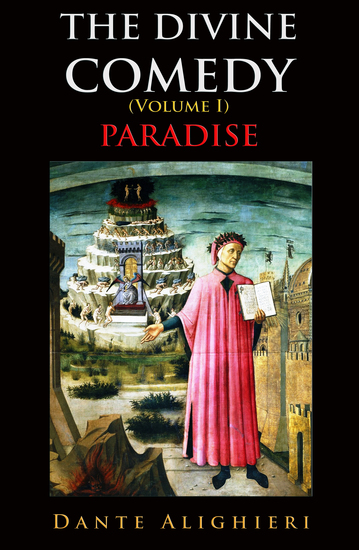
The Divine Comedy (Volume I) - Paradise - cover

The Divine Comedy (Volume I) - Paradise

Alighieri Dante

Traducteur H. F. Cary

Maison d'édition: E-Kitap Projesi & Cheapest Books

  • 0
  • 0
  • 0

Synopsis

The Divine Comedy describes Dante's journey through Hell (Inferno), Purgatory (Purgatorio), and Paradise (Paradiso), guided first by the Roman poet Virgil and then by Beatrice, the subject of his love and of another of his works, La Vita Nuova. While the vision of Hell, the Inferno, is vivid for modern readers, the theological niceties presented in the other books require a certain amount of patience and knowledge to appreciate. Purgatorio, the most lyrical and human of the three, also has the most poets in it; Paradiso, the most heavily theological, has the most beautiful and ecstatic mystic passages in which Dante tries to describe what he confesses he is unable to convey (e.g., when Dante looks into the face of God: "all'alta fantasia qui mancò possa" — "at this high moment, ability failed my capacity to describe," Paradiso, XXXIII, 142).

His glory, by whose might all things are mov'd,
Pierces the universe, and in one part
Sheds more resplendence, elsewhere less. In heav'n,
That largeliest of his light partakes, was I,
Witness of things, which to relate again
Surpasseth power of him who comes from thence;
For that, so near approaching its desire
Our intellect is to such depth absorb'd,
That memory cannot follow. Nathless all,
That in my thoughts I of that sacred realm
Could store, shall now be matter of my song.

Benign Apollo! this last labour aid,
And make me such a vessel of thy worth,
As thy own laurel claims of me belov'd.
Thus far hath one of steep Parnassus' brows
Suffic'd me; henceforth there is need of both
For my remaining enterprise Do thou
Enter into my bosom, and there breathe
So, as when Marsyas by thy hand was dragg'd
Forth from his limbs unsheath'd. O power divine!
If thou to me of shine impart so much,
That of that happy realm the shadow'd form
Trac'd in my thoughts I may set forth to view,
Thou shalt behold me of thy favour'd tree
Come to the foot, and crown myself with leaves;
For to that honour thou, and my high theme
Will fit me. If but seldom, mighty Sire!

To grace his triumph gathers thence a wreath
Caesar or bard (more shame for human wills
Deprav'd) joy to the Delphic god must spring
From the Pierian foliage, when one breast
Is with such thirst inspir'd. From a small spark
Great flame hath risen: after me perchance
Others with better voice may pray, and gain
From the Cirrhaean city answer kind.
Disponible depuis: 25/01/2024.
Longueur d'impression: 200 pages.


D'autres livres qui pourraient vous intéresser

  • The Elephant Leg's Rope - A short philosophical story - cover

    The Elephant Leg's Rope - A...

    Shady El Seify

    • 0
    • 0
    • 0
    A short story about an Egyptian young man who wanders around Cairo until he finds himself in the zoo to look at an elephant. He is surprised that the elephant looks at him with the same look as he does, so their minds unite and separate to see the world from the perspective of an elephant tied with a rope to its leg.
    Voir livre
  • Gunter - cover

    Gunter

    Lydia Higman, Rachel Lemon,...

    • 0
    • 0
    • 0
    'Stories from the past just simply don't get told unless someone bothers doing it. And I really believe this story needs to be told.'
    1604. A small village outside Oxford. Two boys have been murdered by local brute Brian Gunter at a football match and their mum wants justice. But Brian is also the richest and most powerful man in the village, and has an ego too fragile to tolerate public slander…
    A nasty feud begins, and when Brian's daughter Anne starts demonstrating strange afflictions, an allegation is made: she has been bewitched.
    Impassioned and highly theatrical, Dirty Hare's award-winning production of Gunter, co-created by Lydia Higman, Julia Grogan and Rachel Lemon, tells a true story of deception, witchcraft and football.
    The play premiered at Summerhall at the Edinburgh Festival Fringe in 2023, where it was awarded a Scotsman Fringe First Award, Pick of the Fringe from both Playbill and Lyn Gardner, whilst Dirty Hare were named one of The Stage's Fringe Five list of breakout theatremakers. It transferred to the Royal Court Theatre, London, in 2024.
    Voir livre
  • Faust Part II - cover

    Faust Part II

    Johann Wolfgang von Goethe

    • 0
    • 0
    • 0
    Faust Part II is Johann Wolfgang von Goethe's monumental continuation and completion of his legendary dramatic masterpiece. Expanding far beyond the intimate tragedy of Part I, this second installment transforms the story of the restless scholar into a sweeping philosophical epic that explores politics, economics, art, mythology, ambition, and ultimately, redemption. Vast in scope and profound in meaning, Faust Part II stands as one of the most ambitious works in world literature.
    
    After the tragic events surrounding Gretchen, Faust's journey does not end. Instead, it evolves. Mephistopheles remains at his side as Faust is drawn into ever-greater realms of experience and influence. No longer confined to personal desire alone, Faust now seeks fulfillment on a grand scale—through power, creativity, and transformation of society itself. His striving shifts from romantic passion to political authority, aesthetic achievement, and even the reshaping of nature.
    
    Goethe structures Faust Part II in five acts, each unfolding in dramatically different settings—from imperial courts and fantastical masquerades to classical mythological landscapes inspired by ancient Greece. In one of literature's most striking episodes, Faust encounters Helen of Troy, the embodiment of ideal beauty, blending classical mythology with modern longing. Through this union, Goethe symbolically unites Romantic and Classical ideals, exploring the tension between passion and harmony, imagination and order.
    
    Unlike the deeply personal tragedy of Part I, Part II is rich with allegory and symbolism. Faust becomes a figure representing humanity's insatiable drive to expand knowledge, power, and dominion over the world. His involvement in financial schemes at the Emperor's court foreshadows modern economic systems, while his ambitious land-reclamation project reflects humanity's desire to conquer and reshape nature. Yet Goethe does not present ambition as purely destructive; instead, he portrays striving as an essential and defining human quality.
    
    Mephistopheles continues to provide ironic commentary, embodying doubt, skepticism, and negation. His sharp wit contrasts with Faust's relentless forward momentum. Together, they navigate a world where illusion and reality blur, where myth intersects with modernity, and where human aspiration collides with moral consequence.
    
    The philosophical core of Faust Part II lies in its exploration of redemption. Goethe ultimately suggests that it is not perfection but continuous striving—an unending effort toward higher purpose—that defines human greatness. Even in the face of error and failure, the persistent desire to create, improve, and transcend becomes a path toward spiritual elevation.
    
    Completed shortly before Goethe's death in 1832, Faust Part II represents the culmination of a lifetime of thought and artistic development. Its language is complex, poetic, and richly layered with cultural references, demanding reflection and rewarding careful reading. While more abstract and symbolic than its predecessor, it offers a grand and visionary conclusion to Faust's journey.
    
    Profound, imaginative, and intellectually daring, Faust Part II is not merely a continuation of a story—it is a sweeping meditation on civilization, creativity, and the eternal human drive to reach beyond limits. Together with Part I, it forms one of literature's greatest achievements, a timeless exploration of ambition, responsibility, and the possibility of ultimate grace.
    Voir livre
  • The Odyssey - cover

    The Odyssey

    Homer

    • 0
    • 0
    • 0
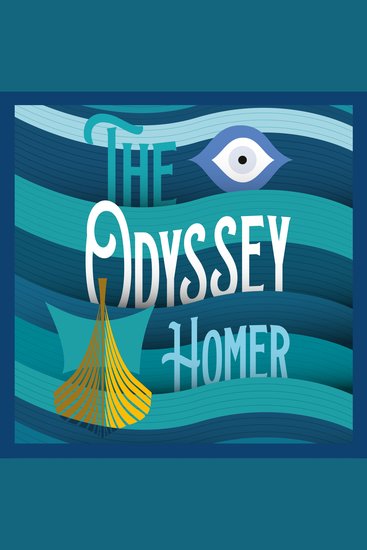
    Trouble is brewing at the home of the hero Odysseus, who has spent years fighting in the Trojan Wars and is now captive of the beautiful nymph Calypso. Hordes of suitors to his wife have invaded the family house, and Odysseus' son Telemachus sets out to find his father. Freed from the clutches of Calypso after the intervention of Zeus, Odysseus begins his epic return journey. 
     
    The timeless themes of the Odyssey - survival, courage, loyalty and hospitality - have resonated with readers through the ages, making it the most enduring classic in western civilization. This edition features a striking graphic cover design, bringing the classic work to new readers.
    Voir livre
  • Little Eyolf - cover

    Little Eyolf

    Henrik Ibsen

    • 0
    • 0
    • 0
    Henrik Ibsen's 1894 play Little Eyolf tells the story of the Allmers family: the father, Alfred, his wife Rita, their crippled nine-year-old son Eyolf, and Alfred's sister Asta.  As the play begins, Alfred has just gotten back from a trip to the mountains, and resolves to spend more time with his son, rather than on intellectual pursuits.  Asta is romantically pursued by Borgheim, an engineer, while the cracks in Alfred and Rita's marriage gradually reveal themselves.  The family receives a visit from the Rat-Wife, and are never the same again. (Summary by Elizabeth Klett)Cast: 
    Alfred Allmers: Bruce PirieRita Allmers: Elizabeth KlettEyolf: Katie RileyAsta Allmers: Arielle LipshawEngineer Borgheim: mbThe Rat-Wife: Ruth GoldingNarrator: Nadine Eckert-BouletAudio edited by: Elizabeth Klett
    Voir livre
  • Lady Windermere's Fan - cover

    Lady Windermere's Fan

    Oscar Wilde

    • 0
    • 0
    • 0
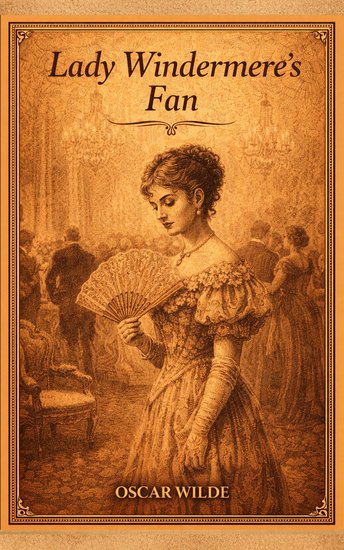
    Lady Windermere's Fan by Oscar Wilde is a dazzling comedy of manners that sparkles with wit, elegance, and razor-sharp social commentary. First performed in 1892, this celebrated stage play showcases Wilde at the height of his theatrical brilliance, blending humor and irony with a perceptive exploration of morality, reputation, and the complexities hidden beneath polite society.
    
    Set within the refined drawing rooms of London's upper class, the story unfolds over the course of a single day and evening. Lady Windermere, young, beautiful, and firmly devoted to principles of virtue, becomes convinced that her husband is betraying her with a mysterious woman, Mrs. Erlynne. Hurt and outraged, she finds herself tempted to retaliate by accepting the attention of a charming admirer. What begins as suspicion soon spirals into emotional turmoil, misunderstandings, and a crisis that threatens to shatter lives and reputations.
    
    At the center of the drama is the symbolic fan—a delicate yet powerful object that becomes entwined with secrets and moral choices. Through it, Wilde highlights the fragility of social standing and the thin line between virtue and scandal. As revelations emerge and truths are reconsidered, characters must confront the gap between appearance and reality.
    
    Wilde's signature epigrams and sparkling dialogue drive the play's momentum. Each exchange brims with clever observations about marriage, gender expectations, hypocrisy, and the performative nature of high society. Beneath the glittering humor, however, lies a deeper emotional core. The play examines forgiveness, sacrifice, and the human capacity for compassion, challenging rigid moral judgments.
    
    The character of Mrs. Erlynne stands out as one of Wilde's most compelling creations—enigmatic, poised, and far more complex than society assumes. Through her, the play questions conventional definitions of respectability and explores whether redemption is possible within a world governed by gossip and rigid codes of conduct.
    
    Lady Windermere's Fan remains one of Wilde's most enduring works, beloved for its lively pacing, memorable characters, and timeless insights. It captures the spirit of the late Victorian era while speaking to universal themes that continue to resonate with modern audiences. Elegant yet provocative, lighthearted yet profound, this play is a masterful blend of entertainment and social critique.
    
    With its brilliant humor and emotional depth, Lady Windermere's Fan invites readers and audiences alike to look beyond surface appearances—and to consider that sometimes, mercy may be wiser than judgment.
    Voir livre