Begleiten Sie uns auf eine literarische Weltreise!
Buch zum Bücherregal hinzufügen
Grey
Einen neuen Kommentar schreiben Default profile 50px
Grey
Jetzt das ganze Buch im Abo oder die ersten Seiten gratis lesen!
All characters reduced
Faust Part II - cover

Faust Part II

Johann Wolfgang von Goethe

Verlag: CLXBX

  • 0
  • 0
  • 0

Beschreibung

Faust Part II is Johann Wolfgang von Goethe's monumental continuation and completion of his legendary dramatic masterpiece. Expanding far beyond the intimate tragedy of Part I, this second installment transforms the story of the restless scholar into a sweeping philosophical epic that explores politics, economics, art, mythology, ambition, and ultimately, redemption. Vast in scope and profound in meaning, Faust Part II stands as one of the most ambitious works in world literature.

After the tragic events surrounding Gretchen, Faust's journey does not end. Instead, it evolves. Mephistopheles remains at his side as Faust is drawn into ever-greater realms of experience and influence. No longer confined to personal desire alone, Faust now seeks fulfillment on a grand scale—through power, creativity, and transformation of society itself. His striving shifts from romantic passion to political authority, aesthetic achievement, and even the reshaping of nature.

Goethe structures Faust Part II in five acts, each unfolding in dramatically different settings—from imperial courts and fantastical masquerades to classical mythological landscapes inspired by ancient Greece. In one of literature's most striking episodes, Faust encounters Helen of Troy, the embodiment of ideal beauty, blending classical mythology with modern longing. Through this union, Goethe symbolically unites Romantic and Classical ideals, exploring the tension between passion and harmony, imagination and order.

Unlike the deeply personal tragedy of Part I, Part II is rich with allegory and symbolism. Faust becomes a figure representing humanity's insatiable drive to expand knowledge, power, and dominion over the world. His involvement in financial schemes at the Emperor's court foreshadows modern economic systems, while his ambitious land-reclamation project reflects humanity's desire to conquer and reshape nature. Yet Goethe does not present ambition as purely destructive; instead, he portrays striving as an essential and defining human quality.

Mephistopheles continues to provide ironic commentary, embodying doubt, skepticism, and negation. His sharp wit contrasts with Faust's relentless forward momentum. Together, they navigate a world where illusion and reality blur, where myth intersects with modernity, and where human aspiration collides with moral consequence.

The philosophical core of Faust Part II lies in its exploration of redemption. Goethe ultimately suggests that it is not perfection but continuous striving—an unending effort toward higher purpose—that defines human greatness. Even in the face of error and failure, the persistent desire to create, improve, and transcend becomes a path toward spiritual elevation.

Completed shortly before Goethe's death in 1832, Faust Part II represents the culmination of a lifetime of thought and artistic development. Its language is complex, poetic, and richly layered with cultural references, demanding reflection and rewarding careful reading. While more abstract and symbolic than its predecessor, it offers a grand and visionary conclusion to Faust's journey.

Profound, imaginative, and intellectually daring, Faust Part II is not merely a continuation of a story—it is a sweeping meditation on civilization, creativity, and the eternal human drive to reach beyond limits. Together with Part I, it forms one of literature's greatest achievements, a timeless exploration of ambition, responsibility, and the possibility of ultimate grace.
Verfügbar seit: 03.03.2026.
Drucklänge: 221 Seiten.
Weitere Bücher, die Sie mögen werden

  • The Poetry of Claude McKay - A pioneer of black poetry and a founder of the Harlem Renaissance - cover

    The Poetry of Claude McKay - A...

    Claude Mckay

    • 0
    • 0
    • 0
    Festus Claudius McKay was born in Sunny Ville, Jamaica on the 15th September 1890, He was the youngest son to parents who had gathered enough assets to secure them the right to vote. 
     
    As a boy he was fascinated by English Poetry and literature, although at 17 he took on work as an apprentice woodcutter for two years before becoming a police constable in the capital, Kingston.  In this mainly white and affluent town racism was rife and its nature awakened his political instincts and pursuit of social justice.  He soon returned home and published his first two poetry collections in 1912. 
     
    By the early 1920’s he had travelled extensively across the United States and parts of Europe and was recognised as a very talented poet and an essential founding component of the Harlem Renaissance.   
     
    As well as poetry he also wrote several novels and was a dedicated activist for social reform.  
     
    By the late 1930s he had developed a deep interest in Catholicism and several years later moved to Chicago as a teacher for a Catholic organisation. 
     
    By the mid 1940’s several illnesses has further debilitated his health. 
     
    Claude McKay died of heart failure on the 22nd May 1948.  He was 57.
    Zum Buch
  • Antwerp - From their pens to your ears genius in every story - cover

    Antwerp - From their pens to...

    Ford Madox Ford

    • 0
    • 0
    • 0
    Ford Madox Ford was born Ford Hermann Hueffer on 17th December 1873 in Wimbledon, London, England.    
    Today he is best known for one book, ‘The Good Soldier’, which is regularly held to be one of the 100 greatest novels of all time.  But, rather unfairly, the breadth of his career has been overshadowed.  He wrote novels as well as essays, poetry, memoirs and literary criticism. Today he is well-regarded but known only for a few works rather than the grand arc of his career. 
    Ford collaborated with Joseph Conrad on three novels but would later complain that, as with all his collaborators, and those he so readily championed, his contribution was overshadowed by theirs.  
    He founded The English Review and The Transatlantic Review which were instrumental in publishing and promoting the works of so many authors and movements. 
    During WWI he initially worked on propaganda books before enlisting. Ford was invalided back to Britain in 1917, remaining in the army and giving lectures until the War’s end. After a spell recuperating in the Sussex countryside he lived mostly in France during the 1920s.  
    He published the series of four novels known as Parade’s End, between 1924 and 1928. These were particularly well-received in America, where Ford spent much of his time from the later 1920s to his death in 1939. 
    His last years were spent teaching at Olivet College in Olivet, Michigan. 
    Ford Madox Ford died on 26th June 1939 at Deauville, France at the age of 65.
    Zum Buch
  • Welcome and Farewell - cover

    Welcome and Farewell

    George Pope Morris

    • 0
    • 0
    • 0
    George Pope Morris was an American editor, poet, and songwriter.In addition to his publishing and editorial work, Morris was popular as a poet and songwriter; especially well-known was his poem-turned-song "Woodman, Spare that Tree!"[10] His songs in particular were popular enough that Graham's Magazine in Philadelphia promised Morris $50, sight unseen, for any work he wanted to publish in the periodical. - Summary by Wikipedia
    Zum Buch
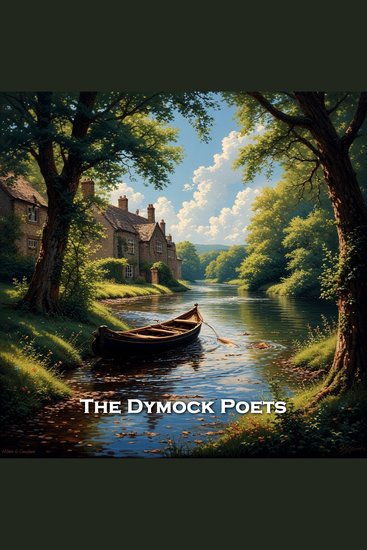
  • The Dymock Poets - Meeting of the minds - cover

    The Dymock Poets - Meeting of...

    Robert Frost, Edward Thomas,...

    • 0
    • 0
    • 0
    In the village of Dymock, just by the river Leadon in Gloucester, in the years that were leading up to the Great War, six poets were creating literary history.   
    Living, visiting, reading and writing in this small area their friendships, as they intermingled and influenced each other’s lives, would create the enduring legacy of The Dymock Poets. 
    And these were not just run of the mill scribes.  Included in their number were Robert Frost, Edward Thomas and Rupert Brooke.  These three, together with John Drinkwater, Lascelles Abercrombie and Wilfrid Wilson Gibson, were the beating heart of the group.    
    In his volume we gather together some of their finest verse to best illustrate their poetical careers as well as including poems from the visiting Eleanor Farejon, a close friend of Thomas and his wife.
    Zum Buch
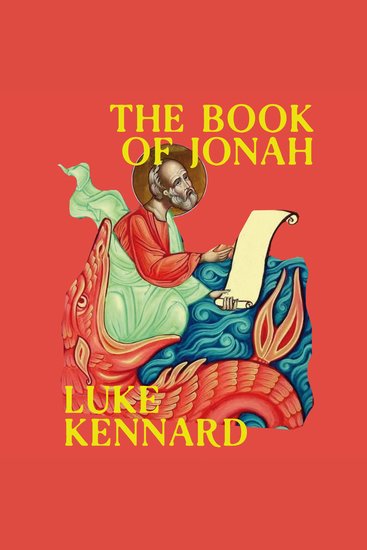
  • The Book of Jonah - A Telegraph Book of the Year - cover

    The Book of Jonah - A Telegraph...

    Luke Kennard

    • 0
    • 0
    • 0
    Read by the author, Luke Kennard‘Kennard’s distinctive voice – surreal, funny, anxious, always overthinking, and cringingly self-deprecating – has made him one of the most widely liked and imitated British poets’ – Tristram Fane Saunders, TLSNone of the Old Testament prophets were especially happy or confident in their calling, but Jonah was the only one who rejected it outright, disobeying direct instruction from God and literally running away. In The Book of Jonah, Luke Kennard transforms the unique and awkward position Jonah’s story occupies in scripture – part dream, part joke, part provocation – into a madcap picaresque which marries the sacred and the absurd.Though Jonah’s encounter with the whale is most commonly interpreted as the story of a reluctant prophet being punished by his maker, Kennard’s Jonah is more wily business traveller than seer. Taking his instruction instead from non-governmental organizations, arts development agencies and public-relations gurus, this Jonah keeps relentlessly busy, accepting any assignment that will take him further away from Nineveh and drown out the word of God in his ears. On his travels he meets errant writers, fixers, artists and consultants, but nobody who can give him a sense of what his work might be beyond a five-star capitalist purgatory in a series of exotic locations. What would it mean to be a prophet – or even a false prophet – in this milieu?Taking on the decimation of funding for the arts, the emptiness of the hero’s journey and a literary culture regarded by wider society with cynicism, ignorance and apathy, The Book of Jonah is a blistering poetry collection from the Forward Prize-winning author of Notes on the Sonnets.
    Zum Buch
  • A Doll's House - cover

    A Doll's House

    Henrik Ibsen

    • 0
    • 0
    • 0
    'Nobody in this house knows what I'm capable of.'
    With a comfortable home, successful husband and two beautiful children, Nora Helmer is the envy of many. But her happy home is built on false foundations. As long-buried secrets begin to surface, Nora wonders if what she has is the same as what she wants.
    Chris Bush's taut and gripping adaptation of Henrik Ibsen's classic play is a powerful exploration of friendship, betrayal, dependency and liberation. It premiered at the Crucible, Sheffield Theatres, in 2024, directed by Elin Schofield.
    Zum Buch