Rejoignez-nous pour un voyage dans le monde des livres!
Ajouter ce livre à l'électronique
Grey
Ecrivez un nouveau commentaire Default profile 50px
Grey
Abonnez-vous pour lire le livre complet ou lisez les premières pages gratuitement!
All characters reduced
Physics - cover

Physics

Willis E. Tower, Charles M. Turton, Charles H. Smith, Thomas D. Cope

Maison d'édition: e-artnow

  • 0
  • 0
  • 0

Synopsis

This work is an introductory book to the world of physics. It is intended for university-level readers during that era when it was written. The book provides a great deal of information regarding the science and structured the chapters in a way that makes it easy for an average layperson to follow the contents.
Disponible depuis: 26/11/2023.
Longueur d'impression: 11538 pages.

D'autres livres qui pourraient vous intéresser

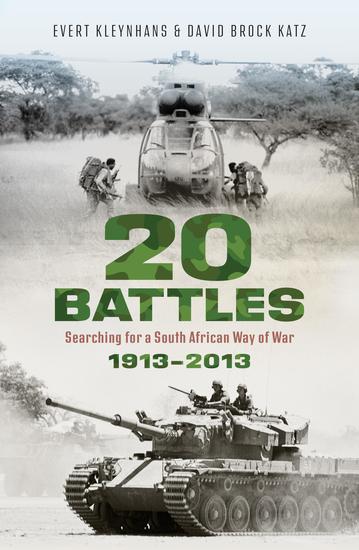
  • 20 Battles - Searching for a South African Way of War 1913-2013 - cover

    20 Battles - Searching for a...

    Evert Kleynhans, David Brock Katz

    • 0
    • 0
    • 0
    Favouring manoeuvre over attrition and often punching above their weight, South African soldiers have become known for their tenacity, dash and ability to defy the odds. Their unique directive command style has also helped them to excel in defining battles and operations, from the campaign in German South West Africa in 1915 to the cross-border operations in Angola during the Border War.
    In 20 Battles, military historians Evert Kleynhans and David Brock Katz investigate the evolution of South Africa's armed forces over a century from 1913 to 2013. They track the evolution of the doctrine and structure of the defence force, uncovering historical continuity and the lessons learned from past battles and operations.
    What is clear is that when South African soldiers have the freedom to operate according to their manoeuvre doctrine, as they had in East Africa in 1916 and southern Ethiopia in 1941, they can achieve stunning results. But when hemmed in by rigid doctrine and a top-down command style, as at Delville Wood in 1916 and Tobruk in 1942, the results can be tragic.
    20 Battles combines both battlefield drama and crisp analysis and in the process provides a much-needed perspective on the South African way of war.
    Voir livre
  • A Treatise of Human Nature Book 1 - cover

    A Treatise of Human Nature Book 1

    David Hume

    • 0
    • 0
    • 0
    David Hume's "A Treatise of Human Nature" presents a revolutionary examination of human cognition. Through meticulous analysis, Hume delves into the complexities of perception, memory, and imagination, challenging age-old philosophical beliefs. By introducing empiricism, he argues that all knowledge originates from sensory experience. This foundational work redefines modern thought, probing the boundaries of understanding and the very essence of human reality.
    Voir livre
  • END OF HISTORY AND THE LAST MAN 10-Minute Summary THE - Has history come to an end? The boldest and most brilliant interpretation of humanity’s present and future history - cover

    END OF HISTORY AND THE LAST MAN...

    Francis Fukuyama

    • 0
    • 0
    • 0
    In The End of History and the Last Man, political scientist Francis Fukuyama presents one of the most provocative theses of the contemporary era: after the fall of the Berlin Wall and the collapse of the Soviet Union, liberal democracy not only emerged as the dominant political model, but also represents the culmination of humanity’s ideological evolution. 
    With clear prose and rigorous argumentation, Fukuyama draws on thinkers such as Hegel, Marx, and Nietzsche to develop an ambitious vision: if history is a struggle of ideas, then liberalism has triumphed over its rivals—fascism and communism—on political, economic, and moral grounds. From this perspective, humanity has reached its ultimate form of organization, at least structurally. 
    However, this claim is neither triumphalist nor naive. Fukuyama acknowledges the challenges that liberal democracies face: nationalism, religion, economic inequality, and especially the threat of the “last man,” a passive, conformist figure concerned solely with personal well-being. The author warns that although liberal ideology has prevailed, the human yearning for recognition, identity, and purpose remains alive. History may have ended, but human dilemmas persist. 
    This book offers not only a deep historical and philosophical reading but also challenges the reader with fundamental questions: What does it mean to be free? Can a society live without transcendent ideals? Are we condemned to comfort, or are we capable of reinventing our purpose? 
    Ideal for readers interested in politics, philosophy, contemporary history, and social theory, this work has become a classic of modern political thought. A brilliant, controversial, and deeply relevant text that invites reflection on humanity’s destiny in an age of uncertainty. 
       
     
    Voir livre

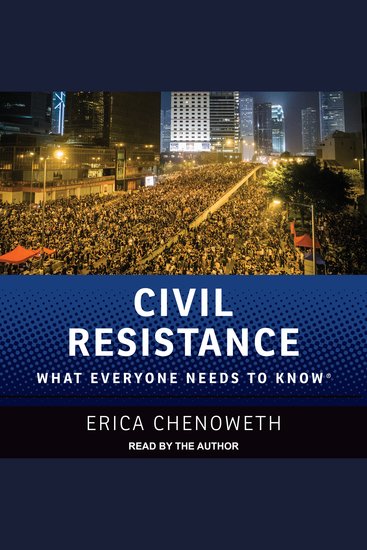
  • Civil Resistance - What Everyone Needs to Know - cover

    Civil Resistance - What Everyone...

    Erica Chenoweth

    • 0
    • 0
    • 0
    Civil resistance is a method of conflict through which unarmed civilians use a variety of coordinated methods (strikes, protests, demonstrations, boycotts, and many other tactics) to prosecute a conflict without directly harming or threatening to harm an opponent. Sometimes called nonviolent resistance, unarmed struggle, or nonviolent action, this form of political action is now a mainstay across the globe. It was been a central form of resistance in the 1989 revolutions and in the Arab Spring, and it is now being practiced widely in Trump's America. If we are going to understand the manifold protest movements emerging around the globe, we need a thorough understanding of civil resistance and its many dynamics and manifestations. 


    In Civil Resistance: What Everyone Needs to Know®, Erica Chenoweth—one of the world's leading scholars on the topic—explains what civil resistance is, how it works, why it sometimes fails, how violence and repression affect it, and the long-term impacts of such resistance. Featuring both historical cases of civil resistance and more contemporary examples such as the Arab Awakenings and various ongoing movements in the United States, this book provides a comprehensive yet pithy overview of this enormously important subject.
    Voir livre
  • Traditions of the North American Indians - cover

    Traditions of the North American...

    James Athearn Jones

    • 0
    • 0
    • 0
    The first of three volumes of collected Native American folktales or oral traditions.Born in Massachusetts in 1790, James Athearn Jones grew up with Native American culture all around him. His childhood nursemaid was from the Gay Head tribe, and his household was frequented by other local Indigenous people of all ages. He enjoyed hearing their folktales. As an adult, he traveled the continent and sought to preserve and collect these stories in a book. In this first of three volumes, Jones shares eighteen captivating folktales from the North American Indians he encountered in his life. Discover such stories as “The Man of Ashes,” “Pomatare, the Flying Beaver,” and “The Resurrection of the Bison.” This enriching and enlightening collection serves as a fascinating means to explore some of the history and culture of Native Americans.
    Voir livre
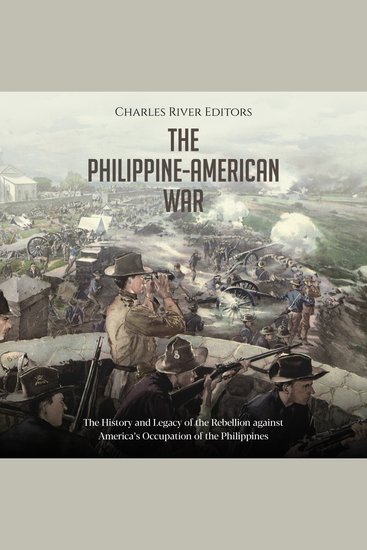
  • Philippine-American War The: The History and Legacy of the Rebellion against America’s Occupation of the Philippines - cover

    Philippine-American War The: The...

    Editors Charles River

    • 0
    • 0
    • 0
    On April 27, 1898 six American ships of the line, led by the Olympia with Commodore George Dewey aboard, headed toward Manila Bay. After several days of sailing over the South China Sea, Dewey hoped to sail past the Spanish fort at Corregidor to arrive at Manila without detection, and sailed without lights in order to do so. He made it into the bay, where the naval battle with the Spanish South Pacific Squadron began in the wee hours of May 1, 1898. Dewey was a student of the Mahanian school of naval strategy, so called for the aggressive Alfred T. Mahan, a top naval strategist and President of the Naval War College. As such, he concentrated his efforts on the offensive, preferring to meet the Spanish fleet on his own terms and to avoid, if it all possible fire from land-based batteries that lined Manila Bay. He refused to engage the batteries on land, sailing straight past the firing batteries and toward the Spanish fleet. Dewey issued his most famous command just before 6:00 that morning, “You may fire when ready, Gridley!”  
    The leader of an 1896 insurgency against the Spanish, Emilio Aguinaldo y Famy, had left the Philippines in an agreement following Spanish promises of reform that never materialized. As a recognized Filipino leader, he was brought to Manila by an American ship within days of the American victory at Manila, but the events that followed were to prove controversial and lead to U.S. control of the Philippines, along with a revolution of the Filipino people that would prove to be far longer and more costly than the Spanish-American war itself. The Philippines had no meaningful connection to Cuba except as a Spanish colony, and Spanish forces in the islands were no threat to the U.S. Pacific coast, but the island chain appeared to offer a convenient location for a naval base in an age when warships were coal-powered and needed coaling bases. 
    Voir livre