Begleiten Sie uns auf eine literarische Weltreise!
Buch zum Bücherregal hinzufügen
Grey
Einen neuen Kommentar schreiben Default profile 50px
Grey
Jetzt das ganze Buch im Abo oder die ersten Seiten gratis lesen!
All characters reduced
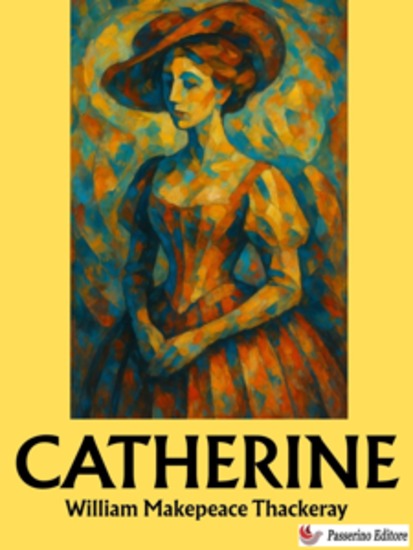
Catherine - cover

Catherine

William Makepeace Thackeray

Verlag: Passerino

  • 0
  • 0
  • 0

Beschreibung

What happens when a writer sets out to mock the fashionable “Newgate” novels that glorify criminals—only to find his own villainess oddly compelling? In Catherine, William Makepeace Thackeray crafts a darkly satirical tale of crime, corruption, and twisted charm. Loosely based on the real-life criminal Catherine Hayes, the novel follows the rise and fall of a scheming, manipulative woman whose cunning is matched only by her capacity for deceit. Intended as a parody, Catherine subverts expectations by making its heroine dangerously likable, blurring the lines between condemnation and fascination.Written in Thackeray’s signature ironic style, with frequent interjections from a narrator who is both amused and appalled, Catherine stands as an early experiment in antihero fiction—wicked, witty, and wildly ahead of its time. A must-read for fans of satire, historical crime, and literature that isn’t afraid to challenge morality and genre conventions.William Makepeace Thackeray (18 July 1811 – 24 December 1863) was one of the great English writers of the 19th century, best known for his sharp, ironic take on the society of his time. Born in 1811 in India (then under British rule), he spent most of his life in England, where he became one of the most prominent literary voices of the Victorian era. His most famous novel, Vanity Fair, is a sweeping portrait of English society.
Verfügbar seit: 16.06.2025.

Weitere Bücher, die Sie mögen werden

  • Through the Looking Glass - cover

    Through the Looking Glass

    Lewis Carroll

    • 0
    • 0
    • 0
    Embark on a whimsical journey through the fantastical world of "Through the Looking Glass" by Lewis Carroll, now available as a delightful audiobook experience. Follow Alice as she steps through the looking glass into a world where nothing is quite as it seems, encountering quirky characters and absurd situations at every turn. 
    In this beloved sequel to "Alice's Adventures in Wonderland," Carroll's vivid imagination and playful language come to life in enchanting detail. From the curious logic of the White Queen to the mischievous antics of Tweedledee and Tweedledum, listeners will be captivated by the charm and wit of Carroll's storytelling. 
    Perfect for listeners of all ages, "Through the Looking Glass" offers a whimsical escape into a world of nonsense and wonder. Whether you're a longtime fan of Alice's adventures or discovering them for the first time, this audiobook promises hours of enchantment and enjoyment. 
    So, if you're ready to embark on a magical journey filled with laughter and imagination, start listening to "Through the Looking Glass" today and experience the timeless charm of Lewis Carroll's classic tale.
    Zum Buch
  • The Mystery of Edwin Drood - cover

    The Mystery of Edwin Drood

    Charles Dickens

    • 0
    • 0
    • 0
    The Mystery of Edwin Drood is Charles Dickens's final and most enigmatic novel, left unfinished at the time of his death. Blending elements of mystery, psychological drama, and Gothic suspense, the book stands apart from Dickens's other works and continues to intrigue readers and scholars alike.
    
    Set in the atmospheric cathedral town of Cloisterham, the story revolves around the sudden disappearance of young Edwin Drood. Suspicion soon falls upon his uncle, John Jasper, a respected choirmaster whose outward respectability masks dark inner obsessions. As hidden desires, jealousy, and moral corruption emerge, Dickens carefully constructs a tense and unsettling portrait of a man divided against himself.
    
    Alongside the central mystery, the novel introduces a cast of vivid characters, including the independent and thoughtful Rosa Bud, the mysterious siblings Neville and Helena Landless, and the eccentric investigator Mr. Datchery. Through these figures, Dickens explores themes of identity, guilt, secrecy, and the struggle between conscience and desire.
    
    Though unfinished, The Mystery of Edwin Drood remains a compelling and powerful work. Its unresolved ending invites endless speculation, making readers active participants in solving its central puzzle. Dark in tone yet rich in character and atmosphere, the novel stands as a fascinating final chapter in Dickens's literary legacy and a timeless classic of Victorian mystery.
    Zum Buch
  • Endowment of Motherhood The (Unabridged) - cover

    Endowment of Motherhood The...

    H. G. Wells

    • 0
    • 0
    • 0
    Herbert George Wells (21 September 1866 - 13 August 1946) was an English writer. Prolific in many genres, he wrote dozens of novels, short stories, and works of social commentary, history, satire, biography and autobiography. His work also included two books on recreational war games. Wells is now best remembered for his science fiction novels and is often called the "father of science fiction", along with Jules Verne and the publisher Hugo Gernsback.
    THE ENDOWMENT OF MOTHERHOOD: Some few years ago the Fabian Society, which has been so efficient in keeping English Socialism to the lines of "artfulness and the 'eighties," refused to have anything to do with the Endowment of Motherhood.
    Zum Buch
  • The Food of the Gods and How It Came to Earth - cover

    The Food of the Gods and How It...

    H. G. Wells

    • 0
    • 0
    • 0
    "In the world of the small, the large is always a monster."
    
    What happens when science outpaces morality? When two eccentric scientists, Mr. Bensington and Professor Redwood, develop "Herakleophorbia"—a substance that allows for continuous, limitless growth—they envision a world of giant livestock and abundant food. Instead, they unleash a biological revolution. From giant wasps and man-eating rats to a new generation of human "Giants" who stand forty feet tall, the world is irrevocably changed. Wells uses this fantastic premise to craft a biting satire of a society that fears progress and a moving epic about the struggle for a larger, more noble existence.
    
    The Chaos of the Small: The first half of the novel is a brilliant dark comedy. Due to the negligence of a pair of sloppy caretakers, the "Food" leaks into the English countryside, creating a nightmare of gargantuan pests. Wells meticulously describes the terror of a world where common insects and rodents become apex predators, forcing humanity to confront the dangers of its own tinkering.
    
    The War of the Worlds (Small vs. Large): As the human "Children of the Food" grow to adulthood, they find themselves outcasts in a world built for "little people." The novel shifts from science fiction to political allegory, as the "old" world, led by the populist politician Caterham (the "Jack the Giant-killer"), attempts to suppress and destroy the giants. It is a powerful meditation on the "growing pains" of civilization and the fear of the unknown.
    
    A Prophecy of the Future: Wells leaves the reader with a haunting question: Can humanity evolve fast enough to inhabit the world its science has created? The Food of the Gods is an essential read for anyone interested in the ethics of biotechnology and the eternal struggle between the status quo and the future.
    
    Witness the growth of a new world. Purchase "The Food of the Gods" today and see the world through the eyes of a giant.
    Zum Buch
  • A Daughter of Eve - cover

    A Daughter of Eve

    Honoré de Balzac

    • 0
    • 0
    • 0
    In A Daughter of Eve, Honoré de Balzac delivers a compelling exploration of love, marriage, ambition, and disillusionment set against the glittering yet treacherous backdrop of 19th-century Parisian society. As part of his monumental collection La Comédie Humaine, this novel dives deeply into the emotional and moral struggles of women navigating the rigid expectations of aristocratic life.
    
    The story centers on two sisters, Marie-Angélique and Marie-Eugénie de Granville, daughters of a devoted and idealistic mother who has raised them with strict moral principles and romantic ideals. Both sisters are married into respectable positions—one to a rising politician, the other to a nobleman—but beneath the polished surface of their lives lies a quiet dissatisfaction. Their sheltered upbringing leaves them ill-prepared for the complexities of marriage, social ambition, and emotional temptation.
    
    Marie-Angélique, the more passionate and impulsive of the two, becomes the emotional heart of the novel. Though married to Félix de Vandenesse, a man deeply immersed in political ambition, she feels neglected and yearns for romance and admiration. When she encounters Raoul Nathan, a charismatic and manipulative writer burdened with debts and grand illusions, she is swept into an emotional entanglement that threatens not only her marriage but her social standing. Through this relationship, Balzac masterfully reveals the dangers of vanity, naivety, and unchecked desire.
    
    Meanwhile, Marie-Eugénie represents a contrasting temperament—calmer and more practical—yet she too must confront the realities of aristocratic life. Together, the sisters embody Balzac's exploration of the "daughter of Eve": women portrayed as vulnerable to temptation, yet capable of growth, sacrifice, and moral reckoning.
    
    Balzac paints a vivid portrait of Restoration-era France, where politics, literature, and high society intersect in a world driven by reputation, influence, and financial survival. The novel scrutinizes the fragile balance between love and duty, highlighting how easily emotional longing can collide with social expectation. With psychological depth and sharp social commentary, Balzac exposes both the fragility of romantic illusions and the resilience of women forced to confront the consequences of their choices.
    
    Rich in character development and moral complexity, A Daughter of Eve is not merely a story of infidelity or temptation—it is a study of human weakness, ambition, and redemption. Balzac invites readers to question whether innocence is a strength or a liability in a world governed by power and appearance.
    
    For readers who appreciate classic French literature, intricate character studies, and timeless reflections on love and society, A Daughter of Eve remains a powerful and thought-provoking work that continues to resonate across generations.
    Zum Buch
  • The Old Fellow's Letter - cover

    The Old Fellow's Letter

    Lucy Maud Montgomery

    • 0
    • 0
    • 0
    Lucy Maud Montgomery (November 30, 1874 – April 24, 1942), published as L. M. Montgomery, was a Canadian author best known for a series of novels beginning in 1908 with Anne of Green Gables. The book was an immediate success. The title character, orphan Anne Shirley, made Montgomery famous in her lifetime and gave her an international following.
    The Old Fellow's Letter: Ruggles and I were down on the Old Fellow. It doesn't matter why and, since in a story of this kind we must tell the truth no matter what happens or else where is the use of writing a story at all? I'll have to confess that we had deserved all we got and that the Old Fellow did no more than his duty by us.
    Zum Buch