


Rejoignez-nous pour un voyage dans le monde des livres!
Ajouter ce livre à l'électronique
Grey
Ecrivez un nouveau commentaire Default profile 50px
Grey
Abonnez-vous pour lire le livre complet ou lisez les premières pages gratuitement!
All characters reduced
Memoirs of a Midget - A Lyrical Journey through Society and Solitude in the Early 20th Century - cover

Memoirs of a Midget - A Lyrical Journey through Society and Solitude in the Early 20th Century

Walter de la Mare

Maison d'édition: Good Press

  • 0
  • 0
  • 0

Synopsis

In "Memoirs of a Midget," Walter De la Mare crafts a rich and intricate narrative that explores the life of a petite protagonist navigating a world dominated by towering figures. Employing a lyrical prose style, De la Mare immerses readers in a whimsical yet poignant exploration of identity, perception, and the human experience. The book masterfully juxtaposes the fantastical with the mundane, revealing deeper truths about the nature of existence and the often overlooked nuances of life's journey. Set against the backdrop of the early 20th century, the narrative reflects the author's fascination with the extraordinary within the ordinary, drawing upon literary traditions that resonate with both modernism and romanticism. Walter De la Mare, a distinguished English poet and novelist, was profoundly influenced by his interest in folklore, psychology, and the complexities of human emotion. His own life experiences, marked by an affinity for the numinous and the surreal, spill into the pages of this novel, showcasing his ability to intertwine the whimsical with a sense of existential inquiry. De la Mare's unique vision allows him to portray the world through the lens of a character who feels both alien and deeply connected to the human condition. "Memoirs of a Midget" is a remarkable read for those who appreciate literary depth woven with an enchanting narrative. It invites readers to contemplate their perspectives on life, identity, and societal norms, making it a compelling addition to any literary collection. Highly recommended for lovers of introspective literature, it promises both an enchanting escape and profound insights.
Disponible depuis: 18/09/2023.
Longueur d'impression: 363 pages.

D'autres livres qui pourraient vous intéresser

  • HorrorBabble's Subterranean Terror - 10 Stories of the Dark Places Beneath Us - cover

    HorrorBabble's Subterranean...

    Robert Bloch, Edmond Hamilton,...

    • 0
    • 0
    • 0
    A collection of horror stories set in shadowy caverns, crypts, and other undesirable hollows. 
    Contents: 
    Far Below by Robert Barbour Johnson (Weird Tales, June-July 1939) 
    The story of dreadful creatures burrowing up into the New York subway. 
    The Creeper in the Crypt by Robert Bloch (Weird Tales, July 1937) 
    An unusual case of kidnapping in witch-haunted Arkham. 
    The Secret in the Tomb by Robert Bloch (Weird Tales, May 1935) 
    A man answers an inexplicable summons from beyond the grave. 
    Murder in the Grave by Edmond Hamilton (Weird Tales, February 1935) 
    A night of terror ten feet below the surface of the ground. 
    The Thing in the Cellar by David H. Keller (Weird Tales, March 1932) 
    The tale of a terrified little boy, and his fear of what might be lurking in the basement. 
    It Walks by Night by Henry Kuttner (Weird Tales, December 1936) 
    A ghastly horror that stalked through the crypts beneath an old graveyard. 
    The Graveyard Rats by Henry Kuttner (Weird Tales, March 1936) 
    A cemetery caretaker must exterminate a colony of monstrous rats. 
    The People of the Pit by Abraham Merritt (All-Story Weekly, January 1918) 
    An individual descended much too deeply into the heart of the Earth. 
    The Epiphany of Death by Clark Ashton Smith (The Fantasy Fan, July 1934) 
    A shocking revelation in the catacombs of Ptolemides. 
    The Seed from the Sepulchre by Clark Ashton Smith (Weird Tales, October 1933) 
    In the Venezuelan jungle, a diabolical plant lived on human life.
    Voir livre
  • The Canterville Ghost - cover

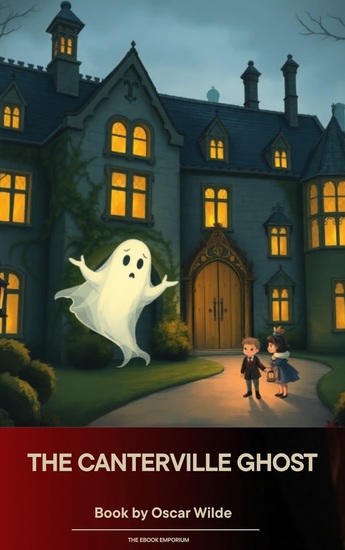
    The Canterville Ghost

    Oscar Wilde

    • 0
    • 0
    • 0
    "What happens when a centuries-old ghost meets a modern family that simply refuses to be scared?"
    
    For three hundred years, Sir Simon de Canterville has been the pride of the British supernatural world, haunting his ancestral home with bloodstains and rattling chains. But his reign of terror comes to a screeching halt when the Otis family, a group of pragmatic and unimpressed Americans, moves in. Armed with "Pinkerton's Champion Stain Remover" and "Rising Sun Lubricator" for his squeaky chains, the Otises treat the ghost not as a nightmare, but as a nuisance. In this brilliant satire, Oscar Wilde pits old-world tradition against new-world practicality, leading to a conclusion that is as moving as it is witty.
    
    The Comedy of Terrors: The humor lies in the ghost's growing frustration. Sir Simon takes his "haunting" as a serious profession, and his inability to frighten the rambunctious Otis twins leads to a hilarious reversal where the ghost becomes the victim of the living. It is a masterclass in the "Comedy of Manners."
    
    A Touch of True Redemption: Beyond the laughs, the story shifts gears when the young Virginia Otis encounters the weary ghost. Her compassion leads to a beautiful and poetic finale, exploring themes of forgiveness, death, and the power of love to bridge the gap between two worlds.
    
    Why It Is a Timeless Favorite: The Canterville Ghost is perfect for readers of all ages. It offers the biting social commentary Wilde is famous for, wrapped in a fast-paced, entertaining plot that moves from slapstick comedy to profound allegory in just a few pages.
    
    Meet the world's most frustrated phantom. Purchase "The Canterville Ghost" today.
    Voir livre
  • The Velveteen Rabbit - cover

    The Velveteen Rabbit

    Margery Williams

    • 0
    • 0
    • 0
    The Velveteen Rabbit (or How Toys Become Real) is a British children's book written by Margery Williams (also known as Margery Williams Bianco) and illustrated by William Nicholson. It chronicles the story of a stuffed rabbit's desire to become real through the love of his owner. The story was first published in Harper's Bazaar in 1921 featuring illustrations from Williams' daughter Pamela Bianco. It was published as a book in 1922 and has been republished many times since.
    The Velveteen Rabbit was Williams' first children's book. It has been awarded the IRA/CBC Children's Choice award. Based on a 2007 online poll, the National Education Association voted the book #28 on the "Teachers' Top 100 Books for Children".
    Voir livre
  • Daniel Deronda Volume 1 - cover

    Daniel Deronda Volume 1

    George Eliot

    • 0
    • 0
    • 0
    "Daniel Deronda" by George Eliot is a sweeping and compelling novel that weaves together the stories of two protagonists whose paths cross in unexpected ways, leading them on a journey of self-discovery, love, and moral awakening. The novel opens with Gwendolen Harleth, a beautiful and headstrong young woman, whose charm and charisma mask her inner complexities. Fueled by a desire for wealth and social standing, Gwendolen enters into a loveless marriage with the wealthy but cold Henleigh Mallinger Grandcourt. As she grapples with the consequences of her choices, she finds herself entangled in a web of emotional turmoil, and her moral compass is put to the test.
    Voir livre
  • A Piece of Steak - American author of The Call Of The Wild & White Fang brings a biting story about a poverty stricken aging boxer and his plight - cover

    A Piece of Steak - American...

    Jack London

    • 0
    • 0
    • 0
    John Griffith Chaney was born on January 12th, 1876 in San Francisco.   
     
    His father, William Chaney, was living with Flora Wellman when she became pregnant.  Chaney insisted she have an abortion.  Flora's response was to turn a gun on herself.  Although her wounds were not severe the trauma made her temporarily deranged. 
     
    In late 1876 his mother married John London and the young child was brought to live with them as they moved around the Bay area, eventually settling in Oakland where now, calling himself Jack, he completed grade school. 
     
    Jack worked hard at several jobs, sometimes 12-18 hours a day, but his dream was university.  He studied hard and borrowed the money to enrol in the summer of 1896 at the University of California in Berkeley. 
     
    In 1897, at 21, Jack searched out newspaper accounts of his mother's suicide attempt and for the name of his biological father. He wrote to Chaney, then living in Chicago, who claimed he could not be Jack’s father because he was impotent and casually asserted that London's mother had relations with other men.  Jack, devastated by the response, quit Berkeley and went to the Klondike. Other accounts suggest that his dire finances presented Jack with the excuse he needed to leave. 
     
    In the Klondike Jack began to gather material for his writing but also accumulated many health problems, including scurvy, which together with hip and leg problems he would carry for the rest of his life. 
     
    During the late 1890's Jack was regularly publishing short stories and by the turn of the century full blown novels. 
     
    By 1904 Jack had married, fathered two children and was now in the process of divorcing.  A stint as a reporter on the Russo-Japanese war of 1904 was equal amounts trouble and experience. But that experience was always put to good use in a continuing and remarkable output of work. 
     
    In 1905 he married Charmian Kittredge who at last was a soul and companion who brought him some semblance of peace despite his advancing alcoholism and his incurable wanderlust. 
     
    Twelve years later Jack had amassed both wealth and a literary reputation through such classics as ‘The Call of the Wild’, ‘White Fang’ and many others. He had a reputation as a social activist and was a tireless friend of the workers.   
     
    Jack London died suffering from dysentery, late-stage alcoholism and uremia, aged only 40, on November 22nd 1916 at his property in Glen Elen in California 
     
    In ‘A piece of Steak’ an ageing prizefighter seeks one last win. Not for glory, or to revisit fame, but simply to put food on the table and keep his family together.  But to do that he must beat a highly rated up and coming adversary.
    Voir livre
  • Father Brown: The Wrong Shape (Unabridged) - cover

    Father Brown: The Wrong Shape...

    G. K. Chesterton

    • 0
    • 0
    • 0
    Certain of the great roads going north out of London continue far into the country a sort of attenuated and interrupted spectre of a street, with great gaps in the building, but preserving the line. Here will be a group of shops, followed by a fenced field or paddock, and then a famous public-house, and then perhaps a market garden or a nursery garden, and then one large private house, and then another field and another inn, and so on.
    Voir livre
