Begleiten Sie uns auf eine literarische Weltreise!
Buch zum Bücherregal hinzufügen
Grey
Einen neuen Kommentar schreiben Default profile 50px
Grey
Jetzt das ganze Buch im Abo oder die ersten Seiten gratis lesen!
All characters reduced
Original Plays [First Series] - Enriched edition - cover

Original Plays [First Series] - Enriched edition

W. S. Gilbert

Verlag: DigiCat

  • 0
  • 0
  • 0

Beschreibung

In "Original Plays [First Series]," W. S. Gilbert showcases his unparalleled wit and ingenuity through a collection of comedic works that delightfully challenge societal norms and theatrical conventions of the Victorian era. Rich in satirical dialogue and accompanied by clever plots, each play reveals Gilbert's distinctive literary style marked by sharp humor and absurdity. As a precursor to the operatic collaborations with Arthur Sullivan, these plays intricately weave social commentary within their farcical narratives, engaging audiences in a lively critique of class distinctions and the pretentiousness of polite society. W. S. Gilbert, an influential figure in Victorian theatre, was known not only as a playwright but also as a poet and illustrator. His early influences included the theatrical practices and societal mores of his time, which he both revered and ridiculed. By combining his talents in writing and illustration, Gilbert sought to entertain and provoke thought, exploring themes of love, authority, and folly in a rapidly changing world. "Original Plays [First Series]" is essential reading for all lovers of theatre and literature. Echoing contemporary issues in his timeless humor, Gilbert invites readers to reflect on the absurdities of their own lives. This collection is a window into the performative genius of a master playwright, making it a must-have for anyone wishing to appreciate the rich tapestry of Victorian theatre.

In this enriched edition, we have carefully created added value for your reading experience:
- A comprehensive Introduction outlines these selected works' unifying features, themes, or stylistic evolutions.
- A Historical Context section situates the works in their broader era—social currents, cultural trends, and key events that underpin their creation.
- A concise Synopsis (Selection) offers an accessible overview of the included texts, helping readers navigate plotlines and main ideas without revealing critical twists.
- A unified Analysis examines recurring motifs and stylistic hallmarks across the collection, tying the stories together while spotlighting the different work's strengths.
- Reflection questions inspire deeper contemplation of the author's overarching message, inviting readers to draw connections among different texts and relate them to modern contexts.
- Lastly, our hand‐picked Memorable Quotes distill pivotal lines and turning points, serving as touchstones for the collection's central themes.
Verfügbar seit: 15.08.2022.
Drucklänge: 172 Seiten.


Weitere Bücher, die Sie mögen werden

  • The Top 10 Poets – Massachussetts - Five poems each from the best poets born in Massachussetts - cover

    The Top 10 Poets –...

    Emily Dickinson, Edgar Allan...

    • 0
    • 0
    • 0
    The language of Poetry is an art that most of us attempt at some point in our lives.  Although its commonplace exposure has been somewhat marginalised in today’s often fast-paced lives we all recognise good verse that can empathise with our thoughts or open us up to experience new things in new ways, to better understand and to enjoy the many strands of our lives. 
    But finding a starting point can be overwhelming, even off-putting, so in this series we offer up our Top 10 classic poets, who brim with talent and verse, on a range of subjects and themes that we can all enjoy. 
    The United States may be far younger than many nations on Earth, yet its tumultuous history has reaped a harvest of poets and poetry of very fine calibre.  In this volume we explore the verse of Massachusetts.
    Zum Buch
  • Antigone - cover

    Antigone

    Sophocles

    • 0
    • 0
    • 0
    This is the final installment in Sophocles's Theban Plays, following Oedipus Rex and Oedipus at Colonus.  Oedipus's daughter Antigone deliberately breaks the laws of Thebes when she buries her brother's body and is sentenced to death.  She clashes with Creon, the King of Thebes, over what constitutes justice and morality: the laws of the state or the laws of the individual.  (Summary by Elizabeth Klett)Cast: 
    Antigone: Elizabeth KlettIsmene: Arielle LipshawCreon: Bruce PirieHaemon: mbEurydice: Lucy PerryTiresias: Martin GeesonGuard: Algy PugChorus, Second Messenger: Lars RolanderMessenger: David GoldfarbNarrator: David LawrenceAudio edited by: Elizabeth Klett
    Zum Buch
  • Coriolanus - cover

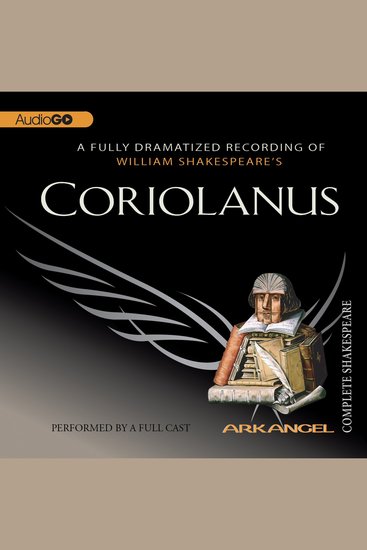
    Coriolanus

    Pierre Arthur Laure, Tom...

    • 0
    • 0
    • 0
    Rome is a city divided, nobility and common people locked in mutual suspicion. The patrician Caius Marcius, later called Coriolanus, is Rome’s greatest soldier, but his proud refusal to accommodate himself to the demands of the plebeians leads to banishment and death. 
    A Roman history as well as tragedy, Coriolanus is a complex and subtle exploration of the themes of absolution and compromise, both in the political world and in the life of the individual. 
    Paul Jesson plays Coriolanus, and Marjorie Yates is Volumnia. Ewan Hooper plays Menenius 
    ACT IScene 1. The common people of Rome, the plebeians, are on the verge of rebellion due to the lack of grain; they blame the partricians—the Roman nobility—for their plight. They are especially bitter toward Caius Marcius, a patrician and a successful soldier, whom they regard as “the chief enemy to the people.” Menenius tries to persuade them that the patricians are acting in their best interests but when Marcius arrives he makes no attempt to disguise his contempt for the plebeians. When news comes that the Volsces have taken up arms against Rome, Marcius receives it with pleasure, believing their leader Tullus Aufidius to be a noble adversary. Sicinius and Brutus, tribunes appointed to represent the interests of the plebeians, discuss Marcius’ overweening pride.Scene 2. Aufidius prepares to go to war against Rome.Scene 3. Marcius’ mother, Volumnia, urges his wife Virgilia to glory in his warlike prowess. Valeria brings news that Marcius is about to attach the Volsces’ city of Corioles.Scene 4. Marcius curses the fainthearted Roman soldiers and urges them on to attack Corioles. When they refuse, he enters the enemy city single-handed. When the Romans see him alone within the walls of Corioles, they rush in to assist him.Scene 5. Marcius is contemptuous of the looting Roman soldiers and, despite his wounds, plunges back into the battle in search of Aufidius.Scene 6. Covered from head to foot in blood, Marcius announces victory at Corioles.Scene 7. Lartius prepares to go to the Roman camp and warns the lieutenant to guard the gates of Corioles well.Scene 8. Marcius and Aufidius fight.Scene 9. Although Marcius refuses all Cominius’ efforts to reward him with booty, the general insists that he accept the name Coriolanus, as tribute to his extraordinary bravery.Scene 10. Aufidius vows to destroy Marcius by any means—honorable or otherwise. 
    ACT IIScene 1. The tribunes Sicinius and Brutus try to persuade Menenius that Marcius is excessively proud, but he will have none of it, accusing them of ambition and servility. Coriolanus returns to Rome in triumph and is greeted by his wife and mother. Brutus and Sicinius fear that if Coriolanus becomes consul they will be stripped of their power.Scene 2. The Senate has deccided to make Coriolanus consul. With great reluctance he goes, as custom requires, to solicit the citizens’ votes by displaying his battle wounds in the marketplace.Scene 3. Despite the awareness of some plebeians that Coriolanus has little love for the common people they recognize his nobility, and choose him for consul. Once he has gone, however, their unease resurfaces and the tribunes persuade them to revoke their votes. 
    ACT IIIScene 1. Coriolanus walks through Rome, discussing the news that Aufidius is again preparing to take up arms. When the tribunes warn him to go no further, Coriolanus accuses them of inciting the plebeians against him and asserts that the people did not deserve free distribution of corn because they were unwilling to defend their country in war. Menenius tries to calm him, but Coriolanus continues to rage that “gentry tile, wisdom,/Cannot conclude but by the yea and no/Of general ignorance.” Finally, Brutus orders Coriolanus’ arrest and chaos ensues as the plebeians are exhorted by the tribunes to seize Coriolanus but are beaten back by the senators. When the tribunes demand Coriolanus’ death, Menenius appeases them by sayin
    Zum Buch
  • The Most Charming Creatures - Poems - cover

    The Most Charming Creatures - Poems

    Gary Barwin

    • 0
    • 0
    • 0
    With uncanny wit, inventive beauty, and numinous surprise, The Most Charming Creatures explores the contemporary and its language, considering our wonder, sorrow, bewilderment, anxiety, and tenderness. While these poems energize and connect and “turn the paren- / theses inside out so that / we mean everything,” they are also alive to the alluring complicity of language and its duplicity and deceptions. “This is the way the world ends / Not with a bang but / while we watch.”
    		 
    A follow-up to the award-winning author’s acclaimed selected poems, this new collection continues Barwin’s examination of the possibilities of the poem: a celebration, a story, an investigation, a riff, a word machine, a parable, a transformation. But what are the “most charming creatures” of the title? In 1862, scientific illustrator Ernst Haeckel termed radiolarians (ancient single-celled organisms with mineral skeletons) “the most charming creatures,” but here Barwin turns the microscope around to consider something just as strange and mysterious: language, our culture, and the self. From microorganisms, onion rings, grief, and Gerard Manley Hopkins to beetles, neoliberalism, sandwiches, Martin Luther, and stand-up comedy, he offers: “it’s a miracle that we’ve survived / it’s a miracle that we’ve survived at all.”
    Zum Buch
  • The Other Boleyn Girl - (stage version) - cover

    The Other Boleyn Girl - (stage...

    Philippa Gregory

    • 0
    • 0
    • 0
    Henry VIII's court is a stage for love and treachery, where the weapons of choice are sex, marriage – and the executioner's axe. As Henry's mistress, Mary Boleyn is a pawn in her family's lust for power. Queen Katherine of Aragon hasn't produced a male heir, and Mary's ruthless uncle scents the chance of putting his niece on the throne.
    But Henry's wandering eye has fallen on another: Mary's headstrong sister, Anne, whose ambition not only threatens to destroy her bond with Mary, but shakes the foundations of Church and State.
    Based on Philippa Gregory's internationally bestselling novel, The Other Boleyn Girl is a brilliant evocation of intrigue at the Tudor court – a racy and riveting drama of events that changed the course of English history. This stage adaptation by Mike Poulton was premiered at Chichester Festival Theatre in 2024, directed by Lucy Bailey.
    Zum Buch
  • She Stoops to Conquer - cover

    She Stoops to Conquer

    Oliver Goldsmith

    • 0
    • 0
    • 0
    In She Stoops to Conquer, or The Mistakes of a Night, a young lady pretends to be a servant in order to win the notice of a young man who is painfully shy around women of his own class.  Hilarious misadventures and mayhem ensue before matters are neatly wrapped up at the end.  This play, one of the great English comedies, was first performed in 1773 and continues to be very popular with audiences today.  (Summary by LA Walden) 
    Cast:Mr. Hardcastle - Bob NeufeldSir Charles Marlow - David LawrenceYoung Marlow - balaHastings - Brett W. DowneyTony Lumpkin - ToddHWMrs. Hardcastle - AvailleMiss Hardcastle -Arielle LipshawMiss Neville - Charlotte DuckettFirst Fellow and First Servant - DrakaunusSecond Fellow, Second Servant, and Jeremy - rookieblueThird Fellow, Third Servant, and Roger - Joseph AbellFourth Fellow and Diggory - Algy PugLandlord and Mr. Woodward - zaantaMaid - Amanda FridayServant - Elizabeth KlettStage directions - Laurie Anne Walden 
    Audio edited by Laurie Anne Walden
    Zum Buch