Rejoignez-nous pour un voyage dans le monde des livres!
Ajouter ce livre à l'électronique
Grey
Ecrivez un nouveau commentaire Default profile 50px
Grey
Abonnez-vous pour lire le livre complet ou lisez les premières pages gratuitement!
All characters reduced
The Purple Land - Being the Narrative of One Richard Lamb's Adventures in The Banda Orientál in South America as Told By Himself - cover

The Purple Land - Being the Narrative of One Richard Lamb's Adventures in The Banda Orientál in South America as Told By Himself

W. H. Hudson

Maison d'édition: DigiCat

  • 0
  • 0
  • 0

Synopsis

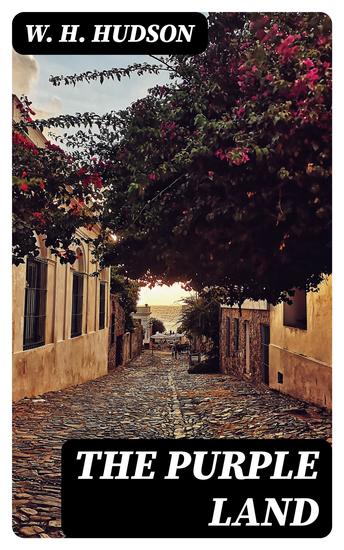
Set against the vibrant backdrop of 19th-century Uruguay, W. H. Hudson's "The Purple Land" weaves a rich narrative that blends adventure, romance, and social commentary. Employing a lyrical prose style, Hudson intricately describes the lush landscapes, cultural nuances, and complex human relationships within a region tumultuously shaped by colonialism and socio-political conflicts. The book is not merely a travelogue; it is an immersive exploration of identity and belonging, infused with Hudson's deep appreciation for nature and his acute observations of society's intricacies. W. H. Hudson, an English writer and naturalist known for his passionate environmental advocacy, drew extensively from his own experiences living in South America. His commitment to understanding the land and its inhabitants is evident in the vivid characterization and intricate descriptions throughout the novel. Hudson's unique perspective, having arrived in Argentina as a child of English immigrants, brings authenticity to his portrayal of Uruguay, reflecting both his love for the region and his critique of imperialism. "The Purple Land" is an essential read for those interested in classic literature that transcends mere adventure. It invites readers to reflect on the interplay of culture, identity, and the natural world, making it a compelling addition to the canon of travel literature and historical fiction.
Disponible depuis: 28/05/2022.
Longueur d'impression: 230 pages.


D'autres livres qui pourraient vous intéresser

  • My Name Is Philippa - cover

    My Name Is Philippa

    Philippa Ryder

    • 0
    • 2
    • 1
    My Name is Philippa: A Transgender Memoir of Love, Understanding and Transformation. Experience a heart-changing journey with Philippa Ryder as she transitions from male to female with the support of her family. This powerful and moving story explores the physical and emotional process of transitioning and provides answers to common questions about being transgender—a must-read for anyone seeking to understand and support the global movement towards gender freedom and empowerment.
    Voir livre
  • The Wrong Dog - An Unlikely Tale of Unconditional Love - cover

    The Wrong Dog - An Unlikely Tale...

    David Elliot Cohen

    • 0
    • 0
    • 0
    A Heartwarming Story of Unconditional Love for Fans of Dog Tales“Part Marley and Me, part Bucket List, part travel memoir, Cohen’s book tells the story of Simba, a larger-than-life Labrador retriever whose physical size is matched only by his love of people.” ―Sara Hodon, Compulsive Reader
     
    2018 International Book Awards Winner
     
    From New York Times bestselling author David Elliot Cohen comes this unforgettable dog tale and story of a cross-country road trip. The Wrong Dog is a heartwarming and hilarious memoir of a mischievous dog and the unconditional love he forges with the family who mistakenly adopts him.
     
    There are no bad dogs. Meet Simba II, a playful white Labrador puppy brought home by accident. As he grows into an enormous ninety-pound dog with a huge personality, Simba cements the bond between two families and enriches their lives in countless ways.
     
    A cross-country road trip to remember. When the family moves from San Francisco to New York, the author is charged with the ultimate animal rescue−bringing Simba to the family’s new home. He and his best friend, Erick, load Simba into the back of a station wagon and set out on a 3,300-mile once-in-a-lifetime road trip across America.
     
    An epic journey for dog lovers. With stops at Buck Owens’ Crystal Palace; the Las Vegas Strip; Meteor Crater; the Painted Desert; Cadillac Ranch; Winslow, Arizona; Gallup, New Mexico; Graceland, and other all-American landmarks, this engaging and poignant volume chronicles an epic journey, the unconditional love between one dog and his family, and the vast and benevolent role dogs play in American family life. But most of all, The Wrong Dog shows us how the end of life can sometimes be the richest part of all.
     
    If you’re a dog lover who’s enjoyed books such as Arthur: The Dog who Crossed the Jungle to Find a Home, A Dog Called Hope, or No Ordinary Dog, then you’ll love and laugh along with The Wrong Dog.
    Voir livre
  • And Then Came the Blues - My Story of Survival on Both Sides of the Badge A Memoir - cover

    And Then Came the Blues - My...

    Katrina Brownlee

    • 0
    • 0
    • 0
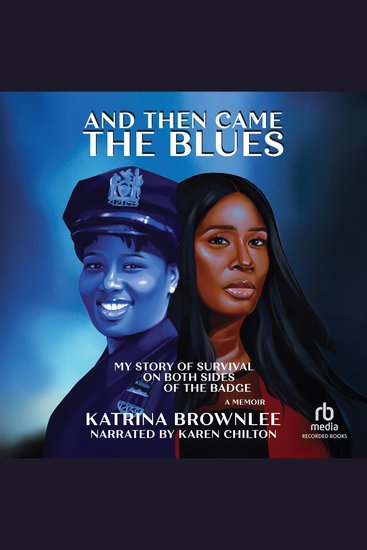
    After being shot ten times by her fiancé and left for dead, Katrina Brownlee miraculously survived and became a decorated NYPD detective, a mentor, and founder of a nonprofit support group for at-risk women. 
      
    ACCORDING TO THE NATIONAL COALITION AGAINST DOMESTIC VIOLENCE, in the United States, an average of twenty-four people per minute are physically abused by an intimate partner, and one in three women have experienced some form of domestic violence. One of those women was Katrina Brownlee, who as a twenty-two-year-old mother of two experienced hell at the hands of her then-fiancé. He was a law enforcement officer—a group two to four times more likely than the general population to be abusive, and who are known for protecting their own. During his dangerous outbursts, Brownlee would call the police for help, only to see the cops turn their backs on her when her abuser flashed his badge. On a cold January morning in 1993, her fiancé shot her ten times and left her for dead. 
      
    Brownlee could have been just one more of the eleven females killed per minute worldwide by a loved one. Instead, miraculously, she survived. Through hard work, faith, and perseverance, she recovered from her injuries and found a path through her trauma. She decided to become a police officer to help others in her situation, to be the “good cop” who had not been there for her when she had needed saving. 
      
    In 2021, she retired from a highly decorated twenty-year career with the NYPD. As the founder of a support group for at-risk young women, Young Ladies of Our Future, Brownlee decided that the time had come to tell her story—the whole story—of self-empowerment, of healing generational trauma, and of turning pain into hope for herself and her community. 
      
    “And Then Came the Blues is a gripping memoir of resilience, justice, and redemption. I was incredibly moved by Katrina Brownlee’s unflinching honesty and inspired by her tenacity. She has written a riveting tale that reminds us that triumph after trauma is possible.”—Bernice L. McFadden, author of Sugar
    Voir livre
  • The Nose - Gogol uses the absurd in expert form to show us the problems with society status class and their places in the world around us - cover

    The Nose - Gogol uses the absurd...

    Nikolai Gogol

    • 0
    • 0
    • 0
    Nikolai Vasilievich Gogol was born on 1st April 1809 to a father, descended from Ukrainian Cossacks and a mother with a military background in the Ukrainian town of Sorochyntsi, then part of the Russian Empire and rich in Cossack traditions and folklore.   
     
    His father wrote poetry and plays which the young Gogol helped stage at his uncle’s home theatre.  This helped ignite in him a love of literature and blossomed when he attended, what is now, the Nizhyn Gogol State University at the age of 12.  Here he participated in school theatre productions and refined his mastery of his native Ukrainian and also the Russian of his Imperial masters. 
     
    In 1828 he went to St Petersburg and unsuccessfully tried to begin a career as an actor after finding that with no money and no connections the civil service was barred to him. 
     
    Embezzling money from his mother he embarked on a trip to Germany. When the money ran out, he returned to St Petersburg but the experiences were used in a series of stories he contributed to periodicals.  These tales were steeped in his childhood memories of the Ukrainian landscape and peasantry enlivened with the supernatural of its folklore woven with realistic events of the day.  He wrote in Russian in a whimsical, colloquial style with a smattering of Ukrainian words and phrases that provided an authenticity.  Eight stories were published as ‘Evenings on a Farm near Dikanka’.  Seemingly all at once fame and fortune arrived. Gogol was hailed by his contemporaries, including Pushkin, as a pre-eminent writer of Russian literature.   
     
    His success continued with his brilliant plays ‘The Inspector General’ and the comedy ‘The Marriage for the Theatre’, both being highly acclaimed.   
     
    In 1834 he became Professor of Medieval History at the University of St. Petersburg but with little academic or teacher training, failed to adequately fulfil many of his duties and soon resigned this post.  With no obligations and using his earnings from his writing, which now included the impressionistic and immortal ‘Dead Souls’, Gogol travelled around Europe, spending the most time in Rome where he studied art, read Italian literature and developed a passion for opera.  
     
    In the 1840s Gogol became preoccupied with a need to purify his soul and embarked on a pilgrimage to Jerusalem. In tandem he fell under the influence of a strict and austere spiritual ascetic who persuaded him to observe strict fasts that, allied with his depression and deteriorating health, contributed to his death on 21st April 1852 at the age of only 43. 
     
    In the Nose Gogol reaches out with the absurd premise that a Nose can have, and enjoy, a life of its own regardless of the complications and consequences to its former owner.
    Voir livre
  • ¡Ándale Prieta! - A Love Letter to My Family - cover

    ¡Ándale Prieta! - A Love Letter...

    Yasmín Ramírez

    • 0
    • 0
    • 0
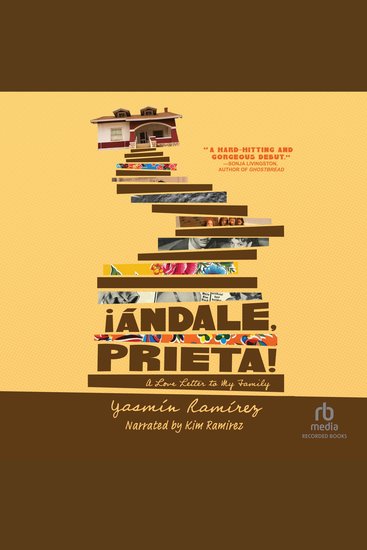
    When I tell people who don’t speak Spanish what “prieta” means—“dark” or “the dark one”—their eyes pop open and a small gasp escapes. … How do I tell them that now, even after the cruelty of children, “Prieta” means love? That each time “Prieta” fell from my grandmother’s lips, I learned to love my dark skin. My Ita called me Prieta. When she died, she took the name with her. 
     
    Yasmín Ramírez spent her twenties feeling lost—working an intensely taxing retail job and turning to bars for comfort. When her beloved grandmother dies, she comes home to El Paso, Texas, where people know how to spell her accented name. As she pulls her life together, she finds comfort in celebrating her Ita, a resilient matriarch who was far from the stereotypical domestic abuelita. Yasmín remembers Ita wistfully singing old Mexican rancheras, her mastectomy scar, the hours they spent watching boxing matches at a dive bar, and of course, Ita’s lesson on how to ball a fist for a good punch. Interviewing her mom and older  
    sister, Yasmín learns even more about why her Ita was so tough—the abusive men, the lost pregnancies, and the toil of almost literally back-breaking jobs. In time, the writer finds her grandmother calling her forth to live with the same bravery and tenacity: “¡Ándale, Prieta!”
    Voir livre
  • Dickon the Devil - From their pens to your ears genius in every story - cover

    Dickon the Devil - From their...

    Sheridan Le Fanu

    • 0
    • 0
    • 0
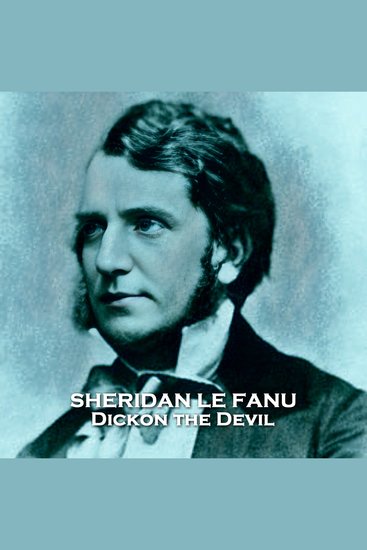
    Joseph Sheridan Le Fanu was born on 28th August 1814 in Dublin into a literary family with Huguenot, Irish and English roots.   
    For a time he and his siblings were tutored but Le Fanu would often immerse himself in the books of his father’s library. 
    In 1833 Le Fanu began his Law studies at Trinity College, Dublin and graduated in 1839. Although called to the bar he instead began a career in journalism.   
    He was also writing. His first fiction story ‘The Ghost and the Bonesetter’ was published in 1838.  In 1843 came the novella ‘Spalatro: From the Notes of Fra Giacomo’, a hero with a particular necrophiliac passion for an undead blood-drinking beauty, a forerunner to his later female vampire ‘Carmilla’.  
    In 1844 Le Fanu married Susanna Bennett with whom he had 4 children. The following year his first novel ‘The C'ock and Anchor’ was published. Works now flowed from his pen and with a rapid increase in family finances they moved, in 1851, to Merrion Square, Dublin, where he remained until his death.  
    In 1858 Susanna died and Le Fanu became reclusive. It was during this period that he produced some of his best work.  Working only by candlelight he wrote through the night, burnishing his reputation as a major figure of 19th Century supernaturalism with many classics including; ‘Green Tea’, ‘Mr Justice Harbottle’, and ‘In a Glass Darkly’.  
    Joseph Thomas Sheridan Le Fanu died in Merrion Square in his native Dublin on February 7th, 1873, at the age of 58.
    Voir livre