Begleiten Sie uns auf eine literarische Weltreise!
Buch zum Bücherregal hinzufügen
Grey
Einen neuen Kommentar schreiben Default profile 50px
Grey
Jetzt das ganze Buch im Abo oder die ersten Seiten gratis lesen!
All characters reduced
The American Operations in WW2: East Indies - cover

The American Operations in WW2: East Indies

U.S. Army Center of Military History, Charles R. Anderson

Verlag: Madison & Adams Press

  • 0
  • 0
  • 0

Beschreibung

World War II was the largest and most violent armed conflict in the history of mankind. Highly relevant today, World War II has much to teach us, not only about the profession of arms, but also about military preparedness, global strategy, and combined operations in the coalition war against fascism. This book follows military operations of the US Army in the East Indies from 1 January to 22 July 1942. 
On 7 December 1941 Japan turned its war on the Asian mainland south and eastward into the Pacific. Attacks within hours on the Malay Peninsula, Hong Kong, Hawaii, Wake, Guam, and the Philippines not only shocked Allied governments, who believed Japanese envoys had been negotiating in good faith in Washington, but also caught them poorly prepared for war along the Asian rimlands. By the end of the day a sizable Japanese amphibious force had established itself on the Malay Peninsula; the backbone of the U.S. Pacific Fleet lay twisted and burning in the mud of Pearl Harbor; hundreds of Western aircraft sprawled crumpled on airfields and hillsides across the Central and South Pacific; and neither the British Eastern Fleet nor Royal Netherlands Navy units in the Pacific could steam safely through the Indian Ocean, around Malaya, or in the East Indies. It was imperative that the Western Powers somehow stop the Japanese southward advance, which now threatened to drive a wedge between the British in the Indian Ocean and the Americans in the Pacific, to seize the East Indies with its valuable natural resources, and to isolate Australia from both the United States and the British Commonwealth...
Verfügbar seit: 05.09.2023.
Drucklänge: 21 Seiten.


Weitere Bücher, die Sie mögen werden

  • The Hot Glue Gun Chronicles - Poems by Dr Ashley Crooks-Allen - cover

    The Hot Glue Gun Chronicles -...

    Dr. Ashley Crooks-Allen

    • 0
    • 0
    • 0
    The Hot Glue Gun Chronicles is a winner of the 2023 Philosophy Media Group Publishing Competiton and the debut manuscript from poet & scholar Ashley Crooks-Allen. This collection of poetry explores themes of identity, healing, and belonging through the lens of an Afro-Latinx Queer identifying poet and scholar. 
    “The Hot Glue Gun Chronicles is a flamingassemblage of penetrating verse and poetic musicality. Crooks-Allen’s timely offering, in the tradition of Black queer poets like June Jordan and Pat Parker before them, does not shy away from the straight-up truth. In their words, we might very well locate the keys to our own internal freedom.” 
    - Darnell Moore, author of No Ashes in The Fire: Coming of Age Black and Free in America 
    "What an honor it has been to cultivate this manuscript and elevate the voice of Dr. Ashley Crooks-Allen. I published this book because I believe in its mission- to put together the broken and to create beauty from unexpected pieces. Ashley invites us to revisit subjects we may have fooled ourselves into thinking we'd moved on from- gently saying 'Aht-aht! There's more work to do here.'" 
    - Kiera "Ashlee Haze" Nelson, Poet & CEO, Philosophy Media Group & Kiera Ashlee Talent Co
    Zum Buch
  • Emerson's Essays Volume 2 - cover

    Emerson's Essays Volume 2

    Ralph Waldo Emerson

    • 0
    • 0
    • 0
    "Emerson's Essays" by Ralph Waldo Emerson is a timeless collection of profound and thought-provoking essays that explore the core principles of transcendentalism and offer profound insights into the human experience. In this enriching anthology, Emerson presents a wide array of essays covering topics such as nature, self-reliance, society, and the pursuit of truth and wisdom. Emerson's writing is characterized by its poetic prose, profound reflections, and inspiring rhetoric. His essays offer readers a profound understanding of the human condition, encouraging introspection and self-exploration. Through his timeless wisdom, Emerson challenges readers to question conventional wisdom, explore their own truths, and lead lives of purpose and authenticity.
    Zum Buch
  • Japan's Surrender - The Path to Victory in the Pacific and the End of World War II - cover

    Japan's Surrender - The Path to...

    Sage Winters

    • 0
    • 0
    • 0
    The Pacific theater of World War II was a brutal and protracted conflict, defined by fierce battles, shifting strategies, and immense human cost. By 1945, the war had entered its final stages, with the Allied forces, led primarily by the United States, gradually gaining the upper hand over Imperial Japan. The end of the Pacific War seemed inevitable, yet the path to Japan's surrender was far from straightforward. The road to victory in the Pacific involved a combination of military ingenuity, strategic alliances, and significant geopolitical shifts. However, the culmination of this path was not solely the result of battlefield victories but also of profound shifts in the political, economic, and moral considerations of both the Japanese leadership and the Allied powers. 
      
    The turning point in the Pacific War came with key battles such as the Battle of Midway in 1942, which severely crippled Japan’s naval forces, and the Allied island-hopping strategy, which successfully isolated and neutralized key Japanese strongholds in the Pacific. Despite these significant losses, Japan’s leadership remained determined to continue the war, believing that they could negotiate a favorable peace settlement or, at worst, fight to a bloody conclusion. In 1945, as Japan’s ability to defend its empire steadily diminished, the Allied forces intensified their efforts, culminating in the invasion of Okinawa—an operation that proved to be one of the bloodiest of the war. 
      
    As the war raged on, the Japanese home islands were subjected to relentless bombing campaigns, both conventional and, later, nuclear. The United States, having developed the atomic bomb, found itself at a crossroads. The decision to deploy this new weapon was fueled by the desire to force Japan’s surrender without having to launch a full-scale invasion, which would likely result in catastrophic casualties for both sides.
    Zum Buch
  • The Cherubim and the Flaming Sword - cover

    The Cherubim and the Flaming Sword

    Pastor Philip

    • 0
    • 0
    • 0
    When God drove Adam and Eve out of the Garden of Eden,   He placed a Cherubim and a Flaming Sword on the east side of the Garden of Eden to guard the way to the Tree of Life. The significance of the cherubim and the flaming sword still exists today. The song, 'Don't You Know' sung by Chey at the end of the sermon, gives the listener an opportunity to reflect on the sermon.
    Zum Buch
  • Virginia's Civil Rights Hero Curtis W Harris Sr - cover

    Virginia's Civil Rights Hero...

    William Lazarus

    • 0
    • 0
    • 0
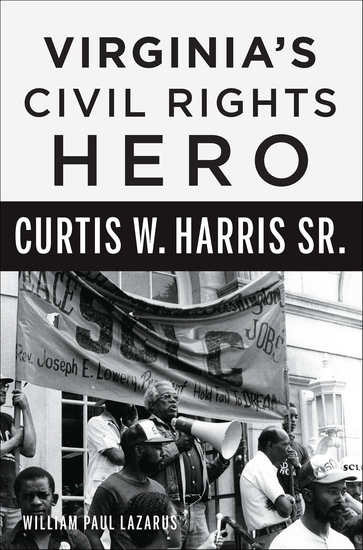
    In 1924, the Virginia State Legislature passed the Racial Integrity Act. The act banned interracial marriage down to "a single drop" of African blood. Just three months later, Curtis W. Harris was born in Dendron, Virginia. Harris was the sixth child of impoverished sharecroppers, living in a desolate outpost of the Commonwealth, but in time he would lead the fight against the Racial Integrity Act and many other racially restrictive laws. Despite being arrested multiple times and beaten, Rev. Harris would help reverse centuries of racial discrimination that began when slaves first arrived in Virginia in 1619. Author William Paul Lazarus tells the story of Harris' determination in the face of intense hostility, which took him to the forefront of America's Civil Rights Movement, arm-in-arm with the Rev. Martin Luther King Jr.
    Zum Buch
  • Who Gets to Write Fiction? - Opening Doors to Imaginative Writing for All Students - cover

    Who Gets to Write Fiction? -...

    Ariel Sacks

    • 0
    • 0
    • 0
    Writing and sharing fiction allows adolescents to glimpse other lives 


    The current curricular emphasis on analytical writing can make it feel risky to teach creative writing in ELA classrooms. But the opportunity to write fiction in school opens many doors for young people: doors the author argues are critical to the development of our students, our education system, and even our democracy. 


    This book will delight English teachers weary of focusing relentlessly on argument and information writing. Veteran teacher Ariel Sacks vividly describes the many academic, social–emotional, and community-building advantages of teaching imaginative writing in the classroom, not least of which is the impact it has on equity for marginalized students. Her book is a teacher-to-teacher text that folds in detailed, practical guidance about how to design lessons and meet standards, while presenting a powerful central argument: that the writing of fiction should be treated not as a luxury for some, but as a center of the English curriculum for all students.
    Zum Buch