Discover the Book That Defined an Entire Genre of Thought.
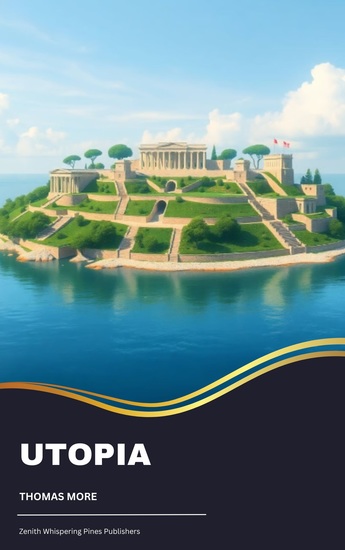
First published in 1516, Sir Thomas More's Utopia remains one of the most influential works of Western literature. Written as a playful yet biting social satire, the book introduces readers to a distant island nation where private property is abolished, religious tolerance is practiced, and every citizen works for the common good.
Through a fictional dialogue with the traveler Raphael Hythloday, More presents a radical alternative to the corruption and inequality of 16th-century Europe. While the title famously translates to "No Place," the questions More raises about justice, wealth distribution, and the role of the state continue to resonate in modern political debate.
This definitive edition offers the complete, unabridged text of this Renaissance masterpiece. A cornerstone of Humanist thought and political philosophy, Utopia is essential reading for anyone interested in the history of ideas or the eternal search for a perfect world.
Explore the foundation of social idealism. Buy "Utopia" today and challenge your perspective on society.
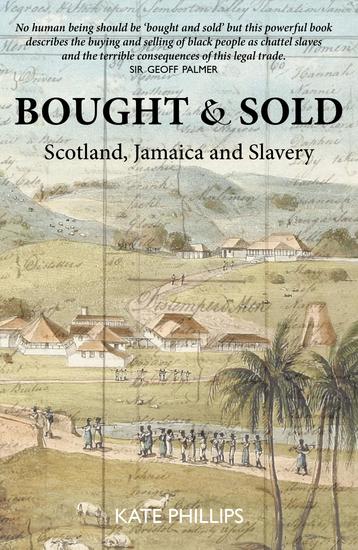
This book traces the story of how and why thousands of Scots made money from buying and selling humans… a story we need to own. We need to admit that many Scots were enthusiastic participants in slavery.
Union with England gave Scotland access to both trade and settlement in Jamaica, Britain's richest colony and its major slave trading hub. Tens of thousands from Scotland lived and worked there. The abolition campaign and slave revolts threatened Scottish plantation owners, merchants, traders, bankers and insurance brokers who made their fortunes from slave-farmed sugar in Jamaica and fought hard to preserve the system of slavery. Archives and parliamentary papers in both countries reveal these transatlantic Scots in their own words and allow us to access the lives of their captives.
Scotland and Jamaica were closely entwined for over one hundred years. Bought & Sold traces this shared story from its early beginnings in the 1700s to the abolition of slavery in the British Empire and reflects on the meaning of those years for both nations today.
About empty thrones, a lot can be said. Throughout history, both ancient and near modern, a lack of an heir and the sudden death of a beloved monarch always meant trouble. When the position of a king is up for grabs, a lot of eager hands come forward. Pretenders and would-be heirs, cousins and nephews, bastard sons and daughters - they all came forward staking their claim to the throne. In the history of Medieval England, such episodes were many. Usurpers who oust kings and heirs, pretenders with long-forgotten dynastic claims: many once fought for the lucrative throne of the English Kingdom. However, by far the most important of all these historic episodes lasted from 1455 to 1487 - 32 long years of struggle and bloodshed in England. And that episode was known as the Wars of the Roses. These wars ravaged England, pitting two competing cadet families of the royal House of Plantagenet - York, and Lancaster. Their supporters, the Lancastrians and Yorkists, descended into bitter warfare over the throne. For their symbols they took red and white roses, respectively - thus giving the name to the conflict.
A comprehensive and detailed account of medieval life and culture in France, with reference to other parts of Europe, including chapters on private life, food, hunting, games and pastimes, costume, privileges and rights, justice, commerce, finance, and punishments. The online text of the book has over 400 contemporary illustrations. Warning: Sections 27 and 28, Punishments, may be disturbing to those of a sensitive disposition. (Summary by Ruth Golding)
Do boycotts work? Should arms sales be stopped? What about supplying weapons to the good guys? In How Wars End an international expert explains how we can act to bring about peace in an age of escalating war.In 2003 Jan van Aken almost helped stop a war. But as he was preparing to go to Baghdad to search for biological weapons, he got a message: the US was determined to avenge 9/11 and wouldn't wait for UN inspections to take place. The invasion went ahead, and only years later, the world discovered that Iraq had had no biological weapons at that time.From this experience and the many others he has had as a weapons inspector, conflict analyst and activist, in How Wars End van Aken shows how conflict resolution really works. From disinformation and dodgy dossiers to chemical weapons and murderous drones, he identifies why wars start and spiral. And he looks at the alternatives, including civil initiatives, diplomacy, sanctions, and international interventions.Interweaving the latest findings from peace research with stories and examples from Northern Ireland, Serbia, South Sudan, Afghanistan, Syria, Ukraine, Israel-Palestine and more, How Wars End lays out evidence-based strategies for moving from violent conflict to ceasefire, and from ceasefire to lasting peace.Translated by Jo Heinrich.
Following his book Captured on corporate capture of regulatory and government agencies, and his years of experience as a prosecutor, Senator Sheldon Whitehouse here turns his attention to the right-wing scheme to capture the courts, and how it influenced the Trump administration's appointment of over 230 "business-friendly" judges, including the last three justices of the United States Supreme Court.
Whitehouse traces the motive to control the court system back to Lewis Powell's notorious memo, which gave a road map for corporate influence to target the judiciary, and chronicles a hidden-money campaign using an armada of front groups and helped by the infamous Citizens United Supreme Court decision. The scheme utilized the Federalist Society as an appointments turnstile, spent secret millions to support the nominees, orchestrated an "amicus brief" signaling apparatus, and propped up front-group litigants to "fast-lane" strategic test cases to the friendly justices.
Whitehouse finds the same small handful of right-wing billionaires and corporations running operations that he likens to "covert ops," ultimately enticing the Senate to break rules, norms, and precedents to confirm wildly inappropriate nominees who would advance the anti-government agenda of a small number of corporate oligarchs.
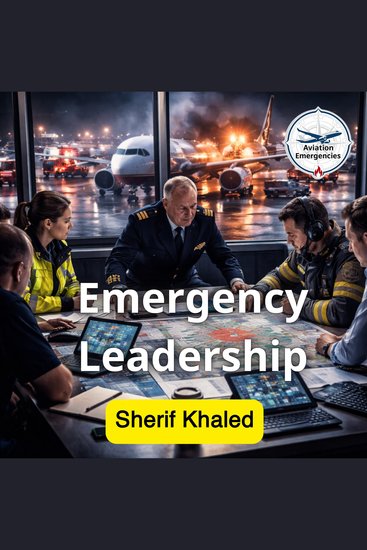
Emergency leadership is not merely about issuing orders or managing field teams; it is an integrated ability to think under pressure and make decisive decisions in a rapidly changing and uncertain environment. In emergency situations, the leader becomes the central force that transforms chaos into order and danger into a controllable path. This form of leadership relies on situational awareness, time management, precise task distribution, and maintaining team cohesion despite psychological and operational pressures. A true emergency leader is someone who can read what is not immediately visible, act before risks escalate, and establish a working rhythm that aligns all team members toward a single objective: protecting lives and achieving full control over the incident.
Ihr Account wird momentan auf einem anderen Gerät benutzt.
Es ist bereits eine Sitzung auf einem anderen Gerät geöffnet.
Abmelden
Erneut verbinden
Ihr Account wird momentan auf einem anderen Gerät benutzt.
Um darauf zugreifen zu können, müssen die Berechtigungen und obligatorischen Richtlinien (markiert mit *) überprüft und akzeptiert werden.
Wenn Sie Hilfe oder weitere Informationen benötigen, schreiben Sie an support@24symbols.com
Akzeptieren
Ihr Account wird momentan auf einem anderen Gerät benutzt.
OK
Bestätigungs-E-Mail noch einmal schicken
Ihr Account wird momentan auf einem anderen Gerät benutzt.
Wir haben versucht, Ihr Abo abzubuchen, aber es ist uns nicht gelungen. Das teilt uns Ihre Bank/Karte mit:
Wenn Sie weiterlesen möchten, müssen Sie sich möglicherweise an Ihre Bank wenden oder Ihre Zahlungsinformationen hier ändern:
Ich möchte meine Karte aktualisieren!
Haben Sie Fragen? Schreiben Sie uns an support@24symbols.com und wir werden Ihnen weiterhelfen.
Cookies helfen uns bei der Bereitstellung unserer Dienste. Durch die Nutzung unserer Dienste erklären Sie sich damit einverstanden, dass wir Cookies setzen.Mehr erfahren