Join us on a literary world trip!
Add this book to bookshelf
Grey
Write a new comment Default profile 50px
Grey
Subscribe to read the full book or read the first pages for free!
All characters reduced
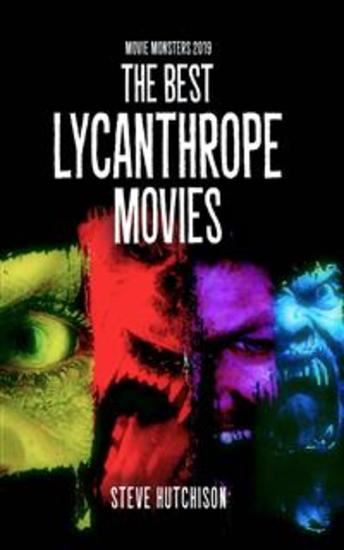
The Best Lycanthrope Movies (2019) - cover

The Best Lycanthrope Movies (2019)

Steve Hutchison

Publisher: Tales of Terror

  • 0
  • 0
  • 0

Summary

Steve Hutchison reviews 50 of the best lycanthrope movies. Each film is analyzed and discussed with a synopsis and a rating. The movies are ranked from best to worst. How many have you seen?
Available since: 04/29/2023.

Other books that might interest you

  • Mysteries in the Music: Case Closed - cover

    Mysteries in the Music: Case Closed

    Jim Berkenstadt

    • 0
    • 0
    • 0
    Mysteries in the Music: Case Closed examines some of the secrets, myths, legends, hoaxes, conspiracies, and wildly inexplicable events that are such an intriguing part of rock and roll history. 
    Travel Back to the 1950s to uncover "Who Really Discovered Elvis Presley?" Revisit the 1960s when a folk troubadour tried forming a supergroup with The Beatles and The Rolling Stones. Transport back to Jamaica 1976 to discover whether the CIA tried to assassinate reggae superstar Bob Marley. Discover whether The Beach Boys actually stole a song from cult leader Charles Manson. Uncover the secrets behind Nirvana's Nevermind album. 
    Award-winning, Bestseller Jim Berkenstadt, aka the Rock And Roll Detective®, has spent decades researching the players behind these famous mysteries hidden within the music itself. No one has ever asked eyewitnesses the tough questions or dug through the primary source materials and documentary evidence left behind... until now. Unsolved for decades, the stories of pop music lore have been unearthed - and the truth is finally revealed. Berkenstadt has served as an historical consultant to the late George Harrison, Martin Scorsese, The Beatles (Apple Corps Ltd), Traveling Wilburys, REELZ TV, and the estate of Roy Orbison. 
    Praise for Mysteries in the Music: Case Closed 
    "Jim Berkenstadt, the Rock And Roll Detective®, strikes again! Rock and Roll was built on its own crazy mythology, but Jim knows the true stories are likely to be even wilder than the myths. Mysteries surrounding Bob Marley, Elvis, The Beatles, the Stones, the Beach Boys, Nirvana, Traveling Wilburys, and even the FBI are finally revealed. I read this book with great pleasure and fascination and I have no doubt that you will too."  
    -- Chris Frantz, Talking Heads, Tom Tom Club and author of Remain in Love"
    Show book
  • A History of the Undead - Mummies Vampires and Zombies - cover

    A History of the Undead -...

    Charlotte Booth

    • 0
    • 1
    • 0
    A history of Western culture’s fascination with undead creatures in film and television. 
     
    Are you a fan of the undead? Watch lots of mummy, zombie and vampire movies and TV shows? Have you ever wondered if they could be “real?” 
     
    This book, A History of the Undead, unravels the truth behind these popular reanimated corpses. 
     
    Starting with the common representations in Western media through the decades, we go back in time to find the origins of the myths. Using a combination of folklore, religion and archaeological studies we find out the reality behind the walking dead. You may be surprised at what you find . . .
    Show book
  • The Art and Science of Changing Your Mind - cover

    The Art and Science of Changing...

    Dash Shearer

    • 0
    • 0
    • 0
    The Art of Changing Your Mind is a witty and insightful exploration of the power—and occasional absurdity—of shifting your opinions. From mastering the backpedal to using your ever-changing views for personal gain, this book offers a humorous guide to navigating the fine line between being open-minded and simply inconsistent. With practical tips on how to flip-flop with confidence, maintain political advantages, and stay flexible in a world of constant change, it’s a playful yet thought-provoking look at the skill of evolving your beliefs without losing face (or followers). Just don’t be surprised if your mind changes while reading it!
    Show book
  • Summary: Greenlights - by Matthew McConaughey: Key Takeaways Summary & Analysis - cover

    Summary: Greenlights - by...

    Brooks Bryant

    • 0
    • 0
    • 0
    Disclaimer: This is not the official book, but a summary & it does not accompany the official book. 
    "Delve into the fascinating life of Matthew McConaughey with our summary guide to 'Greenlights.' Uncover the layers behind the actor's intriguing philosophy of life, condensed into digestible takeaways and compelling stories. 
    In this concise overview of 'Greenlights,' we encapsulate McConaughey's life journey, from his modest Texan upbringing to his skyrocketing fame in Hollywood, mapping out the 'greenlights' that guided his path. Discover the unconventional wisdom that has propelled his successful career and personal growth, reflected in a series of anecdotes, poems, and philosophical musings. 
    This summary guide to 'Greenlights' distills McConaughey's key insights about resilience, introspection, and personal transformation, offering readers the chance to embark on their own quest for life's 'greenlights.'
    Show book
  • American Legends: The Life of Roy Rogers - cover

    American Legends: The Life of...

    Editors Charles River

    • 0
    • 0
    • 0
    In the early 20th century, Westerns were one of the most popular genres in Hollywood, and one of the young stars at the forefront was Roy Rogers, who had come from an Ohio farm to transform himself into a cowboy. Regardless of his background, Rogers certainly looked the part of the quintessential cowboy, along with his wife Dale Evans and his horse Trigger. His versatile singing and acting abilities made him successful both on radio and on the screen. 
    Rogers came of age at a time when the “singing cowboy” was at the apex of his popularity, and that was favorable because he actually got his start in show business as a singer. In the early ‘30s, he bounced around several groups as a country music singer before earning national attention as a member of the Sons of the Pioneers, who were signed to Decca and had a couple of hits. As a result, when he first appeared in movies in 1935, it was usually in bit roles that required singing, but when Gene Autry threatened to quit acting in 1938, Rogers was viewed as a suitable replacement for lead roles. As it turned out, he became the premiere “singing cowboy” in Autry’s stead, and from 1939-1954, he was one of the Top 10 Western stars in Hollywood, and a Top 10 movie star overall during some of those years. 
    As Rogers evolved into the “King of the Cowboys”, he became a pop culture icon, and he was shrewd enough to capitalize on his image. All sorts of Roy Rogers merchandise hit stores, from action figures to comic strips, and Rogers even banked on the popularity of his horse Trigger by featuring him enough to make the horse a household name as well. Even today, people can find the name Roy Rogers all over the place, if only because he eventually had his name lent to a popular fast food chain in later years.
    Show book
  • Hitchcock's Stars - Alfred Hitchcock and the Hollywood Studio System - cover

    Hitchcock's Stars - Alfred...

    Lesley L Coffin

    • 0
    • 0
    • 0
    Although he was a visual stylist who once referred to actors as cattle, Alfred Hitchcock also had a remarkable talent for innovative and creative casting choices. The director launched the careers of several actors and completely changed the trajectory of others, many of whom created some of the most iconic screen performances in history. However, Hitchcock’s ability to fit his leading men and women into just the right parts has been a largely overlooked aspect of his filmmaking skills.  In Hitchcock’s Stars: Alfred Hitchcock and the Hollywood Studio System, Lesley L. Coffin looks at how the director made the most of the actors who were at his disposal for several decades. From his first American production in 1940 to his final feature in 1976, Hitchcock’s films were examples of creative casting that strayed far from the norm during the structured Hollywood star system. Rather than examining the cinematic aspects of his work, this book explores the collaboration the director engaged in with some of the most
    Show book