Rejoignez-nous pour un voyage dans le monde des livres!
Ajouter ce livre à l'électronique
Grey
Ecrivez un nouveau commentaire Default profile 50px
Grey
Abonnez-vous pour lire le livre complet ou lisez les premières pages gratuitement!
All characters reduced
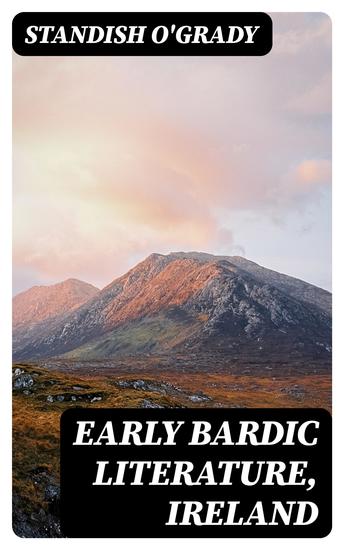
Early Bardic Literature Ireland - cover

Early Bardic Literature Ireland

Standish O'Grady

Maison d'édition: DigiCat

  • 0
  • 0
  • 0

Synopsis

In "Early Bardic Literature, Ireland," Standish O'Grady offers a profound exploration of the origins and evolution of Ireland's bardic tradition, presenting a compendium of poetic works that reflect the linguistic and cultural richness of early Irish society. O'Grady employs a lyrical yet analytical literary style, intertwining meticulous philological insights with fervent enthusiasm for the subject matter. He contextualizes the works within the historical landscape of Ireland, thereby illuminating the significance of this literary canon amidst the sociopolitical changes of the time, including the tensions between Gaelic culture and emerging English influence. Standish O'Grady, a titan of Irish literature and a scholar dedicated to preserving the heritage of his homeland, devoted much of his life to the study and revitalization of Gaelic culture. His own experiences navigating a complex sociopolitical environment fueled his passion for unveiling the storied past of Irish literature. O'Grady's literary contributions extend beyond this work, as he sought to inspire a Gaelic renaissance during a time when the traditional arts were at risk of being overshadowed by colonial pressures. I wholeheartedly recommend "Early Bardic Literature, Ireland" to scholars, students, and lovers of Irish literature alike. This book serves not only as an essential reference for understanding the bardic tradition but also as a heartfelt testament to the resilience of Irish culture. O'Grady's eloquent prose and insightful commentary make this work a valuable addition to the library of anyone interested in the rich tapestry of Ireland's literary heritage.
Disponible depuis: 15/08/2022.
Longueur d'impression: 53 pages.
D'autres livres qui pourraient vous intéresser

  • National Gallery - cover

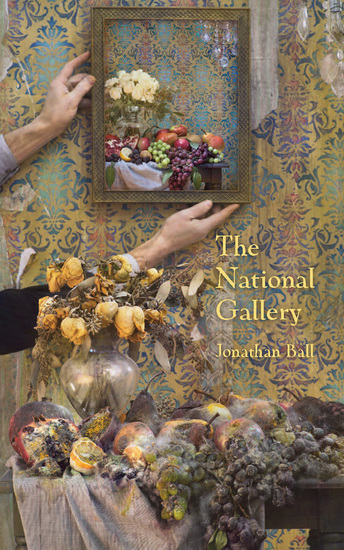
    National Gallery

    Jonathan Ball

    • 1
    • 2
    • 0
    A poetic collage of art in the modern world: from Rilkean elegies for an iPhone to a meditation on Melville's classic
    Jonathan Ball's fourth poetry book, the first in seven years, swirls chaos and confession together. At the book's heart is a question: Why create art? A series of poetic sequences torment themselves over this question, offering few answers and taking fewer prisoners. Loose sonnets that consider the artistic creations of Leatherface, monster-killer from The Texas Chain Saw Massacre, sit alongside Rilkean elegies for an iPhone. Surreal meditations on the collage work of Guy Maddin are followed by all of the lines from Melville's Moby-Dick that mention "salt." Politicians and painters jostle while absurdist humour crashes into stark admissions of vulnerability in the wake of having children. A startling diversity of styles and subjects feed into the maelstrom of The National Gallery, and its dark currents will draw you in to drown.
    Voir livre
  • Franklyn: A Path of Twisting Reality - cover

    Franklyn: A Path of Twisting...

    Richard Cliff

    • 0
    • 0
    • 0
    Franklyn was born into a gritty north of England town. His expected path through life would have him live out his years in the manner of that town's baseline existence. But it wasn't to be.Perhaps he was pre-selected to break rank so that bigger dreams could be fulfilled. Whatever the prime force may have been, he was to know a different life.Perhaps, too, the corridors of our own reality are flimsier than we believe! On the other side of the wall may lie another path.  As Franklyn himself discovers, a perceived reality can be as real as reality itself.
    Voir livre
  • The P Word - The - cover

    The P Word - The

    Waleed Akhtar

    • 0
    • 0
    • 0
    'I'm not in your Britain. I'm in another Britain.'
    Zafar flees homophobic persecution in Pakistan to seek asylum in the UK. Londoner Bilal (or Billy as he prefers to be known) is ground down by years of Grindr and the complexity of being a brown gay man.
    In Soho, at 2 a.m., parallel worlds collide – and Zafar and Billy's lives are about to change forever.
    The P Word is Waleed Akhtar's sharp-witted and devastating play charting the parallel lives of two gay Pakistani men as they negotiate everything from casual hook-ups to the UK's hostile environment.
    A story of who wins in the luck of life's draw, it was premiered at the Bush Theatre, London, in 2022, directed by Anthony Simpson-Pike. It went on to win Outstanding Achievement in Affiliate Theatre at the 2023 Olivier Awards.
    Waleed Akhtar was named Most Promising New Playwright at the 2023 OffWestEnd Awards, for his two plays The P Word and Kabul Goes Pop: Music Television Afghanistan.
    Voir livre
  • The Poetry of Robert Herrick - 17th Century lyrical poet that was also a cleric - cover

    The Poetry of Robert Herrick -...

    Robert Herrick

    • 0
    • 0
    • 0
    The Clergyman and poet, Robert Herrick was born in Cheapside, in London in 1591. An exact date is not known though he was baptized on August 24th, the seventh child of Nicholas Herrick, a wealthy goldsmith.  
    Some controversy surrounds several chapters in his early years.  The first are allusions that his father, in November 1592, two days after making a will, killed himself by jumping from the fourth-floor window of his house. However, the Queen's Almoner did not confiscate the Herrick estate for the crown as was the usual procedure with suicides, so an alternate narrative emerged that he fell accidentally which seems to have more credence. 
    There is no record of Herrick attending school. Some claim a poem alludes to Westminster School, others merely that he meant Westminster, the area. Another school of thought claims he was educated at Merchant Taylor’s School.  What is known is that in 1607 he was apprenticed to his uncle Sir William Herrick as a goldsmith.   
    Herrick certainly seems to have been a keen and avid poet. The earliest work known to be written by him dates from 1610; 'A Country Life', and deals with the move from London to farm life in Leicestershire.  
    After six years as an apprentice, when Herrick was 22 he matriculated at St John’s College, Cambridge before moving to Trinity College and graduating with his Bachelor of Arts in 1617, Master of Arts in 1620, and in 1623 he was ordained priest.  
    By 1625 he was well known as a poet, mixing in literary circles in London such as that around Ben Jonson. An avowed admirer of Jonson he was also one of a group whom became known as ‘The Sons of Ben’ writing both in his style and about him. 
    In 1629 he was presented by Charles I to the parishioners of Dean Prior, a remote parish of Devonshire. The best of his work was written in the peace and seclusion of country life; 'To Blossoms' and 'To Daffodils' are classical depictions of a devoted appreciation of nature.  
    However, after he refused to subscribe to The Solemn League and Covenant, he was ejected from Devonshire in 1647 and moved to London where he published his religious poems Noble Numbers (1647), and Hesperides (1648). 
    Herrick was distinguished as a lyric poet, and some of his love songs, for example, 'To Anthea' and 'Gather Ye Rose-buds' are considered exceptional.  
    By 1660 he was reinstated at Dean Prior where he lived for the remainder of his life. He wrote no more poems after 1648 but over his life it is thought he wrote in the region of 2,500 poems in total, only a small portion of which were ever published. 
    He died in October 1674, at the age of 83 in circumstances unknown.  He was buried on October 15th, 1674 in an unmarked grave in the churchyard at Dean Prior. 
     This volume comes to you from Portable Poetry, a specialized imprint from Deadtree Publishing.  Our range is large and growing and covers single poets, themes, and many compilations.
    Voir livre
  • Makeover - Poems - cover

    Makeover - Poems

    Laurie Bolger

    • 0
    • 0
    • 0
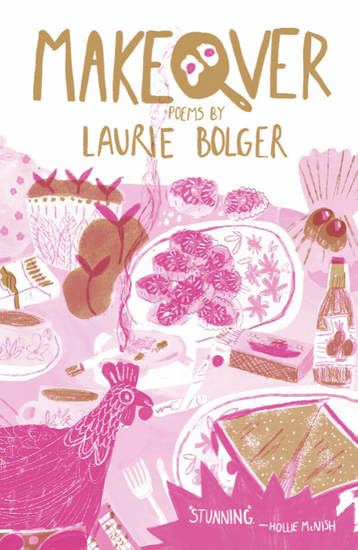
    Makeover is a book dripping with nostalgia, cigarette ash and sour cream dip. Lit by too-close TV screens and too-bright calorie counters, Bolger's poems explore growing up, differing bodies and societal expectations.
    Writing in praise of mums, nans and sisterhood, this is a work bursting with strength, anger, love and, ultimately, hope. In a celebration of girls shaped by swimming baths and Working Men's Clubs, friendship and family, Makeover contends with what we inherit and what we ought to pass on.
    Voir livre
  • Mingle - cover

    Mingle

    Caleb Parkin

    • 0
    • 0
    • 0
    Caleb Parkin's dark and mischievous second poetry collection Mingle stirs up the toxicities between landscapes, ecosystems and bodies, in poems bubbling over with hyper-wealth and haunted by tarnished ideals. Through creatures, compounds and chemicals, the poems probe what makes up our world's matter, and how we use it for good or ill. From gold to hydrocarbons, radioactive gardening to viral memes, the resulting mixture is a potent poetic cocktail…
    Here, intimate connections and grand narratives are unsettled; we are implicated in prickly histories and weird futures and the natural world reminds us of its unruliness – as well as our own. Reflections warp in noxious ponds and voices distort and echo in uncanny landscapes. At times hyperreal and surreal, adventurous and technicolour, Mingle fizzes with the possibilities of queered language and altered states of poetic form.
    Voir livre