Join us on a literary world trip!
Add this book to bookshelf
Grey
Write a new comment Default profile 50px
Grey
Subscribe to read the full book or read the first pages for free!
All characters reduced
Twelve Years a Slave (Illustrated) - cover

Twelve Years a Slave (Illustrated)

Solomon Northup

Publisher: coolaij

  • 0
  • 0
  • 0

Summary

This illustrated edition of "Twelve Years a Slave" includes:Illustrations of objects and places mentioned in the novel. Twelve Years a Slave is an 1853 memoir and slave narrative by American Solomon Northup as told to and written by David Wilson. Northup, a black man who was born free in New York state, details himself being tricked to go to Washington, D.C., where he was kidnapped and sold into slavery in the Deep South.
Available since: 05/23/2022.
Print length: 215 pages.

Other books that might interest you

  • First Crusade The: The History of the Christian Church’s Initial Campaign in the Holy Land - cover

    First Crusade The: The History...

    Charles River Editors

    • 0
    • 0
    • 0
    Of the many campaigns during the Middle Ages, few are as remarkable or seemingly impossible to win at the start as the First Crusade (1095-99), and the true crowning achievement of that crusade, which resulted in two centuries of Western European Christian states in the Middle East and the permanent firing of the European imagination, was the conquest of Jerusalem on July 15, 1099 after three weeks of siege. That victorious siege came four years after the call for a crusade first went out, and had the Crusaders not taken Jerusalem, the First Crusade would not likely have been followed by any more and the campaign might have been no more than an historical footnote of what could have been.  
    	As it turned out, the siege of Jerusalem and the crusade as a whole says much about the first major clash of Western and Eastern military tactics after the fall of the Roman Empire, as well as the power of faith and even fanaticism to motivate people beyond ordinary human endurance. For better and worse, the siege and fall of Jerusalem to the Crusaders has become a fundamental piece in the current view of the West in that part of the world. Indeed, to this day, the First Crusade remains a polarizing event, even among modern historians. For some, the Crusaders were heroes and saints, and for others they were devils who disrupted the peaceful local sects of Muslims, Jews, and Christians, establishing an alien colony that heralded modern European imperialism. In fact, the First Crusade is a good example of why it is unwise to choose sides in history, because neither side was correct and the situation was highly complex. 
    Though it went largely unremarked in the Islamic world at the time, the First Crusade has since become a contentious symbol of European imperialism in the Middle East. Debate over whether the Crusades can truly be perceived as an early example of European colonialism continues in medieval historiography, though the evidence for this is thin.
    Show book
  • Palestine in a World on Fire - cover

    Palestine in a World on Fire

    Katherine Natanel, Ilan Pappe

    • 0
    • 0
    • 0
    As more and more people align themselves with the Palestinian people, Palestine in a World on Fire provides the global perspective and analysis needed to inform how we forge ahead on this path of newfound solidarity. Editors Ilan Pappé and Katherine Natanel have gathered a collection of interviews that are intimate, challenging, and rigorous—many of them conducted before October 7th but still startlingly prescient. The interviewees connect the struggle for Palestinian liberation to various liberatory movements around the world, simultaneously interrogating and recontextualizing their own positions given the ongoing aggression in Palestine. This incredible group includes Angela Y. Davis, Noam Chomsky, Judith Butler, Nadine El-Enany, Gabor Mate, Mustafa Barghouti, Yanis Varoufakis, Paul Gilroy, Elias Khoury, Gayatri Spivak, and Nadera Shalhoub-Kevorkian. 


    Palestine in a World on Fire highlights the centrality of Palestine in struggles shared across the world: capitalism, imperialism, misogyny, neocolonialism, racism, and more. Each conversation tackles urgent events and unfolding dynamics, and the scholar-activists interviewed here provide invaluable perspectives and insights, illuminating the richness and relevance of recent scholarship on Palestine.
    Show book
  • Within The Paradox - From Chaos to Clarity The Science of Transformation and Inner Mastery - cover

    Within The Paradox - From Chaos...

    Edy M Lopez

    • 0
    • 0
    • 0
    A journey through trauma, transformation, and the awakening of the human spirit. 
    What if the moment that breaks you is the very moment that awakens you? 
    After eight years in the U.S. Army, serving with the 82nd Airborne and the 1st Infantry Division across three deployments to Afghanistan and Iraq, Edy Lopez knew discipline, sacrifice, and courage. But nothing could prepare him for the battlefield within. When his life unraveled into months of panic attacks, darkness, and surrender, what emerged was not destruction, but awakening. 
    Within the Paradox is both mirror and map, a journey through trauma, consciousness, and the science of transformation. Blending psychology, physiology, and spirituality, Edy reveals that healing isn't about escaping pain, but understanding it, feeling it, and transmuting it into light. 
    For anyone standing at the threshold of change, this book is an invitation: to stop running, to turn inward, and to remember that you have never been broken, only waiting to awaken.
    Show book
  • The Dancing Mania - cover

    The Dancing Mania

    Justus Hecker

    • 0
    • 0
    • 0
    Numerous theories have been proposed for the causes of dancing mania, and it remains unclear whether it was a real illness or a social phenomenon.One of the most prominent theories is that victims suffered from ergot poisoning, which was known as St Anthony's Fire in the Middle Ages. During floods and damp periods, ergots were able to grow and affect rye and other crops. Ergotism can cause hallucinations, but cannot account for the other strange behaviour most commonly identified with dancing mania.Many sources discuss how dancing mania, and tarantism, may have simply been the result of stress and tension caused by natural disasters around the time, such as plagues and floods…people may have danced to relieve themselves of the stress and poverty of the day, and in doing so, attempted to become ecstatic and see visions. Sources agree that dancing mania was one of the earliest forms of mass hysteria, and describe it as a "psychic epidemic", with numerous explanations that might account for the behaviour of the dancers.Another popular theory is that the outbreaks were all staged, and the appearance of strange behaviour was down to its unfamiliarity. Religious cults may have been acting out well-organised dances, in accordance with ancient Greek and Roman rituals. Despite being banned at the time, these rituals could be performed under the guise of uncontrollable dancing mania. (Introduction from Wikipedia, slightly adapted.)
    Show book
  • Humanoid Robots & Drones: How the Age of Smart Machines Will Revolutionize Our World - cover

    Humanoid Robots & Drones: How...

    Dr. Nick Coman, I. A.I.

    • 0
    • 0
    • 0
    “Humanoid Robots & Drones: How the Age of Smart Machines Will Revolutionize Our World” is a 24‑lecture audio expedition for anyone who likes their wonder with measurements. We chase robots, humanoids, and drones through restaurants, farms, warehouses, hospitals, disaster scenes, stadiums, and city skies—treating each as a solvable puzzle. How does a drone hold position in wind? Why does a humanoid’s shape matter for doors and stairs? When does a non‑humanoid robot beat a humanoid? More often than you’d guess.
     
    You’ll learn the working grammar of the field: motors, cameras, lidar, batteries, and the ugly truth about friction, glare, and radio noise. You’ll see how a drone’s navigation, thermal views, and geofences turn into defect lists, not pretty video; how warehouse robots schedule intersections; why “stop distance” and “payload versus endurance” make or break a plan; and how soft‑skinned humanoids handle the “last ten centimeters” that buildings were designed for human hands. We translate regulation and risk into simple playbooks you can actually use—what the rules permit, what insurers demand, and what keeps neighbors calm.
     
    Expect case studies with receipts: drone light shows that replace fireworks with quiet pixels; roof and bridge inspections before breakfast; farm rigs that spray where plants actually are; hospital runners and delivery bots that save steps and shoulders; telepresence poles and companion robots that help real people on real Tuesdays. The tone is sharp, funny, and unromantic: we puncture hype, celebrate craft, and name failure modes out loud.
     
    By the end, you’ll be able to read a spec sheet like a mechanic, design a credible first deployment, and argue—politely but mercilessly—about the next 10, 25, and 50 years. If you want an operator’s guide to the robots, humanoids, and drones that already work (and the ones that almost do), buckle in. The robots are clocked in, the drones are charged, and class is wheels‑up.
    Show book
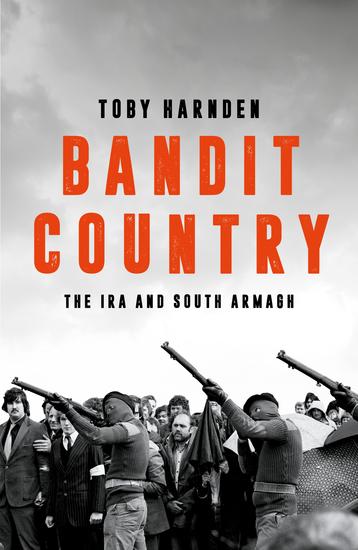
  • Bandit Country - The IRA and South Armagh - cover

    Bandit Country - The IRA and...

    Toby Harnden

    • 0
    • 0
    • 0
    A NEW EDITION OF ONE OF THE MOST CELEBRATED BOOKS ON THE TROUBLES
    Branded as 'Bandit Country' by the British government, South Armagh was the heartland of the Provisional IRA. It was the rebel Irish stronghold where Thomas 'Slab' Murphy reigned supreme, bomb attacks on England were planned and the SAS tracked the IRA snipers who hunted British soldiers.
    In this acclaimed and remarkable book – originally published in 1999 – Toby Harnden, winner of the Orwell Prize, brings to bear his skills as a fearless journalist, inspired investigator and gifted historian, threatened with imprisonment for protecting his sources in Northern Ireland but undeterred. He draws on secret documents and unsparing interviews with key protagonists on both sides to produce perhaps the most compelling and essential account of the IRA and the Troubles.
    Show book