Begleiten Sie uns auf eine literarische Weltreise!
Buch zum Bücherregal hinzufügen
Grey
Einen neuen Kommentar schreiben Default profile 50px
Grey
Jetzt das ganze Buch im Abo oder die ersten Seiten gratis lesen!
All characters reduced
Peak Shadows Shelter - cover

Peak Shadows Shelter

Sage Earthkeeper

Übersetzer A AI

Verlag: Publifye

  • 0
  • 0
  • 0

Beschreibung

Peak Shadows Shelter explores how caves and windbreaks are crucial for survival in challenging mountain ecosystems, blending earth sciences, geography, and ecological understanding. The book reveals sophisticated adaptations, such as understanding wind patterns to optimize windbreak placement and utilizing caves for shelter from extreme temperatures. Indigenous populations' historical practices, like constructing windbreaks from available materials, offer valuable lessons for sustainable interaction with these environments. The book uniquely combines the study of natural shelters (caves) and constructed shelters (windbreaks). It progresses from introducing mountain ecosystem dynamics, including topography and resource availability, to examining geological cave formations and windbreak design principles. Case studies and real-time data, like weather monitoring in cave systems, support the presented information. Ultimately, Peak Shadows Shelter advocates for responsible recreation and mountain conservation by synthesizing knowledge of cave usage and windbreak construction. It provides practical guidelines for sustainable shelter building and minimizing environmental impact, making it a valuable resource for outdoor enthusiasts, researchers, and students interested in understanding and preserving these fragile environments.
Verfügbar seit: 27.02.2025.
Drucklänge: 84 Seiten.

Weitere Bücher, die Sie mögen werden

  • Rethinking Hypothyroidism - Why Treatment Must Change and What Patients Can Do - cover

    Rethinking Hypothyroidism - Why...

    Antonio C. Bianco

    • 0
    • 0
    • 0
    In this primer for patients, their families, and their doctors, a leading physician and scientist explains why the standard treatment for hypothyroidism fails many—and offers an empowering call for change.


    Hypothyroidism, also commonly referred to as Hashimoto’s disease, affects millions in the United States alone. It occurs when the thyroid—the butterfly-shaped gland that sits in your neck right above the front of your shirt collar—malfunctions or after thyroid surgery, causing thyroid hormone levels in circulation to drop below normal. Thus, treatment is aimed at bringing these hormone levels back to normal. This is done with daily tablets of thyroxine or T4. Because hypothyroidism is so common, we likely know someone who is on this type of medication. While most patients respond well to this standard treatment, about ten to twenty percent (some two to three million individuals in the United States) are far from living a typical life. They exhibit “foggy brain”—low energy, confusion, and poor memory. Many doctors have shrugged off their complaints, believing these symptoms to be unrelated to the thyroid disease. In Rethinking Hypothyroidism, Dr. Antonio C. Bianco, a physician and a scientist who has studied hypothyroidism and thyroid hormones for decades, offers an accessible overview of the disease’s treatment and the role of big pharma in shaping it, making the case that the current approach is failing many patients. But more than this, Bianco calls for alternatives to improve lives, and he equips patients and their families with the tools to advocate for other treatments.
    Zum Buch
  • Astronomy 2e - (OpenStax Audio Textbook) - cover

    Astronomy 2e - (OpenStax Audio...

    Andrew Fraknoi, David Morrison,...

    • 0
    • 0
    • 0
    This audiobook is narrated by an AI Voice.   
    The OpenStax Astronomy 2e audio textbook is produced by Audileo, an official OpenStax Technology Partner. The audiobook recording has been created from the March 2025 web version of Astronomy 2e by OpenStax. 
    Some text with complex formulas has been omitted from this recording. 
    Designed to meet the scope and sequence of your course, Astronomy 2e is written in clear non-technical language, with the occasional touch of humor and a wide range of clarifying illustrations. It has many analogies drawn from everyday life to help non-science majors appreciate, on their own terms, what our modern exploration of the universe is revealing. The book can be used for either a one-semester or two-semester introductory course. 
    The audiobook of Astronomy 2e by OpenStax was produced by https://audileo.com. You can access the textbook as a PDF for free at openstax.org. Minor editorial changes were made to ensure a better listening experience. Textbook content produced by OpenStax is licensed under a Creative Commons Attribution 4.0 International License. Go to https://audileo.com/openstax-astronomy-2e-audiobook/ for the latest updates.
    Zum Buch
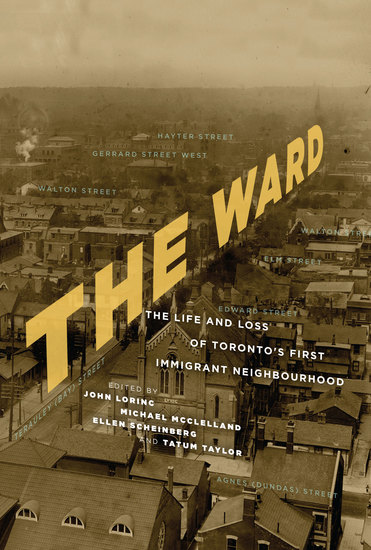
  • The Ward - The Life and Loss of Toronto’s First Immigrant Neighbourhood - cover

    The Ward - The Life and Loss of...

    John Lorinc, Michael McClelland,...

    • 0
    • 0
    • 0
    The story of the growth and destruction of Toronto's first 'priority neighbourhood.'
       
    From the 1840s until the Second World War, waves of newcomers who migrated to Toronto – Irish, Jewish, Italian, African American and Chinese, among others – landed in 'The Ward.' Crammed with rundown housing and immigrant-owned businesses, this area, bordered by College and Queen, University and Yonge streets, was home to bootleggers, Chinese bachelors, workers from the nearby Eaton';s garment factories and hard-working peddlers. But the City considered it a slum, and bulldozed the area in the late 1950s to make way for a new civic square.
       
    The Ward finally tells the diverse stories of this extraordinary and resilient neighbourhood through archival photos and contributions from a wide array of voices, including historians, politicians, architects, story-tellers, journalists and descendants of Ward residents. Their perspectives on playgrounds, tuberculosis, sex workers, newsies and even bathing bring The Ward to life and, in the process, raise important questions about how contemporary cities handle immigration, poverty and the geography of difference.
       
    ‘The Ward shines a light on one of Toronto's most historically significant and most forgotten neighbourhoods. Instead of a straight history, the book's editors opted to present the Ward through multiple short essays, each with its own unique point of view. The result is a fascinating and varied look at an area that once concurrently defined the city and acted as its biggest shame. As a result of the Ward's eventual razing, there are few artifacts left to teach newer generations about this important part of Toronto's history. This book helps correct that.’
       
    – 2016 Toronto Book Awards Jury Citation
       
    '[The Ward] should be of interest to Canadians anywhere, reminding us that we all came from some place else.'
       
    – Michael Enright, CBC Sunday Edition
       
    Contents & Contributors
       
    Introduction – John Lorinc
       
    Searching for the Old Ward – Shawn Micallef
       
    No Place Like Home – Howard Akler
       
    Beforethe Ward: Macauleytown – Stephen A. Otto
       
    My Grandmother the Bootlegger – Howard Moscoe
       
    Against All Odds: The Chinese Laundry – Arlene Chan
       
    VJ Day – Arlene Chan
       
    Merle Foster's Studio: 'A Spot Of Enchantment' – Terry Murray
       
    Missionary Work: The Fight for Jewish Souls – Ellen Scheinberg
       
    King of the Ward – Myer Siemiatycki
       
    Where the Rich Went for Vice – Michael Redhill
       
    A Fresh Start: Black Toronto in the 19th Century – Karolyn Smardz Frost
       
    Policing the Lord’s Day – Mariana Valverde
       
    'The Maniac Chinaman' – Edward Keenan
       
    Elsie's Story – Patte Roseban
       
    Lawren Harris's Ward Period – Jim Burant
       
    'Fool's Paradise': Hastings' Anti-Slum Crusade – John Lorinc
       
    Strange Brew: The Underground Economy of Blind Pigs – Ellen Scheinberg
       
    The Consulate, the Padroni and the Labourers – Andrea Addario
       
    Excerpt: The Italians in Toronto – Emily P. Weaver
       
    Arthur Goss: Documenting Hardship– Stephen Bulger
       
    Fresh Air: The Fight Against TB – Cathy Crowe
       
    The Stone Yard – Gaetan Heroux
       
    William James: Toronto's First Photojournalist – Vincenzo Pietropaolo
       
    The Avenue Not Taken – Michael McClelland
       
    Timothy Eaton’s Stern Fortifications – Michael Valpy
       
    Settling In: Central Neighbourhood House – Ratna Omidvar & Ranjit Bhaskar
       
    Toronto’s Girl with the Curls – Ellen Scheinberg
       
    Chinese Cafés: Survival and Danger – Ellen Scheinberg & Paul Yee
       
    Defiance and Divisions: The Great Eaton's Strike – Ruth A. Frager
       
    Elizabeth Street: What the City Directories Reveal – Denise Balkissoon
       
    Growing Up on Walton Street – Cynthia MacDougall
       
    Revitalizing George Street: The Ward's Lessons – Alina Chatterjee & Derek Ballantyne
       
    Taking Care of Business in the Ward &ndash Ellen Scheinberg
       
    'A Magnificent Dome': The Great University Avenue Synagogue – Jack Lipinsky
       
    Reading the Ward: The Inevitability of Loss – Kim Storey & James Brown
       
    Toronto’s First Little Italy – John Lorinc
       
    The Elizabeth Street Playground, Revisited – Bruce Kidd
       
    Divided Loyalties – Sandra Shaul
       
    Crowded by Any Measure – John Lorinc
       
    A Peddler and His Cart: TheWard’s Rag Trade – Deena Nathanson
       
    Toronto's Original Tenement: Wineberg Apartments – Richard Dennis
       
    Excerpt: Tom Thomson's Diary – Tom Thomson
       
    An Untimely Death – Brian Banks
       
    Paper Pushers – Ellen Scheinberg 
       
    The BMR's Wake-Up Call – Laurie Monsebraaten
       
    Excerpt: Report of the Medical Health Officer … – Charles J. Hastings
       
    Dr. Clarke's Clinic – Thelma Wheatley
       
    Slum-Free: The Suburban Ideal – Richard Harris
       
    The Glionna Clan and Toronto's First Little Italy – John E. Zucchi
       
    'The Hipp' – Michael Posner
       
    Before Yorkville– John Lorinc
       
    Sex Work and the Ward’s Bachelor Society – Elise Chenier
       
    Public Baths: Schvitzing on Centre Avenue – Ellen Scheinberg
       
    The Health Advocates: McKeown on Hastings – John Lorinc
       
    Remembering Toronto's First Chinatown – Kristyn Wong-Tam
       
    Tabula Rasa – Mark Kingwell
       
    Unrealized Renewal  – J. David Hulchanski
       
    A Short History of the 'Civic Square' Expropriation – John Lorinc
       
    Storytelling is Part of the Story – Tatum Taylor
       
    How We Think About What (Little) Survives – Patrick Cummins
       
    Institutional Memory – Scott James & Victor Russell
       
    Alternative Histories – MichaelMcClelland
    Zum Buch

  • Good Nature - Why Seeing Smelling Hearing and Touching Plants is Good for Our Health - cover

    Good Nature - Why Seeing...

    Kathy Willis

    • 0
    • 0
    • 0
    We all take for granted the idea that being in nature makes us feel better. But if you were a skeptic who wanted hard scientific evidence for this idea, where would you look? And how would that evidence be gathered? It wasn't until Dr. Kathy Willis was asked to contribute to an international project looking for the societal benefits we gain from plants that she stumbled across a study that radically changed the way she saw the natural world. In the study there was clear proof that patients recovering from gall bladder operations recovered more quickly if they were looking at trees. 


    In fact, in the last decade there has been an explosion of "proof" that incredible things happen to our bodies and our minds when our senses interact with the natural world. In Good Nature, Kathy Willis takes the listener on a journey with her to dig out all the experiments around the world that are looking for this evidence. What is remarkable about this book is how its revelations should be commonsense—schools should let children play in nature to improve their health and concentration; urban streets should have trees—and yet it reveals just how difficult it is to prove this to businesses and governments. As Kathy Willis says in her narrative, "Nature is far more than just something that is useful for our health. It is not a dispensable commodity. It is an inherent part of us."
    Zum Buch
  • The Plague - cover

    The Plague

    Anonym

    • 0
    • 0
    • 0
    The Plague explores the profound changes and enduring continuities that shaped European society in the wake of the Black Death and other crises of the 1300s. Through a series of thematic chapters, the book examines the resilience of communities, the evolution of social and economic structures, the persistence of faith, and the seeds of cultural and intellectual transformation. Far from being an age of unmitigated darkness, the fourteenth century emerges as a dynamic period of adaptation, creativity, and the quiet beginnings of the modern world.
    Zum Buch
  • Why Science Does Not Disprove God - cover

    Why Science Does Not Disprove God

    Anonym

    • 0
    • 0
    • 0
    The renowned science writer, mathematician, and bestselling author of Fermat's Last Theorem masterfully refutes the overreaching claims the "New Atheists," providing millions of educated believers with a clear, engaging explanation of what science really says, how there's still much space for the Divine in the universe, and why faith in both God and empirical science are not mutually exclusive. 
    A highly publicized coterie of scientists and thinkers, including Richard Dawkins, the late Christopher Hitchens, and Lawrence Krauss, have vehemently contended that breakthroughs in modern science have disproven the existence of God, asserting that we must accept that the creation of the universe came out of nothing, that religion is evil, that evolution fully explains the dazzling complexity of life, and more. In this much-needed book, science journalist Amir Aczel profoundly disagrees and conclusively demonstrates that science has not, as yet, provided any definitive proof refuting the existence of God. 
    Why Science Does Not Disprove God is his brilliant and incisive analyses of the theories and findings of such titans as Albert Einstein, Roger Penrose, Alan Guth, and Charles Darwin, all of whose major breakthroughs leave open the possibility— and even the strong likelihood—of a Creator. Bolstering his argument, Aczel lucidly discourses on arcane aspects of physics to reveal how quantum theory, the anthropic principle, the fine-tuned dance of protons and quarks, the existence of anti-matter and the theory of parallel universes, also fail to disprove God.
    Zum Buch