Rejoignez-nous pour un voyage dans le monde des livres!
Ajouter ce livre à l'électronique
Grey
Ecrivez un nouveau commentaire Default profile 50px
Grey
Abonnez-vous pour lire le livre complet ou lisez les premières pages gratuitement!
All characters reduced
Supply Lines - cover

Supply Lines

Sabine Lorca

Traducteur A AI

Maison d'édition: Publifye

  • 0
  • 0
  • 0

Synopsis

Supply Lines explores the crucial role of military logistics in shaping the outcomes of wars throughout history. It argues that logistical capabilities, often overlooked in favor of battlefield tactics, are frequently the determining factor in military success. From ancient armies dependent on foraging to modern forces with intricate supply chains, the book reveals how the flow of resources impacts military campaigns. For example, a brilliant tactical plan is useless if an army lacks timely access to food, arms, and supplies.

 
The book begins by establishing the core principles of military logistics, such as procurement, transportation, storage, and distribution. It progresses thematically by analyzing logistical challenges across different historical periods and geographical contexts, and presenting detailed case studies of military campaigns where supply lines played a decisive role. Military logistics are examined through various lenses, revealing how economic resources and political decisions influence military outcomes, providing a comprehensive analysis of warfare's underlying dynamics.
Disponible depuis: 29/03/2025.
Longueur d'impression: 63 pages.
D'autres livres qui pourraient vous intéresser

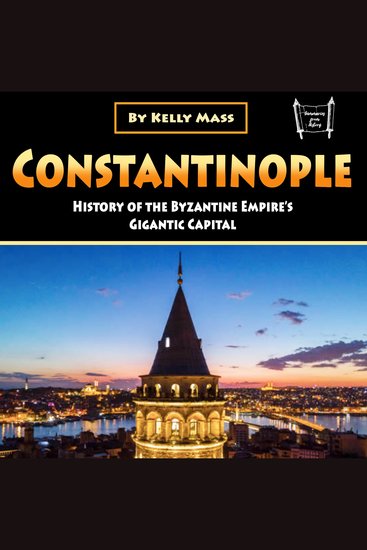
  • Constantinople - History of the Byzantine Empire’s Gigantic Capital - cover

    Constantinople - History of the...

    Kelly Mass

    • 0
    • 0
    • 0
    Constantinople, a city that witnessed the rise and fall of empires, served as the capital for three significant civilizations: the Roman/Byzantine Empire (330–1204 and 1261–1453), the Latin Empire (1204–1261), and the Ottoman Empire (1453–1922). Following the Turkish War of Independence, the capital was moved to Ankara, marking a new chapter in Turkish history. In 1930, the city was officially renamed Istanbul, which remains the Republic of Turkey’s largest city and financial center today. It is also the largest city in Europe. 
    In 324 AD, Emperor Constantine the Great made the fateful decision to transform the old city of Byzantium into a grand new capital, naming it "New Rome" and consecrating it on May 11, 330 AD. This strategic move solidified the city’s place in history, becoming the heart of the Eastern Roman Empire, later known as the Byzantine Empire. 
    Constantinople became a symbol of Orthodox Christianity, often referred to as the "cradle of Orthodox Christian civilization." The city's religious and cultural significance cannot be overstated; it was home to some of the most iconic architectural and religious sites in the Christian world. From the mid-fifth to the early-thirteenth century, Constantinople was Europe's largest, most affluent metropolis, a center of commerce, culture, and intellectual activity.
    Voir livre
  • Hope Beyond Our Sorrows - Learning to Live with Life-Changing Loss - cover

    Hope Beyond Our Sorrows -...

    April Yamasaki

    • 0
    • 0
    • 0
    When a shattered dream breaks your heart, how do you learn to hope again?When April Yamasaki and her husband married, they were young and full of dreams. After almost forty-five years of marriage, those dreams fell apart as Yamasaki found herself grieving the death of her husband. How could life go on without him? Yet even in the depths of her sorrows, she experienced God’s goodness and mercy—big enough for her soul’s lament, longer and deeper and wider than our laments can ever be.Whether you’re grieving the loss of a loved one, a job, a marriage, a church community, or a dream, you too may find yourself wondering, How can I go on? What hope is there for the road ahead? Whatever loss you’re living with, you can find comfort in these short, easily digestible readings accompanied by prayers and spiritual practices from a seasoned devotional writer. Grounded in Scripture, personal experience, and a pastoral heart, Hope Beyond Our Sorrows invites readers to journey with grief, find a new way forward, and live with faith and hope beyond their broken dreams.
    Voir livre
  • Serving Up - Essays on food identity and culture - cover

    Serving Up - Essays on food...

    Zoe Adjonyoh

    • 0
    • 0
    • 0
    A groundbreaking collection of essays about food and its powerful link to identity, culture and community, from twenty exciting voices around the world.
    We hear about a family ritual of drying mango and pickling limes in India, and the search for a father's favourite hotdog in North Carolina. We investigate Latino food in cinema and vegetarianism in Buddhist diets, the cultural appropriation of Chinese food and the effect of gentrification on Black communities. And, we learn about the grassroots organisations fighting for change, for equality for farmers and for better mental health provisions in kitchens, where toxicity and microaggressions are rife.
    Edited by chef and activist Zoe Adjonyoh, and featuring a foreword by acclaimed author and broadcaster Yasmin Khan, Serving Up is an electric, urgent anthology campaigning for representation around our dinner tables, wherever that dinner table may be. 
    Includes essays from: Abigail Koffler, Apoorva Sripathi, Chris Nigro, Cynthia Greenlee, Duron Chavis, Fatima Tarkleman, Hassel Aviles, Izzie Ramirez, Lee Tran Lam, Lenore Adkins and others.
    Voir livre
  • The Book of Lambspring - A Noble Ancient Philosopher Concerning the Philosophical Stone - cover

    The Book of Lambspring - A Noble...

    Nicolas Barnaud

    • 0
    • 0
    • 0
    The Book of Lambspring is one of the few real-life cases of a centuries-old book on alchemy. Nicolas Barnaud was a French Protestant writer, physician and alchemist, from Crest, in Dauphiné, from which he took the name Delphinas. He was a member of the Monarchomaques. He is associated with a number of mysteries.  
    His 1597 collection Commentariolum in Aenigmaticum quoddam Epitaphium, on the Aelia Laelia Crispis puzzle inscription, included the alchemical Mass of Nicholas Melchior, still of disputed authorship. The 1599 Triga Chemica: De Lapide Philosophico Tractatus Tres was the first publication of the Book of Lambspring.
    Voir livre
  • Body Am I - The New Science of Self-Consciousness - cover

    Body Am I - The New Science of...

    Moheb Costandi

    • 0
    • 0
    • 0
    The body is central to our sense of identity. Bodily awareness, says scientist-writer Moheb Costandi, is key to self-consciousness. In Body Am I, Costandi examines how the brain perceives the body, how that perception translates into our conscious experience of the body, and how that experience contributes to our sense of self. Along the way, he explores what can happen when the mechanisms of bodily awareness are disturbed, leading to such phenomena as phantom limbs, alien hands, and amputee fetishes. 


    Costandi explains that the brain generates maps and models of the body that guide how we perceive and use it, and that these maps and models are repeatedly modified and reconstructed. Drawing on recent bodily awareness research, the new science of self-consciousness, and historical milestones in neurology, he describes a range of psychiatric and neurological disorders that result when body and brain are out of sync, including not only the well-known phantom limb syndrome but also phantom breast and phantom penis syndromes; body integrity identity disorder, which compels a person to disown and then amputate a healthy arm or leg; and such eating disorders as anorexia. 


    Wide-ranging and meticulously researched, Body Am I offers new insight into self-consciousness by describing it in terms of bodily awareness.
    Voir livre
  • Discourse on Political Economy - cover

    Discourse on Political Economy

    Jean-Jacques Rousseau, G. D. H....

    • 0
    • 0
    • 0
    This audiobook is narrated by an AI Voice. State-of-the-art voice generation technology, combined with careful human editing, has been employed in this production of "Discourse on Political Economy" by Jean-Jacques Rousseau in order to make this important text more widely accessible to modern audiences. Listeners are invited to explore the audio sample and judge the quality for themselves. 
     
    In "Discourse on Political Economy", Rousseau examines the principles that should guide the administration of the state. Focusing on the practical responsibilities of government, he emphasizes the rule of law, the management of public finances, and the moral duties of those in power. He distinguishes between the general will and the actions of government, arguing that political administration must remain subordinate to the common good. 
     
    A central theme of the essay is the preservation of civic virtue. Rousseau highlights the importance of public education, social unity, and economic moderation, warning that extremes of wealth and poverty can undermine freedom and stability. In this sense, political economy is not merely about wealth, but about sustaining a just and balanced society. 
     
    Positioned between Rousseau’s earlier moral writings and his later political works, this essay anticipates key ideas developed more fully in "The Social Contract". His reflections remain relevant today, inviting listeners to consider the relationship between economic order, political responsibility, and the common good.
    Voir livre