Rejoignez-nous pour un voyage dans le monde des livres!
Ajouter ce livre à l'électronique
Grey
Ecrivez un nouveau commentaire Default profile 50px
Grey
Abonnez-vous pour lire le livre complet ou lisez les premières pages gratuitement!
All characters reduced
Soviet Spacecraft - cover

Soviet Spacecraft

Sabine Lorca

Traducteur A AI

Maison d'édition: Publifye

  • 0
  • 0
  • 0

Synopsis

Soviet Spacecraft explores how the USSR, despite its wartime devastation, achieved remarkable feats in space, often ahead of the United States. The book examines the rapid technological advancements, intense political motivations during the Cold War, and the specific designs of spacecraft like Sputnik, Vostok, and Soyuz. It reveals that the Soviet success wasn't solely due to technology but also a unique system of resource allocation and national ambition, challenging the common narrative of technological determinism.

 
The book progresses systematically, beginning with the Cold War context and initial Soviet interest in rocketry. It highlights key figures like Sergei Korolev and then delves into specific spacecraft, detailing their design, missions, and impact, including less publicized projects such as the Buran space shuttle. By analyzing declassified documents, mission transcripts, and insights from former Soviet engineers, Soviet Spacecraft offers a nuanced view of the Soviet space program, acknowledging both its triumphs and failures. It connects military history, the history of science, and political science to offer a comprehensive understanding.
Disponible depuis: 21/03/2025.
Longueur d'impression: 61 pages.

D'autres livres qui pourraient vous intéresser

  • The January 6th Tapes - The Unabridged Audio Recordings of The Select Committee to Investigate the Attack - cover

    The January 6th Tapes - The...

    The Select Committee to...

    • 0
    • 0
    • 0
    The only audiobook of the live Jan. 6 Select Committee Hearings, illuminating one of the most shocking days in contemporary American history through the unforgettable testimony and a foreword by lawyer and legal analyst Preet Bharara. 
     
    The select committee's investigation into the Jan. 6 attack on the Capitol gripped the country in ways reminiscent of Watergate or the Clinton Impeachment. From the opening statements by Congressman Bennie Thompson and Congresswoman Liz Cheney, to Cassidy Hutchinson’s riveting surprise testimony, to the vote to subpoena former President Donald J. Trump, the hearings were carefully crafted to tell the story of the day our democracy was put in peril.   
     
    The January 6th Tapes is the only audiobook where listeners can hear all 20 hours of unabridged audio recordings – each of the nine public hearings is full of stunning testimony from Trump allies, aides, and lawyers; legal experts; participants in the attacks; and members of the team tasked with protecting the Capitol building that day. It includes a foreword from Preet Bharara, former U.S. Attorney for the Southern District of New York, examining the historical impact of the committee and the hearings, as well as the effect they will have on American democracy.  
     
    Hearing the testimony helps all students of history understand the stakes in a way simply not possible from reading the report. As such, The January 6th Tapes is an easily accessible archive providing a lasting chronicle of one of the darkest days in U.S. history.
    Voir livre
  • Ellis Island and Angel Island: The History and Legacy of America’s Most Famous Immigration Stations - cover

    Ellis Island and Angel Island:...

    Charles River Editors

    • 0
    • 0
    • 0
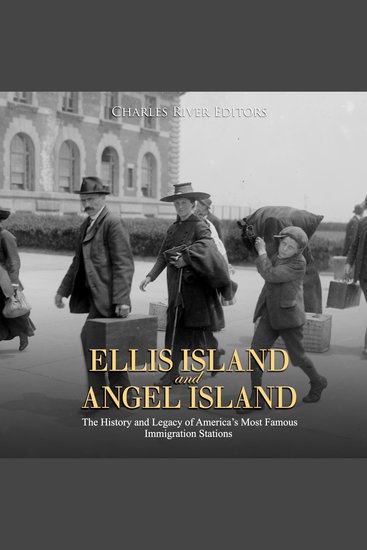
    On New Year’s Day 1892, a young Irish girl named Annie Moore stepped off the steamship Nevada and landed on a tiny island that once held a naval fort. As she made her way through the large building on that island, Annie was processed as the first immigrant to come to America through Ellis Island. Like so many immigrants before her, she and her family settled in an Irish neighborhood in the city, and she would live out the rest of her days there. 
    Thanks to the opening of Ellis Island near the end of the 19th century, immigration into New York City exploded, and the city’s population nearly doubled in a decade. By the 1900s, 2 million people considered themselves New Yorkers, and Ellis Island would be responsible not just for that but for much of the influx of immigrants into the nation as a whole over the next half a century. To this day, about a third of the Big Apple’s population is comprised of immigrants today, making it one of the most diverse cities in the world. 
    Angel Island, the largest island in San Francisco Bay at about 740 acres, was originally named when Don Juan Manuel Ayala sailed into San Francisco Bay. Supposedly, the island was named “Angel” because the land mass appeared to him as an angel guarding the bay, and when Ayala made a map of the Bay, on it he marked Angel Island as, “Isla de Los Angeles.” 
    The island is currently a large state park with beautiful views of the San Francisco Bay and skyline, but the most noteworthy part of the park is the immigration museum. That site is what makes Angel Island so famous today, as it remains best known for being the entry point for Asian immigrants to the United States from 1910-1940.There is no way to know for sure how many people actually passed through Angel Island because of the destruction of most of the historical documentation in a fire, but historians estimate that it was between 100,000 and 500,000 people.
    Voir livre
  • Observing Conflict Escalation in World Society - Ukraine's Maidan and Mali's Breakup - cover

    Observing Conflict Escalation in...

    Richard Bösch

    • 0
    • 0
    • 0
    How do conflicts escalate? This is one of the major questions in conflict research. To offer further answers, Richard Bösch follows a tripartite agenda: First, he develops a constructivist methodology for the study of conflict escalation embedded in a Luhmannian systems theoretical world society perspective. Bösch argues that conflicts can be observed as social systems and he looks at the process of conflict escalation by analysing communication. Second, this analysis offers two case studies: the Maidan protests in Ukraine 2013-2014 and Mali's crisis 2010-2012. Third, it gives insights on how systems theoretical research can be beneficial for Peace and Conflict Studies.
    Voir livre
  • The Boroughs of London - cover

    The Boroughs of London

    Mike Hall, Matt Brown

    • 0
    • 0
    • 0
    Awarded History Book of the Year 2025 by London Historians – 'A complete joy.'
    SHORTLISTED for the British Book Design and Production Awards 2026.
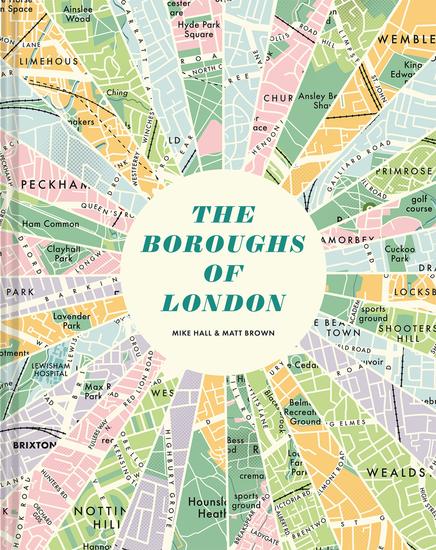
    A stylish collection of beautifully designed maps of each individual London borough, paired with quirky and fascinating facts about what you'll find there.
    Cartographer and illustrator Mike Hall is renowned for his retro-themed print collection of boldly coloured, highly detailed maps of every London borough, inspired by classic 1960s graphic design. Published to coincide with the 60th anniversary of the boroughs' establishment, The Boroughs of London brings together all of Mike's London maps in one elegant volume to pore over.
    But that's not all: alongside the maps is a wealth of authoritative but chatty commentary on each borough from Matt Brown, author of many Batsford books and acknowledged London expert. Packed with interesting facts, anecdotes and trivia, the book provides an introduction to each borough and its constituent neighbourhoods, as well as coverage of ten key places of interest per borough, including historic buildings, monuments, squares, parks and street markets, accompanied by quirky illustrations. It all adds up to a fascinating snapshot of the borough's rich history and present-day diversity and culture.
    From well-known, much-visited central London boroughs like Westminster and the Royal Borough of Kensington and Chelsea to less famous, further-flung suburban areas such as Bexley and Hillingdon, this book provides endless revelations about one of the greatest cities of the world, borough by borough. It's the perfect book for London-dwellers, London visitors and London obsessives, history fans, cartophiles and graphic design aficionados. Readers will want to visit every borough!
    Voir livre
  • Gnosticism: The History and Legacy of the Mysterious Ancient Religion - cover

    Gnosticism: The History and...

    Charles River Editors

    • 0
    • 0
    • 0
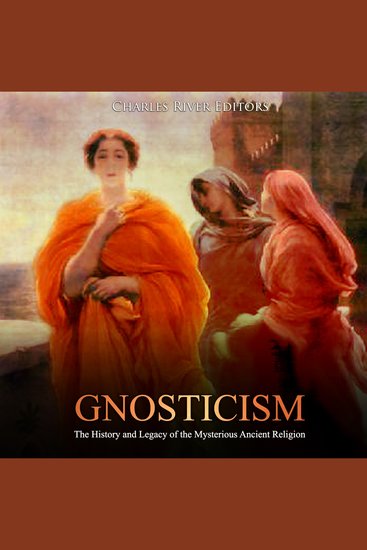
    Gnosticism is one of the great mysteries in the history of Western religion. At its core is an ancient Greek word, gnōsis, a word prominent in the writings of Plato which refers to a deep personal knowledge or understanding that often transcends the physical world.[1] The Gnostics painted a picture of a fallen, broken world in which physicality was a product of a lesser deity. This deity was created in defiance of the One and in order to trap humans and blind them to the truths of their predicament and divine origins. By acquiring insight, or gnōsis, in this secret nature of the world, humans might escape their prison. Only through knowledge can people be set free.  
    	As that makes clear, Gnosticism as a belief system is difficult to define since it is not a well-organized or uniform doctrine like Christianity or Judaism, but at one time there was some synchronization with Christianity that nurtured both movements. As a religion and philosophy, Gnosticism flourished alongside Christianity, and it is not easy to say which one came first, but it is certain that both movements influenced each other. To paraphrase John Dominic Crossan, it is unclear whether Gnosticism was a Christian heresy, a Jewish heresy, or an original religion that powerfully merged with both. Gnosticism borrowed elements from Christians, just as the whole of Christianity took a certain Gnostic flavor, to the point that some books of the New Testament, especially the Gospel of John, could easily pass as a proto-Gnostic document. 
    	At the risk of oversimplifying, Gnosticism was the belief that the souls are divine sparks imprisoned in imperfect physical bodies, due to the machinations of a lesser and evil god who created the world. This evil god is identified with the creator of the Genesis and the Hebrew Bible. The material world and the body are prisons separated from the divine realm, from which humans must escape through the ascent of various levels. This is possible through the acquisition of secret knowledge reserved for the elect. This special revelation or gnosis (knowledge) was supposedly disclosed by Jesus to his dearest disciples, and it can be found in the Gnostic books, deliberately written in cryptic language. The acquisition of the secrets necessary for the salvation of the soul in many cases implied a radical asceticism and corporal sacrifice.  
    	Due to such classical roots, it would be easy to conclude that Gnosticism is an ancient philosophy, and a cursory glance might categorize it as simply a way of understanding the world and promoting investigation. However, the term is most often used to describe not a philosophy but a religion, and not just any religion, but a branch of one of the most resilient and influential traditions in history: Christianity. So what exactly is Gnosticism, and why does it remain such a source of confusion, captivation, and charisma for modern scholarship and culture alike? These answers are complex, and indicative of how the many turnings of the last two millennia have unexpectedly unearthed some answers while burying others even deeper.  
    	Gnosticism: The History and Legacy of the Mysterious Ancient Religion looks at the different origins that shaped Gnosticism, what Gnostics believed and practiced, and the influence they had on other religions. Along with pictures depicting important people, places, and events, you will learn about Gnosticism like never before.
    Voir livre

  • Concise Guide to APA 7TH Edition - An Essential Guide to Academic Writing and Citation - cover

    Concise Guide to APA 7TH Edition...

    Doris Moreno

    • 0
    • 0
    • 0
    The "Concise Guide to APA 7th Edition" is a practical and indispensable resource designed to assist students, scholars, and professionals in mastering the intricacies of the American Psychological Association (APA) citation and writing style. Whether you're a novice writer just starting your academic journey or a seasoned researcher, this concise manual is your key to maintaining clarity and consistency in your written work. 
    This manual offers clear and concise explanations of the fundamental APA guidelines for formatting, referencing, and writing style. It includes step-by-step instructions and examples for creating citations, references, and properly formatted papers in accordance with the latest APA Publication Manual (7th edition). From the proper use of in-text citations to the nuances of reference list entries, the APA Concise Manual is your go-to reference for all your academic and professional writing needs. 
    Key features of this manual include:Up-to-Date APA Guidelines: The manual adheres to the latest APA Publication Manual (7th edition) and provides guidance on changes and updates in citation and writing style.User-Friendly Format: The content is organized in a user-friendly, easy-to-navigate format, making it accessible for readers of all levels.Examples and Templates: Numerous examples and templates are provided to help you understand and apply APA guidelines effectively.Quick Reference Guide: A concise summary of the most commonly used APA rules is included, allowing for quick and easy reference when you need it most.Special Considerations and Exceptions: Find practical tips for common writing and citation challenges, so you can avoid common pitfalls and mistakes.
    Voir livre