
Rejoignez-nous pour un voyage dans le monde des livres!
Ajouter ce livre à l'électronique
Grey
Ecrivez un nouveau commentaire Default profile 50px
Grey
Abonnez-vous pour lire le livre complet ou lisez les premières pages gratuitement!
All characters reduced
Risking Life for Death - Lessons for the Living from the Autopsy Table - cover

Risking Life for Death - Lessons for the Living from the Autopsy Table

Ryan Blumenthal

Maison d'édition: Jonathan Ball

  • 0
  • 0
  • 0

Synopsis

Every contact leaves a trace: a single strand of hair or a tiny droplet of blood can be the silent witness at a crime scene.
Locard's Exchange Principle underpins all forensic science and holds that the perpetrator of a crime will bring something to the crime scene and leave with something from it.
Forensic experts use this principle daily to catch murderers and assailants. In Risking Life for Death, South African forensic pathologist Ryan Blumenthal offers a master class in this singular forensic technique based on real-life case studies. With more than twenty years' experience in the field, Blumenthal explains how to look for clues and traces, and how what he does not find at autopsy is often more important than what he does find. In other words, the absence of evidence can sometimes be of greater value than the presence of evidence.
His account also highlights the dangers forensic pathologists are exposed to daily. As they try to unravel the puzzle of someone's death, forensic pathologists often face life-threatening infections, toxic gases and the hazards associated with high-profile cases – in effect, risking their life to solve someone else's death.
An understanding of Locard's Exchange Principle can help you become a medical detective in your own life, can help you be a happier person and can even provide you with a better philosophy for growing older, Blumenthal argues.
Disponible depuis: 03/07/2023.
Longueur d'impression: 224 pages.
D'autres livres qui pourraient vous intéresser

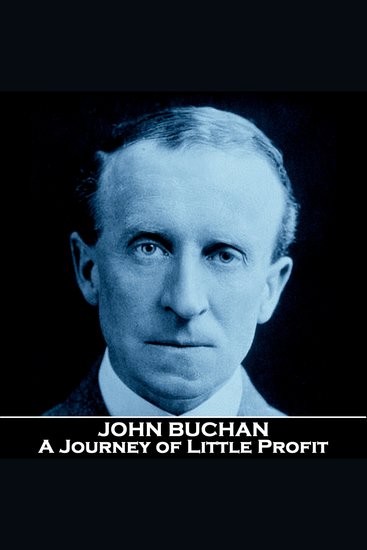
  • A Journey of Little Profit - From their pens to your ears genius in every story - cover

    A Journey of Little Profit -...

    John Buchan

    • 0
    • 0
    • 0
    The Scottish novelist John Buchan enjoyed a remarkable career as politician, historian and Governor General. He was born John Buchan on 26th August 1875 and later added 1st Baron Tweedsmuir PC GCMG GCVO CH to his name.  
    Buchan studied at Hutchesons’ Grammar School, Glasgow and at seventeen won a scholarship to the University of Glasgow to study classics. There he began to write poetry. In 1895 he transferred to Oxford to continue his study of Classics and in 1896 ‘Sir Quixote of the Moors’ was published followed by the non-fiction ‘Scholar-Gipsies’. His prolific literary output now hardly faltered. 
    He graduated in 1900 and became the private secretary to Alfred Milner, the High Commissioner for Southern Africa and other colonies. Buchan found the same inspiration in the African landscape as he had in the Scottish Borders, and would later set many works here. Returning to London he became a partner in a publishing house, and garnered an editorial role at The Spectator. He also completed his law studies. He was called to the bar in 1901 but never practiced.  
    On 15th July 1907 Buchan married Susan Charlotte Grosvenor, the cousin of the Duke of Westminster. In 1910 he wrote ‘Prester John’, the first of a series set in South Africa.  
    In 1911 Buchan entered politics as a Unionist candidate in the Scottish Borders advocating the support of free trade, women’s suffrage, national insurance, and reducing the power of the House of Lords.  
    The Great War saw Buchan writing for the War Propaganda Bureau and as Times correspondent in France. In 1915, he published ‘The Thirty-Nine Steps’, his most famous book and a follow-up Richard Hannay novel, ‘Greenmantle’, in 1916.  
    In 1916 Buchan enlisted in the Intelligence Corps which included writing speeches for Sir Douglas Haig. By 1917 he was Director of Information under Lord Beaverbrook. Buchan called it “the toughest job he ever took on”. He somehow found time to assist in a history of the war magazine. This was later published in 24 volumes: Nelson’s History of the War. 
    After the war his writing focused on historical studies. In 1927 Buchan became the Unionist Party Member of Parliament for the Combined Scottish Universities. In a speech to Parliament he said “I believe every Scotsman should be a Scottish nationalist. If it could be proved that a Scottish parliament were desirable… Scotsmen should support it.”  
    Over the next decade he continued to distinguish himself politically and in literature.  On the 1st June 1935 he became 1st Baron Tweedsmuir of Elsfield in the County of Oxford.  
    He was now also given the position of Governor General in Canada and resolved to travel all over Canada to gain a better insight of the country. Having crossed both length and breadth he saw the cultural shift between areas and their common ground and helped bring about a clear national Canadian identity. 
    On the 6th February 1940 he collapsed from a stroke and sustained a very serious head injury in falling. Two rounds of surgery to stabilise his condition were unsuccessful and Buchan died on the 11th February. After a state funeral in Ottawa his ashes were returned to his estate in Oxfordshire.
    Voir livre
  • The Dark Side of Sci-Fi - 15 Stories Blending Horror and Science Fiction - cover

    The Dark Side of Sci-Fi - 15...

    Philip K. Dick, Iain Gordon,...

    • 0
    • 0
    • 0
    A collection of speculative fiction stories, concerning extraterrestrials, other worlds, and bleak futures. 
    Contents: 
    "Fessenden's Worlds" by E. Hamilton (Weird Tales 1937) 
    A man creates a miniature universe. 
    "The Hanging Stranger" by P. K. Dick (SF Adventures 1953) 
    A man happens upon a body suspended from a lamppost. 
    "The Glass Labyrinth" by S. A. Coblentz (WT 1943) 
    A tale of time and dimensions. 
    "The Transgressor" by H. Kuttner (WT 1939) 
    A curious invention... 
    "The Red God Laughed" by T. McClusky (WT 1939) 
    Following the extinction of the human race... 
    "The Crystal Egg" by H. G. Wells (New Review 1897) 
    An object that serves as a window into the planet Mars. 
    "Beyond the Wall of Sleep" by H. P. Lovecraft (Pine Cones 1919) 
    Strange slumbers in the Catskill Mountains. 
    "The Fear Experiment" by I. Gordon (HorrorBabble 2018) 
    A dark experiment in Georgia. 
    "Old Rambling House" by F. Herbert (Galaxy SF 1958) 
    All they wanted was a home they could call their own... 
    "There is a Reaper ..." by C. V. De Vet (Imagination 1953) 
    What awaits us after death? 
    "In the World's Dusk" by Edmond Hamilton (WT 1936) 
    The last survivor of the human race. 
    "The Supernumerary Corpse" by C. A. Smith (WT 1932) 
    Jasper Trilt was dead—but... 
    "2 B R 0 2 B" by K. Vonnegut, Jr. (If 1962) 
    Death becomes a voluntary act. 
    "The Ultimate Experiment" by T. DeKy (Comet 1941) 
    Robots—the children of men. 
    "The Red One" by J. London (Cosmopolitan 1918) 
    Worshippers of something strange in the jungle.
    Voir livre
  • Summary of Michael Dell’s Play Nice But Win - cover

    Summary of Michael Dell’s Play...

    Falcon Press

    • 0
    • 0
    • 0
    Buy now to get the main key ideas from Michael Dell’s Play Nice But Win 
      
    Play Nice But Win: A CEO’s Journey From Founder to Leader (2021) offers life lessons from Michael Dell, the founder and CEO of one of the world’s leading technology companies. Dell’s journey in the tech industry began even before he was a student selling computers from his dorm at the University of Texas—he was already in the computer business in high school. Dell focuses on the challenges of transforming, enhancing, and keeping his company, with a particular spotlight on his 2012 attempt to take it private again.
    Voir livre
  • Virginia Louise Giuffre - Her Surviving Abuse story of becoming Nobody’s Girl - cover

    Virginia Louise Giuffre - Her...

    Sylvia S. Edwin

    • 0
    • 0
    • 0
     This book chronicles Virginia Giuffre's journey from a vulnerable teenager to a trafficking victim in Jeffrey Epstein's network, through her escape and transformation into a global advocate for survivors. 
    Drawing from court testimony, verified public records, and Virginia's own statements, the book covers: 
    • Her early life and the systemic failures that left her vulnerable to exploitation 
    • Her recruitment by Ghislaine Maxwell at age sixteen at Mar-a-Lago 
    • Life within Epstein's trafficking operation across multiple properties and countries 
    • Her escape to Thailand and rebuilding a life in Australia 
    • The decision to speak publicly in 2015 and the legal battles that followed 
    • The arrests and prosecutions of Jeffrey Epstein and Ghislaine Maxwell 
    • Her ongoing work as an advocate for trafficking survivors worldwide 
    The narrative examines how trafficking occurs, why victims struggle to escape, and what it takes to seek accountability against powerful perpetrators. Written with compassion and based on documented facts, this account honors Virginia's resilience while providing insight into exploitation, justice, and healing.
    Voir livre
  • True Crime Case Histories - Volume 9 - 12 Disturbing True Crime Stories of Murder Deception and Mayhem - cover

    True Crime Case Histories -...

    Jason Neal

    • 0
    • 0
    • 0
    12 Disturbing True Crime Stories of Murder, Deception, and Mayhem 
    Volume Nine of the True Crime Case Histories Series (2022) 
    Fans Love This Series—Over 7,000 Five-Star Ratings 
    If you’re a fan of true crime, you’re undoubtedly familiar with the big-name cases: Ted Bundy, BTK, David Berkowitz, Christopher Watts, Diane Downs, Casey Anthony, Jeffrey Dahmer, Jodi Arias, Ed Gein, etc. The list of well-known, notorious cases throughout history is seemingly endless. Books, websites, podcasts, streaming television series, and magazines are filled with their abhorrent tales of mayhem. They’re some of the most foul killers the world has ever known. 
    In my books, I do my best to find stories you may not have heard of. To do this, I count on my audience to send me stories that may have gone forgotten and aren't found all over the internet. 
    Several submitted stories found in this volume, including the story of five-year-old Stephanie Hebert, who walked only three houses down her quiet suburban sidewalk and disappeared forever. Her case went cold for 40 years before other children from her neighborhood came forward in their adulthood with information leading to the killer. 
    In this volume, you’ll find 12 assorted true crime stories ranging in date from the 1950s to 2020. 
    There’s the story of the sadistic mother who viewed her children only as the spawn of their demon father, torturing them for their entire short lives. 
    You’ll also hear of the deranged husband and wife team who started their own cult and made it their life’s mission to rid the world of witches. 
    Another story tells the disheartening tale of a toddler’s skeleton found in a suitcase on the side of the road. Motorcyclists discovered her mother’s skeleton more than 600 miles away. Five years had passed, with no one even realizing they were missing. 
    Plus many more disturbing stories.
    Voir livre
  • John Montague - A Poet's Life - cover

    John Montague - A Poet's Life

    Adrian Frazier

    • 0
    • 0
    • 0
    In the late twentieth century, Irish poetry achieved an historic quality, a golden era to compare with the verse of the Elizabethan and the Romantic periods. A Poet's Life is the definitive biography of one of the first and foremost poets in this golden generation, John Montague. Inspired by the examples of Yeats and Joyce, he consciously educated himself to play a central role in the self-understanding of his people.   
    Ahead of the public recognition of such issues, Montague wrote personally about abortion, divorce, alcoholism, domestic violence, and clerical abuse in education. His poetry offered to others release from a painful past. Out of where he was most hurt, his best work issued. When the Troubles erupted in his home province, he was to the forefront in engaging with events directly, sometimes in a cross-community effort with fellow poets of the other faith. This record of his life is also an intimate, familial account of modern Irish poetry and its precision, documentary basis, and reliable chronology, it is sure to become a vital conduit into a body of poetry that will never be forgotten.   
    Already a highly lauded biographer, Adrian Frazier was a close acquaintance of Montague for more than forty years. In this fully authorised narrative that is clear, candid, and marbled with humour, Frazier reveals the sources of poetry in Montague's life and traces the progress of his style from book to book. Based on Montague's archive of private papers, and informed by the counsel of the poet's lifelong friends, partners, and fellow poets, this is a monumental work of Irish literary biography, sure to be a classic of the genre.   
    Voir livre