Wrecked by the BBC
Rose Rough
Verlag: Rose Rough
Beschreibung
Two short stories from Rose Rough about white women getting their BBC fantasies FILLED...whether they are ready for it or not! These ladies get totally wrecked by the BBC!
Verlag: Rose Rough
Two short stories from Rose Rough about white women getting their BBC fantasies FILLED...whether they are ready for it or not! These ladies get totally wrecked by the BBC!
The World Fantasy Award Finalist: “It’s Clive Barker crossed with Tanith Lee set to a Siouxsie and the Banshees beat, and I loved every second of it.” —Gemma Files, Shirley Jackson Award–winning author of Experimental Film Welcome to a world of monsters, ghosts, and witches, both seductive and terrifying. In the first collection of short fiction from the author of the Necromancer Chronicles, reality shifts and shimmers with potent magic. More than twenty works, including two poems, feature characters who will steal your heart just as easily as your soul. In “Wrack,” a fisherman becomes so enchanted by a mermaid that the call of the waves becomes impossible to resist. When a killer comes to “Dogtown,” he learns that his bark isn’t worse than the bites of the locals. A dying artist returns to Ireland, where the faerie she has always loved tempts her with eternal life, as long as she leaves her humanity on the shore like so much “Flotsam.” And in “Smoke & Mirrors,” the circus comes to a town strangely bereft of ghosts, thanks to a demonic being conducting a train to the netherworld. With prose that is “gently pulling, promising beautifully cold oblivion in smothering darkness,” Amanda Downum transports you to sweltering southern swamps and the labyrinthine streets of Old World cities, proving without a doubt that “she’s one of the very best dark fantastical writers working today” (Bracken MacLeod, author of Closing Costs). “Ethereal, atmospheric, and mysterious.” —Elizabeth Bear, Hugo Award–winning author of Machine “These stories range from the melancholic to the downright chilling, and deftly evoke both the truly strange and the very human.” —Liz Bourke, author and reviewer for Tor.com and LocusZum Buch
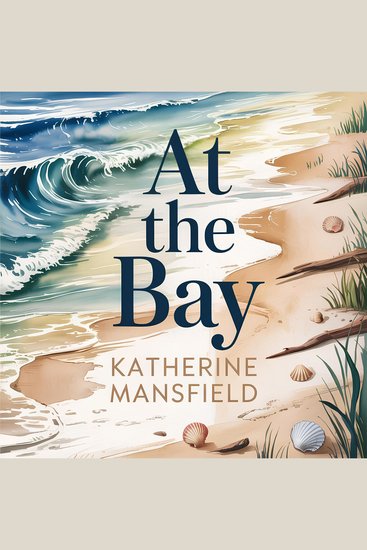
What if a simple summer day by the shore could unveil the quiet tides of desire, memory, and human connection flowing beneath the surface? Enter the radiant world of "At the Bay" by Katherine Mansfield - a shimmering work that captures life’s delicate moments and unspoken tensions with remarkable sensitivity. Wander alongside the inhabitants of a peaceful seaside community, from the kind and reflective Mrs. Fairfield and her family to the neighbors who share their sunlit world, as hidden emotions and private yearnings gently unfold. From children’s carefree wonder along bright, sandy beaches to the quiet introspection and fragile hopes of the adults, every scene pulses with subtle feeling and insight. With her luminous, poetic voice, Mansfield turns ordinary moments into a rich portrait of love, longing, and revelation. A treasure for admirers of literary fiction and timeless storytelling - press play and drift into a world where each day by the bay shimmers with warmth, intimacy, and quiet magic.Zum Buch
The bookshelves of British literature are incredible collections that have gathered together centuries of very talented authors. From these Isles their fame spread and whilst among their number many are now forgotten or neglected their talents endure. Among them is Eliza Heywoode, a provocative talent who was decades, even centuries ahead of other talents.Zum Buch
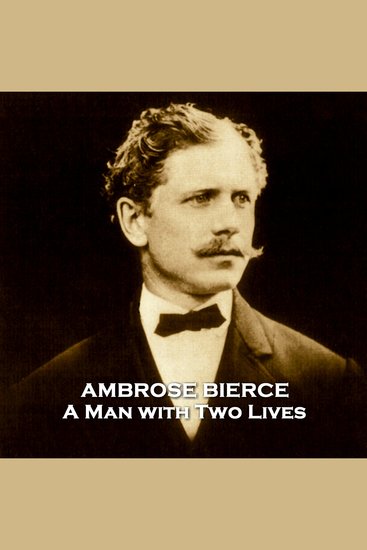
Ambrose Gwinnett Bierce was born on 24th June 1842 at Horse Cave Creek in Meigs County, Ohio. His parents were poor but they introduced him to literature at an early age, instilling in him a deep appreciation of books, the written word and the elegance of language. Growing up in Koscuisko County, Indiana poverty and religion were defining features of his childhood, and he would later describe his parents as “unwashed savages” and fanatically religious, showing him little affection but always quick to punish. He came to resent religion, and his introduction to literature appears to be their only positive effect. At age 15 Bierce left home to become a printer’s devil, mixing ink and fetching type at The Northern Indian, a small Ohio paper. Falsely accused of theft he returned to his farm and spent time sending out work in the hopes of being published. His Uncle Lucius advised he be sent to the Kentucky Military Institute. A year later he was commissioned as an Officer. As the Civil War started Bierce enlisted in the 9th Indiana Infantry Regiment. In April 1862 Bierce fought at the Battle of Shiloh, an experience which, though terrifying, became the source of several short stories. Two years later he sustained a serious head wound and was off duty for several months. He was discharged in early 1865. A later expedition to inspect military outposts across the Great Plains took him all the way to San Francisco. He remained there to become involved with publishing and editing and to marry, Mary Ellen on Christmas Day 1871. They had a child, Day, the following year. In 1872 the family moved to England for 3 years where he wrote for Fun magazine. His son, Leigh, was born, and first book, ‘The Fiend’s Delight’, was published. They returned to San Francisco and to work for a number of papers where he gained admiration for his crime reporting. In 1887 he began a column at the William Randolph Hearst’s San Francisco Examiner. Bierce’s marriage fell apart when he discovered compromising letters to his wife from a secret admirer. The following year, 1889 his son Day committed suicide, depressed by romantic rejection. In 1891 Bierce wrote and published the collection of 26 short stories which included ‘An Occurrence at Owl Creek Bridge’. Success and further works including poetry followed. Bierce with Hearst’s resources helped uncover a financial plot by a railroad to turn 130 million dollars of loans into a handout. Confronted by the railroad and asked to name his price Bierce answered “my price is $130 million dollars. If, when you are ready to pay, I happen to be out of town, you may hand it over to my friend, the Treasurer of the United States”. He now began his first foray as a fabulist, publishing ‘Fantastic Fables’ in 1899. But tragedy again struck two years later when his second son Leigh died of pneumonia relating to his alcoholism. He continued to write short stories and poetry and also published ‘The Devil’s Dictionary’. At the age of 71, in 1913 Bierce departed from Washington, D.C., for a tour of the battlefields where he had fought during the civil war. At the city of Chihuahua he wrote his last known communication, a letter to a friend. It’s closing words were “as to me, I leave here tomorrow for an unknown destination,” Ambrose Bierce then vanished without trace.Zum Buch
Framton Nuttel seeks relaxation in the country. Entranced by a young woman's elaborate lie, he flees in terror from men he believes to be ghosts.Zum Buch
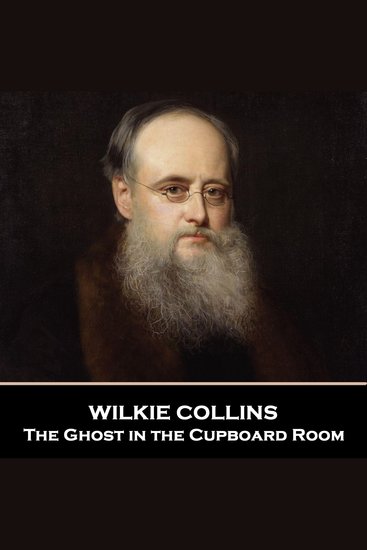
Wilkie Collins was born on 8th January 1824 in Marylebone, London. The family moved several times in his early years before, at 12, they travelled to France and Italy for 2 years where the sights and atmosphere made a deep and lasting impression on him. He resumed his education at Mr Cole’s private boarding school in Highbury, Islington. Here, he began his literary career under unusual circumstances: the school bully would give him no peace until he had been told a bedtime story. This ‘little brute’ helped create one of England’s greatest writers. On leaving school, in 1841, he became a clerk at a tea merchant before, 2 years later, publishing his first short story. However, his first novel was rejected and remained so during his lifetime. A brief stint at Lincoln’s Inn to please his father and to acquire a steady income was halted by his father’s death. Collins then wrote and published his fathers’ memoirs. He then completed his legal education though he would never practice. In March 1851, he was introduced to Charles Dickens and there now started a period of sustained literary output and a remarkable lifelong friendship. His stories were published in Dicken’s magazines, and he toured with Dicken’s theatrical before the two of them travelled to the Continent. By the early 1860’s worrying signs of ill-health appeared with rheumatic gout. As it worsened, he sought respite and cures in German spa towns and gave up writing to help his recuperation. His personal life had become very complicated. He was living with the widowed Caroline Graves and conducting an affair with a much younger Martha Rudd. With the serialised release of ‘The Moonstone’ and vicious attacks of gout Caroline left him and married another. Collins was now prescribed opium and was soon its lifelong dependent. Martha bore him two children and with the return of a now divorced Caroline Graves he now divided his time between the two women. In 1874 he set aside writing to tour North America on a reading tour. Throughout his later years he continued to write and publish. In all 30 novels, 14 plays, 60 short stories and over a 100 non-fiction essays as well as many more collaborations with Dickens. In 1884 the Society of Authors elected him as it’s Vice-President. Wilkie Collins died from a paralytic stroke on September 23rd, 1889, in London. He was 65.Zum Buch