Rejoignez-nous pour un voyage dans le monde des livres!
Ajouter ce livre à l'électronique
Grey
Ecrivez un nouveau commentaire Default profile 50px
Grey
Abonnez-vous pour lire le livre complet ou lisez les premières pages gratuitement!
All characters reduced
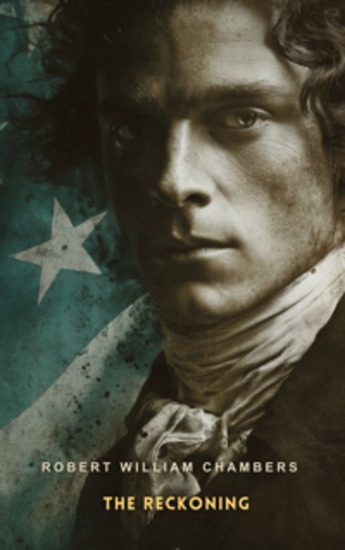
The Reckoning - cover

The Reckoning

Robert William Chambers

Maison d'édition: Interactive Media

  • 0
  • 0
  • 0

Synopsis

In this dramatic historical romance, a steadfast patriot becomes entangled in intrigue as revolution sweeps through the colonies. Pursued by enemies and divided by loyalty, he faces peril, hidden identities, and an unexpected love that challenges his resolve. As tensions rise, he must confront betrayal and courageously choose a path that will shape his fate and the future of those he protects.
Disponible depuis: 24/01/2026.
Longueur d'impression: 316 pages.

D'autres livres qui pourraient vous intéresser

  • The Purloined Letter - cover

    The Purloined Letter

    Sampi Books, Edgar Allan Poe

    • 0
    • 0
    • 0
    "The Purloined Letter" is a short story by Edgar Allan Poe that recounts the ingenuity of detective C. Auguste Dupin in recovering a stolen compromising letter, exploring themes of intellect, psychological analysis and the confrontation between the detective and the cunning thief.
    Voir livre
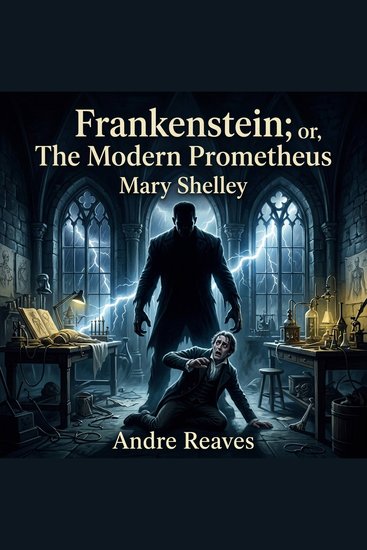
  • Frankenstein; or The Modern Prometheus - Discover the ultimate tale of Gothic Fiction Science Fiction A brilliant scientist plays God unleashing a terrifying monster and a tragic chain of events in this immortal horror masterpiece - cover

    Frankenstein; or The Modern...

    Mary Shelley

    • 0
    • 0
    • 0
    What happens when humanity's darkest ambition crosses the unforgiving boundaries of life and death? 
    Driven by an insatiable thirst for knowledge, the young and brilliant Victor Frankenstein isolates himself in the shadows of his Ingolstadt laboratory. There, amidst the charnel-house remains and the violent storms of the Swiss Alps, he unlocks the ultimate secret of existence: the ability to bestow animation upon dead flesh. But the moment his gargantuan creation opens its dull yellow eyes, Victor’s triumph instantly morphs into paralyzing terror. Abandoned by his maker and loathed by humanity, the bewildered creature is cast out into an unforgiving world. Consumed by a tragic mix of sorrow and a mounting desire for vengeance, the monster begins to hunt down the very family Victor loves most. A deadly game of cat and mouse ensues, begging the question: who is the true monster—the creature, or its creator? 
    If you crave atmospheric chills and philosophical depth, you will be utterly captivated by this seminal masterpiece of Gothic Fiction / Science Fiction. Frankenstein masterfully weaves together the mad scientist archetype, terrifying psychological suspense, and profound ethical dilemmas. Listeners seeking dark atmospheric storytelling, romantic-era horror tropes, and the foundational roots of sci-fi will find themselves glued to every chilling word. 
    About the Author: Mary Shelley conceptualized this groundbreaking novel at just 18 years old during a legendary ghost-story competition with Lord Byron and Percy Bysshe Shelley in the fateful "Year Without a Summer" of 1816. Her pioneering work not only birthed modern science fiction but remains a profound, cautionary exploration of mankind's technological overreach.
    Voir livre
  • A Story Without An End - cover

    A Story Without An End

    Anton Chekhov

    • 0
    • 0
    • 0
    Soon after two o'clock one night, long ago, the cook, pale and agitated, rushed unexpectedly into my study and informed me that Madame Mimotih, the old woman who owned the house next door, was sitting in her kitchen."She begs you to go in to her, sir…" said the cook, panting. "Something bad has happened about her lodger… He has shot himself or hanged himself…""What can I do?" said I. "Let her go for the doctor or for the police!"
    "How is she to look for a doctor! She can hardly breathe, and she has huddled under the stove, she is so frightened… You had better go round, sir."
    I put on my coat and hat and went to Madame Mimotih's house. The gate towards which I directed my steps was open. After pausing beside it, uncertain what to do, I went into the yard without feeling for the porter's bell. In the dark and dilapidated porch the door was not locked. I opened it and walked into the entry. Here there was not a glimmer of light, it was pitch dark, and, moreover, there was a marked smell of incense. Groping my way out of the entry I knocked my elbow against something made of iron, and in the darkness stumbled against a board of some sort which almost fell to the floor. At last the door covered with torn baize was found, and I went into a little hall...
    Voir livre
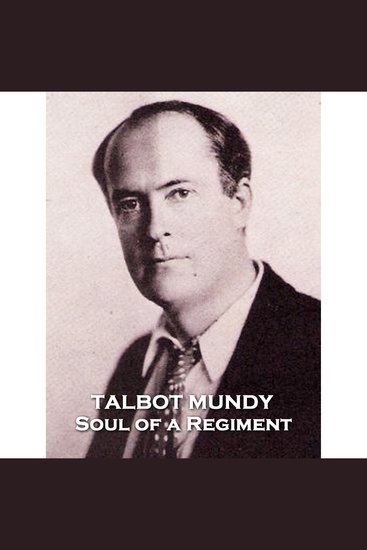
  • The Soul of a Regiment - From their pens to your ears genius in every story - cover

    The Soul of a Regiment - From...

    Talbot Mundy

    • 0
    • 0
    • 0
    Talbot Mundy was born William Lancaster Gribbon on April 23rd 1879 in London. 
    After a particularly undistinguished record at Rugby School, he ran off to Germany and joined a circus. After his return, from Germany, he left Britain to work as a relief worker in Baroda in India. 
    This was followed by further adventures in Africa, the Near East and the Far East.  His initial inclination was to be a con artist, a confidence trickster and exploit other areas of petty criminality.  
    However with a change of location to the United States and a near fatal mugging he decided that life as an upright citizen was now more to his liking. 
    By the age of 29 he had decided on Talbot Mundy as a name and three years later in 1911 he began his writing career. Obviously late but it was still to be prodigious none the less. 
    Talbot’s first story, "A Transaction in Diamonds," was published in The Scrap Book in February 1911.  Two months later in April he published his first non-fiction article, "Pig-sticking in India" – based on a sport much practised by British forces in the Empire – in the pulp magazine Adventure.  
    Many of his novels including his first ‘Rung Ho!’ and his most famous ‘King - Of the Khyber Rifles are set during the British Raj in India.  His time in India was short though he spent many years in Africa and, as seen in the attached bibliography, Talbot had no fear or qualms about writing about any location.  
    Talbot became an American citizen on 9th December 1916. 
    On 5th February 1920, Talbot Mundy, now President of the Anglo-American Society of America, arrived in Jerusalem. He also met and fell in love with a widow named Sally Ames, who would eventually become Mrs Mundy, number 4. During this period Talbot worked mainly as editor for the Jerusalem News, which entailed doing everything from proof reading to reporting. One of his biggest coups was that he was invited to go to Damascus to interview King Feisal. 
    In early 1922, Mundy moved to San Diego, California. It was here that he met Katherine Tingley, the head of a splinter branch of the Theosophical Society which had a community at Point Loma, near San Diego.  It was there in late 1923 that Talbot began writing perhaps his finest novel, Om, the Secret of Ahbor Valley. 
    By 1928 with relationships between himself and his then current wife and also with his publisher failing he re-located to New York to rebuild his life, career and finances. 
    Whilst much of Talbot’s early life was used in his work it seems he was not particularly proud to return to these places or indeed say to much more about his earlier escapades in these places. 
    Although his writing was to prove very popular over the years and has been revived on many occasions since his death it is fair to say that both his writing and his life were colourful.  He married a number of times and still believed that his business dealings would make him very rich. 
    However much of his life would not go as planned and it took several marriages in the hope of finding true happiness.  His sixth wife, Dawn, gave birth to a girl on 26 February 1933 shortly after their return to England. Unfortunately the child died shortly after birth. 
    Thereafter he wrote little but much of his work was republished and his name kept in print. 
    On 5 August 1940 Talbot Mundy died from complications associated with diabetes.
    Voir livre

  • The Golden Anaconda - cover

    The Golden Anaconda

    Elmer Brown Mason

    • 0
    • 0
    • 0
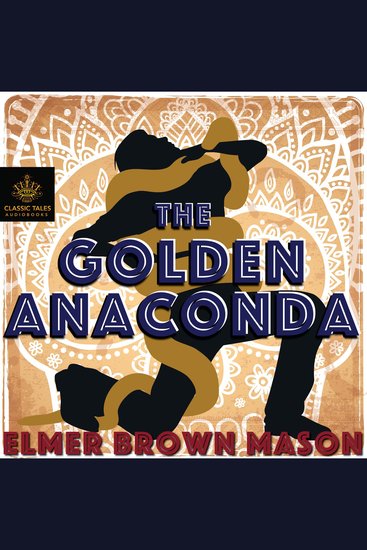
    While capturing anacondas in the jungles of South America, adventurer Wandering Smith spies an orchid hunter fleeing from a troupe of angry natives spewing poisoned arrows. But when this orchid hunter joins the hunting expedition, it becomes clear that he thirsts for something other than rare orchids - he is also collecting the jewels used to adorn shrunken heads.
    
    Elmer Brown Mason is largely forgotten today save for aficionados of pulp magazines. His great contribution to the genre of adventure fiction is his five-story series about Wandering Smith. Isaiah Ezekiel "Wandering" Smith can usually be found at Pere Guerrin's, a rough hangout in New Orleans. His job is to help anyone "who wants to go after something unusual in a strange place".
    Voir livre
  • Great Gatsby The: The Original 1925 Edition (A F Scott Fitzgerald Classic Novel) - cover

    Great Gatsby The: The Original...

    F. Scott Fitzgerald

    • 0
    • 0
    • 0
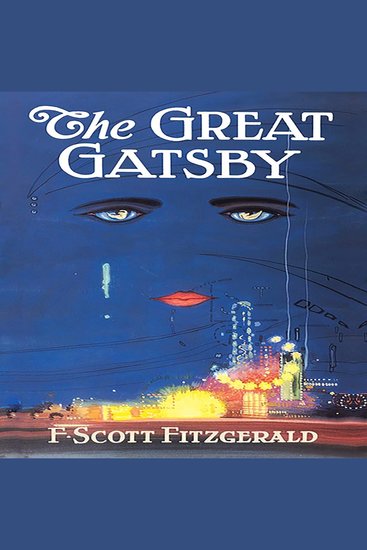
    "The Great Gatsby" is a 1925 novel by American writer F. Scott Fitzgerald. Set in the Jazz Age on Long Island, near New York City, the novel depicts first-person narrator Nick Carraway's interactions with mysterious millionaire Jay Gatsby and Gatsby's obsession to reunite with his former lover, Daisy Buchanan. 
    The novel was inspired by a youthful romance Fitzgerald had with socialite Ginevra King, and the riotous parties he attended on Long Island's North Shore in 1922. Following a move to the French Riviera, Fitzgerald completed a rough draft of the novel in 1924. He submitted it to editor Maxwell Perkins, who persuaded Fitzgerald to revise the work over the following winter. After making revisions, Fitzgerald was satisfied with the text, but remained ambivalent about the book's title and considered several alternatives. Painter Francis Cugat's cover art greatly impressed Fitzgerald, and he incorporated aspects of it into the novel. 
    After its publication by Scribner's in April 1925, The Great Gatsby received generally favorable reviews, though some literary critics believed it did not equal Fitzgerald's previous efforts. Compared to his earlier novels, Gatsby was a commercial disappointment, selling fewer than 20,000 copies by October, and Fitzgerald's hopes of a monetary windfall from the novel were unrealized. When the author died in 1940, he believed himself to be a failure and his work forgotten.
    Voir livre