Begleiten Sie uns auf eine literarische Weltreise!
Buch zum Bücherregal hinzufügen
Grey
Einen neuen Kommentar schreiben Default profile 50px
Grey
Jetzt das ganze Buch im Abo oder die ersten Seiten gratis lesen!
All characters reduced
Discoveries and Inventions of the Nineteenth Century - Unveiling the Legacy of Nineteenth Century Innovations - cover

Discoveries and Inventions of the Nineteenth Century - Unveiling the Legacy of Nineteenth Century Innovations

Robert Routledge

Verlag: Good Press

  • 0
  • 0
  • 0

Beschreibung

In "Discoveries and Inventions of the Nineteenth Century," Robert Routledge meticulously chronicles the profound innovations that shaped the modern world during this transformative era. Through a clear and accessible narrative style, Routledge delves into the major scientific advancements and influential inventions that emerged between 1800 and 1900, intertwining biographies of pivotal figures with detailed explanations of their contributions. This comprehensive work, characterized by its meticulous research and engaging prose, situates these developments within a broader socio-historical context, revealing how they not only influenced technology but also impacted societal norms and cultural shifts. Robert Routledge was a prominent figure in the late 19th century, known for his passion for science and education. His background as a science educator and journalist inspired him to document the remarkable progress of his time, reflecting both his enthusiasm for technological advancement and a desire to educate the public about the importance of scientific inquiry. Through his engagement with the scientific community and firsthand observation of emerging technologies, Routledge offers unique insights that resonate throughout his work. This book is essential for anyone interested in the history of technology and its implications for contemporary society. Routledge'Äôs insightful analysis not only informs readers about the inventions that define our modern lives but also inspires a deeper appreciation for the scientific curiosity that drives human progress. Whether you are a student, educator, or simply a curious reader, this exploration of 19th-century discoveries promises to enrich your understanding of the forces that shaped our world.
Verfügbar seit: 31.10.2023.
Drucklänge: 1227 Seiten.


Weitere Bücher, die Sie mögen werden

  • Speak Lead Inspire! - Learn How to Speak Like a Leader Using Verbal and Non-Verbal Communication - cover

    Speak Lead Inspire! - Learn How...

    John Bixby

    • 0
    • 0
    • 0
    Discover How To Speak Like a Leader By Using Verbal and Nonverbal Communication! 
    With modern technology and the way people can talk over the phone and not face to face, many people lose the ability to talk to a real audience or a live group of people. So, if you want to speak like a leader whether it be on stage or at the workplace, you might be struggling on how to engage people and speak like a true leader. Even if you feel like you haven’t been gifted with the art of speaking, you can leader to speak like a leader if you put in the effort. 
    Leadership Starts With Knowing Your Audience 
    Before being able to speak like a great leader, you need to ask yourself who you plan to lead and why they need great leadership. 
    Knowing your audience is key to success. 
    This allows you to adapt your speech and language to the people you are talking to so that your message can be powerful and more inspirational. 
    Ask yourself who you want to talk to and why you feel like they need a great leader who can speak well… 
    Did you know that speaking like a leader can influence those around you? 
    If you are having trouble influencing and inspiring those around you or those that work for you. 
    The best thing you can do is learn to speak like a leader. 
    When you can lead those around you with your words and actions. 
    They will be inspired to be better and also learn to influence those who work under them as well. 
    Learning how to speak like a great leader without using external resources is essentially impossible. 
    You need to have resources to teach you and point you in the right direction so that you can slowly learn to speak like a powerful leader.
    Zum Buch
  • Show Don't Tell - cover

    Show Don't Tell

    Sandra Gerth

    • 0
    • 0
    • 0
    Show, don't tell is probably the single most-important piece of advice given to writers. But many writers struggle to understand this powerful principle or have difficulty applying it to their own work. Even experienced authors sometimes don't grasp the finer nuances of showing and telling. 


    In this book, Sandra Gerth draws on her experience as an editor and a best-selling author to show you how to show and tell you when to tell. 


    Each chapter includes concrete examples and exercises that will hone your writing skills. 


    Whether you're a novice writer working on your first story or an established author who has already learned the basics of showing and telling, this book will help you to: 


    ● Grasp the difference between showing and telling. 


    ● Understand why showing is such a powerful tool. 


    ● Spot telling in your own manuscript.
    Zum Buch
  • aka bpNichol - A Preliminary Biography - cover

    aka bpNichol - A Preliminary...

    Frank Davey

    • 0
    • 1
    • 0
    Reflecting on the career of a prominent poet, this biography focuses on Canadian wordsmith Barrie Nichol — more commonly known by his pen name, bpNichol — who was a practicing lay psychoanalyst and vice president of one the largest and long-lasting North American communes for more than a decade. Recognizing his international influence as both a visual and sound poet, Nichol's literary achievements are reviewed, including The Martyrology, a renowned, seven-volume poem, four novels, two musical comedies, six children's books, hundreds of hand-drawn visual poems, and even 10 episodes of Jim Henson's hit television series Fraggle Rock. Penned by one of Nichol's numerous literary collaborators, this account reveals the close connections among the writer's various activities, particularly how the autobiographical inquiries and Freudian dream theory linked with the young poet's biographical self-awareness. The book demonstrates how the Subject's main psychoanalytic client was his own writing, following Nichol as he explored its slips, accidental puns, and unintended meanings and implications for the communal future of the human species, both in high literature and comical prime time television.
    Zum Buch
  • Victimization - The Process of Making Someone a Victim - cover

    Victimization - The Process of...

    Cito Harder

    • 0
    • 0
    • 0
    Victimization is a complex and multifaceted process that occurs when an individual or group is subjected to harm, oppression, or injustice. It is not merely the result of a singular event but often an ongoing experience shaped by societal structures, personal relationships, and systemic forces. Understanding victimization requires examining both the immediate and long-term effects on those who suffer, as well as the roles played by perpetrators, bystanders, and institutions that enable or prevent such harm. 
    At its core, victimization involves the exercise of power and control, where one party imposes harm—whether physical, psychological, emotional, or financial—upon another. This harm can be intentional, as in cases of abuse, assault, or discrimination, or unintentional, where systems and structures create disadvantages that lead to victimhood. The process of victimization is not always overt; it can be subtle, embedded within social norms, policies, and expectations that gradually erode a person’s autonomy, dignity, and sense of self-worth. 
    One of the key challenges in defining victimization lies in the perception of victims themselves. Some individuals openly recognize and acknowledge their victim status, while others may resist the label due to fear, shame, or social stigma. Society often imposes expectations on victims—either portraying them as weak and helpless or, conversely, blaming them for their circumstances. This duality can make it difficult for individuals to seek support or justice, reinforcing cycles of suffering and silence.
    Zum Buch
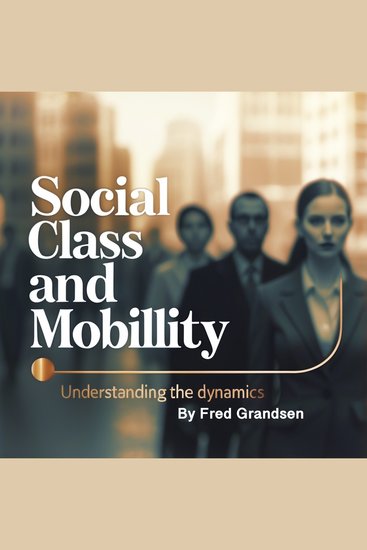
  • Social Class and Mobility - Understanding the Dynamics - cover

    Social Class and Mobility -...

    Fred Grandsen

    • 0
    • 0
    • 0
    Social class and mobility are central concepts in understanding how societies function and evolve. The classification of individuals into different social classes based on income, occupation, education, and wealth shapes life experiences, opportunities, and access to resources. At the same time, social mobility—the ability of individuals or groups to move within a social hierarchy—determines whether societies remain rigidly stratified or allow for upward and downward movement. These dynamics influence economic stability, political structures, and cultural identities, making the study of social class and mobility essential for comprehending broader social patterns. 
    Social class is typically divided into broad categories such as the upper class, middle class, working class, and lower class. Each class has distinct characteristics that define access to wealth, education, job opportunities, and social networks. For example, the upper class often benefits from inherited wealth and exclusive professional opportunities, while the working and lower classes may experience financial instability and limited career advancement. These disparities create divisions that influence daily life, from the quality of healthcare received to the neighborhoods people can afford to live in. 
    Social mobility refers to changes in an individual’s or family’s social position over time. Mobility can be upward, where individuals improve their socioeconomic status, or downward, where they experience a decline. It can also be intergenerational, occurring across multiple generations, or intragenerational, happening within an individual’s lifetime. Various factors influence mobility, including education, economic conditions, public policies, and structural barriers such as discrimination or unequal access to opportunities.
    Zum Buch
  • The Adoptee's Journey - From Loss and Trauma to Healing and Empowerment - cover

    The Adoptee's Journey - From...

    Cameron Lee Small

    • 0
    • 0
    • 0
    Every adoption is rooted in loss. 


    Adoption is often framed by happy narratives, but the reality is that many adoptees struggle with unaddressed trauma and issues of identity and belonging. Adoptees often spend the majority of their youth without the language to explore the grief related to adoption or the permission to legitimize their conflicting emotions. 


    Adoptee and counselor Cameron Lee Small names the realities of the adoptee's journey, narrating his own and other adoptees' stories in all their complexity. He unpacks the history of how adoption has worked and names how the church influenced adoption practices with unintended negative impacts on adoptees' faith. Small's own tumultuous search for and reunion with his mother in Korea inspired him to help other adoptees navigate what it means to carry multiple stories. His adoptee-centered advocacy helps adoptees regain their agency and identity on a journey of integration and healing, with meaningful relationships in all their family systems.
    Zum Buch