Rejoignez-nous pour un voyage dans le monde des livres!
Ajouter ce livre à l'électronique
Grey
Ecrivez un nouveau commentaire Default profile 50px
Grey
Abonnez-vous pour lire le livre complet ou lisez les premières pages gratuitement!
All characters reduced
Flashback Integration - Using Flashbacks to Provide Backstory and Transition to Current Events - cover

Flashback Integration - Using Flashbacks to Provide Backstory and Transition to Current Events

Peter Thompson

Maison d'édition: Heritage Books

  • 0
  • 0
  • 0

Synopsis

A well-placed flashback can transform a story, adding depth, mystery, and emotional weight. Flashback Integration explores how to seamlessly weave past events into the present narrative, enriching character arcs and enhancing reader engagement.


This guide breaks down the different types of flashbacks, whether a single moment of revelation, a slow unraveling of secrets, or a pivotal event that redefines everything. Learn how to use them effectively without disrupting the flow of your story, keeping readers immersed while revealing essential backstory at just the right time.


Perfect for novelists, screenwriters, and storytellers, this book will help you master the art of using flashbacks as a powerful tool for storytelling, creating transitions that feel natural, compelling, and emotionally resonant.
Disponible depuis: 02/02/2025.
Longueur d'impression: 84 pages.

D'autres livres qui pourraient vous intéresser

  • Beelzebubs Tales to His Grandson - First Book - cover

    Beelzebubs Tales to His Grandson...

    G.I. Gurdjieff

    • 0
    • 0
    • 0
    Beelzebub's Tales to His Grandson is the first book of G. I. Gurdjieff's monumental trilogy All and Everything. Conceived as both a cosmological epic and a profound work of inner instruction, the book presents its teachings through an unusual narrative framework that deliberately challenges the reader's habitual modes of perception and understanding.The story is framed as a series of conversations between Beelzebub — a high-ranking cosmic being exiled from the Solar System — and his beloved grandson Hassein. During a long interstellar journey aboard the spacecraft Karnak, Beelzebub recounts the history of the universe, the laws governing cosmic processes, and, above all, the tragic and peculiar condition of humanity on the planet Earth.Through this fictional yet rigorously structured device, Gurdjieff seeks to bypass conventional philosophical exposition. Instead of offering teachings directly, he embeds them in myth, satire, scientific speculation, and moral commentary, compelling the listener to engage actively with the material rather than passively absorb it.At the cosmic level, Beelzebub explains the fundamental laws of the universe — especially the Law of Three and the Law of Seven — which govern all processes, from the creation of galaxies to the functioning of the human psyche. These laws provide a unifying framework linking physics, metaphysics, biology, and psychology, presenting the cosmos as an ordered but fragile system, maintained through conscious participation rather than mechanical causality alone.A central theme of the book is the degeneration of humanity. Beelzebub describes how early humans once possessed a harmonious relationship between thinking, feeling, and bodily instinct, enabling conscious evolution. This balance, however, was gradually lost due to a series of cosmic misunderstandings, catastrophic events, and—most critically—the implantation of artificial psychological mechanisms that distorted human perception and behavior.
    Voir livre
  • Digital Liberty - Power Wealth and the Influence Machine - cover

    Digital Liberty - Power Wealth...

    Matt Stroud

    • 1
    • 1
    • 0
    Digital Liberty explores the imminent convergence of three pivotal themes: data, artificial intelligence and society's intricate social graph, and wars of a looming crisis that threatens to challenge the very foundations of liberal democracies.
    Voir livre
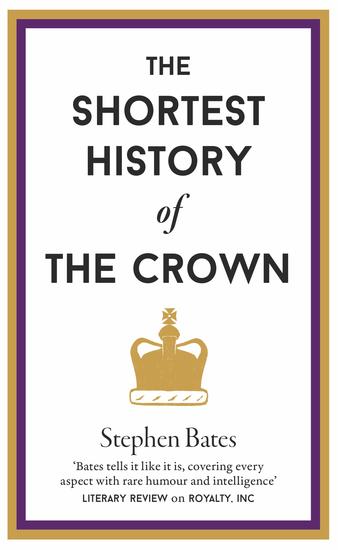
  • The Shortest History of The Crown - cover

    The Shortest History of The Crown

    Stephen Bates

    • 0
    • 0
    • 0
    'There have been scores of books about the monarchy but few, if any, as fearless and perceptive as this is... Bates tells it like it is, covering every aspect with rare humour and intelligence. I couldn't recommend it more highly.' LITERARY REVIEW on ROYALTY INCAmidst the turbulence and invasions, upheaval and dissent that characterise British history, one thing has remained remarkably stable. Although there are other monarchies, Britain's Crown stands out due to the continuity of its traditions, and its ability to adapt.There's a reason why schoolchildren still learn about the Kings and Queens: it's their power struggles and subtle compromises that have shaped the nation we inhabit today. When members of the Royal family go on 'walkabouts', they do so because monarchs stretching back to King Alfred understood the need to be seen by their subjects, and the dire consequences of remaining aloof (or abroad). When they give interviews, or accept taxes, they do so as part of a long series of engagements with other, almost-equally powerful operators: Church, Parliament, the nobility.In this sprightly commentary on the Crown's 1,800-year-long story, Stephen Bates provides a dazzling insight into Royal custom and ritual, whilst depicting the individuals behind the myth with compassion and wit. And as our ageing Queen prepares to pass the baton, he asks us all to consider: could we ever do without the Crown?
    Voir livre
  • Wounds into Wisdom - Healing Intergenerational Jewish Trauma - cover

    Wounds into Wisdom - Healing...

    PhD Rabbi Tirzah Firestone, MD...

    • 0
    • 0
    • 0
    Our past does not simply disappear. The painful history of our ancestors and their rich cultural wisdom intertwine within us to create the patterns of our future. Even when past trauma remains unspoken or has long been forgotten, it becomes part of us and our children—a legacy of both strength and woundedness that shapes our lives. 


    In this book, Tirzah Firestone brings to life the profound impact of protracted historical trauma through the compelling narratives of Israeli terror victims, Holocaust survivors, and those whose lives were marred by racial persecution and displacement. The tragic story of Firestone's own family lays the groundwork for these revealing testimonies of recovery, forgiveness, and moral leadership. 


    Throughout, Firestone interweaves their voices with neuroscientific and psychological findings, as well as relevant and inspiring Jewish teachings. Seven principles emerge from these wise narratives—powerful prescriptive tools that speak to anyone dealing with the effects of past injury. At the broadest level, these principles are directives for staying morally awake in a world rife with terror.
    Voir livre
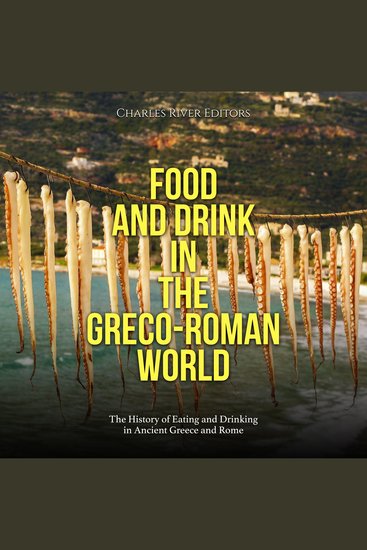
  • Food and Drink in the Greco-Roman World: The History of Eating and Drinking in Ancient Greece and Rome - cover

    Food and Drink in the...

    Editors Charles River

    • 0
    • 0
    • 0
    The social importance placed on food and wine in the Greek world was even more pronounced and had profound consequences for the rest of the world. As one modern historian aptly put it, “How classical Athens was fed is not a matter of marginal importance. Nothing less than the material base of a brilliant civilization is at issue.” Indeed, it was through the ability to create a food surplus that the ancient Greeks were able to establish their poleis and, from these, go on to develop the political and social structures that built the backbone of Western Civilization. Drinking for pleasure, as opposed to simply meeting the body´s requirement for hydration, was so crucial in Greece that a couple historians noted, “In a way, the study of the classics is the study of the consumption of alcohol.” While this assertion is an oversimplification, there is no doubt that alcohol played a crucial role in the evolution of Greek culture. 
    Indulgence is at the heart of modern perceptions of eating and drinking for the ancient Romans. The majority of primary sources depicting food and drink that have survived show rich patricians reclining at a table loaded with exotic foods, and Roman diners are often depicted as gorging themselves over numerous courses served over many hours. Of course, the history of eating and drinking for the wider population within the more than 1,000-year span of the empire was somewhat different. What the richest ate was markedly different from the fare on offer to their slaves, and between these two extremes, there were numerous socioeconomic groups whose eating and drinking habits varied enormously. Moreover, since the Roman Empire encompassed much of Europe and the Middle East, the different kinds of food and drinks available in Rome were vast.
    Voir livre
  • The Mind of the Minister - Restoring trust between ministers and civil servants - cover

    The Mind of the Minister -...

    Tom Browne

    • 0
    • 0
    • 0
    Britain's most important relationship, between civil servants and ministers, has reached breaking point. Drawing on interviews with former government ministers and Permanent Secretaries – including Vince Cable, Caroline Flint, Rory Stewart, Philip Rutnam, Simon McDonald and Una O'Brien – The Mind of the Minister provides expert guidance and recommendations for how this vital relationship can improve.
    Centuries of carefully built trust and mutual understanding have been undermined and strained in recent years, not least by mismanagement at the highest level, a scorched-earth approach to constitutional norms and the testing of civil service integrity. This relationship now needs urgent attention.
    Ministers, famously, begin the job with an hour's notice and often know little about the department they've landed in. They bring energy, drive and optimism for change, but over time, these ambitions can be drowned by reality, accountability and crises, as well as the distractions of promotion, demotion or a changing political landscape.
    Civil servants, on the other hand, serve the government of the day and remain in post while ministers come and go. They must be ready to adjust and impartially support a minister of any political persuasion or personality.
    How does this partnership really work in practice? How do both sides adjust to the different chapters in a ministerial lifespan? What happens if rule makers become rule breakers without repercussions? This compelling book lifts the curtain on the minister–civil servant partnership, highlighting that this crucial relationship must improve – for the sake of our democracy.
    Voir livre