Rejoignez-nous pour un voyage dans le monde des livres!
Ajouter ce livre à l'électronique
Grey
Ecrivez un nouveau commentaire Default profile 50px
Grey
Abonnez-vous pour lire le livre complet ou lisez les premières pages gratuitement!
All characters reduced
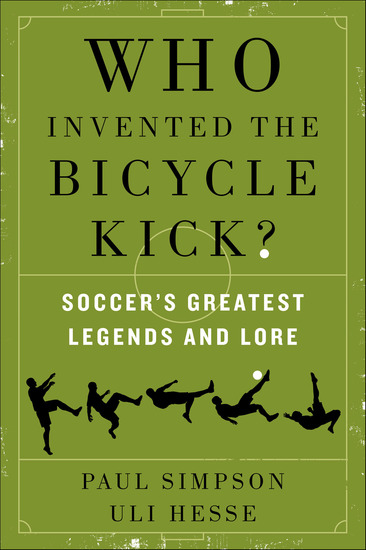
Who Invented the Bicycle Kick? - Soccer's Greatest Legends and Lore - cover

Who Invented the Bicycle Kick? - Soccer's Greatest Legends and Lore

Paul Simpson, Uli Hesse

Maison d'édition: William Morrow Paperbacks

  • 0
  • 0
  • 0

Synopsis

Published in time for the 2014 World Cup, the ultimate collection of soccer’s greatest lore and legends, illustrated with 100 black-and-white photos, by two of the world’s most knowledgeable soccer journalists.Who Invented the Bicycle Kick? is a rollicking ride through soccer history that will surprise and delight fans old and new. Veteran soccer journalists Uli Hesse and editor Paul Simpson bring together the sublime feats, legendary personalities, neglected heroes, bizarre twists of fate, and fascinating mysteries that have shaped the world’s most popular game, including:Who invented the bicycle kick?Why does a football match last 90 minutes?Who scored the fastest goal ever?Which match produced the largest number of red cards?Why are seven dead cats buried under a stadium in Argentina?Which country was banned from the World Cup after refusing to play in shoes?Providing answers to more than 100 questions, Hesse and Simpson explore the beautiful game as never before, shedding new light on legends such as Pele, Maradona, Messi, Beckham, Ronaldo, and Rooney, and uncovering lost histories of international clubs like Manchester United, Chelsea, Aston Villa, Real Madrid, Bayern Munich, and more. Challenging conventional wisdom, and destroying a few urban myths, Who Invented the Bicycle Kick? is a must for every soccer lover.
Disponible depuis: 20/05/2014.
Longueur d'impression: 307 pages.


D'autres livres qui pourraient vous intéresser

  • American Civil War in 1864 The: The History and Legacy of the War’s Penultimate Year - cover

    American Civil War in 1864 The:...

    Editors Charles River

    • 0
    • 0
    • 0
    Americans have long been fascinated by the Civil War, marveling at the size of the battles, the leadership of the generals, and the courage of the soldiers. Since the war's start over 150 years ago, the battles have been subjected to endless debate among historians and the generals themselves. The Civil War was the deadliest conflict in American history, and had the two sides realized it would take 4 years and inflict over a million casualties, it might not have been fought. Since it did, however, historians and history buffs alike have been studying and analyzing the biggest battles ever since.  
    	By the close of 1864, Abraham Lincoln had been reelected, the Union army had taken Nashville from General Hood, and Sherman had concluded his total war, “slash-and-burn” march of destruction to Savannah, Georgia, offering it as a Christmas present to Lincoln. Nevertheless, with everything seemingly falling to pieces, the South still held out hope of some sort of miracle, and Davis even attempted to send a peace delegation to meet with Lincoln in the early months of 1865. On January 28, 1865 as Union General Ulysses S. Grant was continuing to lay siege to Lee’s army at Petersburg, Virginia, Davis sent three commissioners headed by Vice-President Stephens to initiate informal peace talks with Lincoln. By February 3, however, the talks, known as the Hampton Roads Conference, came to a stalemate as Lincoln would accept nothing less than total union, while Davis would only accept Southern independence.  
    	Even at that point, the South was clearly on its last legs. General George H. Thomas destroyed John Bell Hood’s Confederate army at the battles of Nashville and Franklin, leaving only two large Confederate armies still in the field. Lee's army was weakened by desertion, lack of supplies and casualties, and Joseph E. Johnston’s army could barely resist against Sherman’s army as it was advancing north toward Virginia.
    Voir livre
  • The Day Nina Simone Stopped Singing - cover

    The Day Nina Simone Stopped Singing

    Darina Al Joundi, Mohamed Kacimi

    • 0
    • 1
    • 0
    The Homeland actress’s “recollections of her unconventional youth in war-torn Beirut are heartbreaking yet humorous . . . in this unique” memoir (Publishers Weekly).   Raised in 1970s Lebanon on Charles Baudelaire, A Clockwork Orange, and fine Bordeaux, Darina Al-Joundi was encouraged by her unconventional father to defy all taboos. She spent her adolescence defying death in Beirut nightclubs as bombs fell across the city. The more oppressive the country became, the more drugs and anonymous sex she had, fueling the resentment directed at her daily by the same men who would spend the night with her.   As the war dies down, she begins to incur the consequences of her lifestyle. On his deathbed, her father’s last wish is for his favorite song, “Sinnerman” by Nina Simone, to be played at his funeral instead of the traditional suras of the Koran. When she does just that, the final act of defiance elicits a catastrophic response from her surviving family members.   In this dramatic true story, Darina Al-Joundi is defiantly passionate about living her life as a liberated woman, even if it means leaving everyone and everything behind in this “beautifully taut and relentlessly unemotional” memoir (Kirkus).
    Voir livre
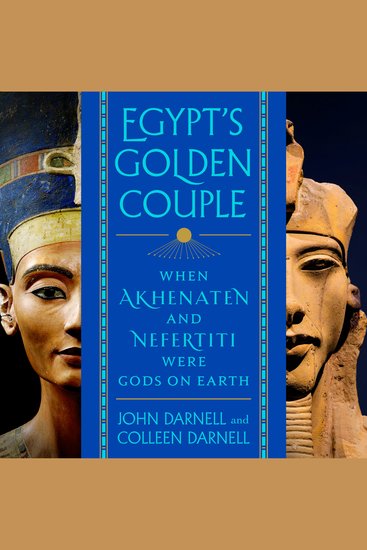
  • Egypt's Golden Couple - When Akhenaten and Nefertiti Were Gods on Earth - cover

    Egypt's Golden Couple - When...

    John Darnell, Colleen Darnell

    • 0
    • 0
    • 0
    Two celebrated Egyptologists bring to vivid life the intriguing and controversial reign of King Tut’s parents 
    Akhenaten has been the subject of radically different, even contradictory, biographies. The king has achieved fame as the world’s first individual and the first monotheist, but others have seen him as an incestuous tyrant who nearly ruined the kingdom he ruled. The gold funerary mask of his son Tutankhamun and the painted bust of his wife Nefertiti are the most recognizable artifacts from all of ancient Egypt. But who are Akhenaten and Nefertiti? And what can we actually say about rulers who lived more than three thousand years ago? 
     
    November 2022 marks the centennial of the discovery of the tomb of Tutankhamun and although “King Tut” is a household name, his nine-year rule pales in comparison to the revolutionary reign of his parents. Akhenaten and Nefertiti became gods on earth by transforming Egyptian solar worship, innovating in art and urban design, and merging religion and politics in ways never attempted before. Combining fascinating scholarship, detective suspense, and adventurous thrills, Egypt’s Golden Couple is a journey through excavations, museums, hieroglyphic texts, and stunning artifacts. From clue to clue, renowned Egyptologists, John and Colleen Darnell, reconstruct an otherwise untold story of the magnificent reign of Akhenaten and Nefertiti.
    Voir livre
  • Fatal Chemistry - Inside the Fentanyl Crisis - cover

    Fatal Chemistry - Inside the...

    Davis Truman

    • 0
    • 0
    • 0
    In the book Fatal Chemistry, one gets to know the frightful reality of the rise of fentanyl, which is a synthetic opioid that has changed the face of addiction, broken families, and put the limits of medicine, policy, and even human nature to the test. This book, by its very compelling nature and with the power of the investigative journalists, dives deep into how fentanyl changed from being a breakthrough in medicine to a dangerous drug that is the cause of the drug epidemic in the community worldwide, which is distributed on the streets. 
    Aside from the history of the opiates, the dark side of the web in the illegal trade, Fatal Chemistry uncovers the driving forces behind the epidemic that are concealed. You understand how the stress, trauma, and social life problems of the early years lead to addiction – but also realize how science, empathy, and prevention can be the answer to it. 
    If so, the person is a medical provider, a policymaker, an educator, or simply someone who wants to know the real story behind the news. Fatal Chemistry is full of both learning and optimism – an uncommon mixture of reality, people's experiences, and useful insights. 
    In here, you will find: 
    •	The untold history of opioids and the birth of fentanyl 
    •	How illicit fentanyl entered the global market — and why it's so deadly 
    •	The anatomy of the epidemic and its devastating ripple effects 
    •	Real-world approaches to treatment, recovery, and harm reduction 
    •	The science behind stress, trauma, and addiction 
    •	Proven strategies for overdose prevention and community resilience 
    Fatal Chemistry: Inside the Fentanyl Crisis is more than a piece of writing; it is a realization. Informative, very emotional, and profoundly human, this must-have piece of writing will alter the way in which you view addiction, recovery, and the world surrounding you.
    Voir livre
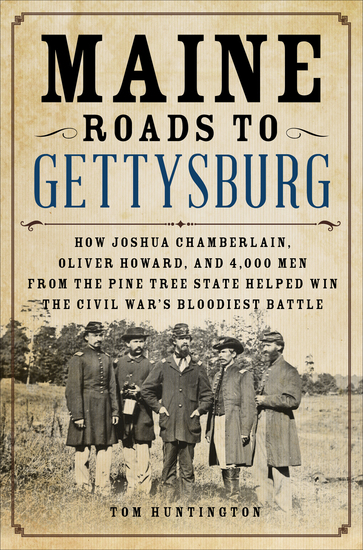
  • Maine Roads to Gettysburg - How Joshua Chamberlain Oliver Howard and 4000 Men from the Pine Tree State Helped Win the Civil War's Bloodiest Battle - cover

    Maine Roads to Gettysburg - How...

    Tom Huntington

    • 0
    • 0
    • 0
    From the author of Searching for George Gordon Meade, a study of how troops from Maine aided the Union Army’s victory at the Battle of Gettysburg. Joshua Lawrence Chamberlain and his 20th Maine regiment made a legendary stand on Little Round Top during the Battle of Gettysburg in July 1863. But Maine’s role in the battle includes much more than that. Soldiers from the Pine Tree State contributed mightily during the three days of fighting. Pious general Oliver Otis Howard secured the high ground of Cemetery Ridge for the Union on the first day. Adelbert Ames—the stern taskmaster who had transformed the 20th Maine into a fighting regiment—commanded a brigade and then a division at Gettysburg. The 17th Maine fought ably in the confused and bloody action in the Wheatfield; a sea captain turned artilleryman named Freeman McGilvery cobbled together a defensive line that proved decisive on July 2; and the 19th Maine helped stop Pickett’s Charge during the battle’s climax.  Maine soldiers had fought and died for two bloody years even before they reached Gettysburg. They had fallen on battlefields in Virginia and Maryland. They had died in front of Richmond, in the Shenandoah Valley, on the bloody fields of Antietam, in the Slaughter Pen at Fredericksburg, and in the tangled Wilderness around Chancellorsville. And the survivors kept fighting, even as they followed Robert E. Lee’s Army of Northern Virginia into Pennsylvania.  In Maine Roads to Gettysburg, author Tom Huntington tells their stories. Praise for Searching for George Gordon Meade “An engrossing narrative that the reader can scarcely put down.” —Pulitzer Prize-winning historian James M. McPherson “Unique and irresistible.” —Lincoln Prize-winning historian Harold Holzer
    Voir livre
  • Who We Are Is Made - An Audio-Anthology - cover

    Who We Are Is Made - An...

    Nicole Combeau, Daniel Amador,...

    • 0
    • 0
    • 0
    Who We Are Is Made is an audio-anthology of South Florida writers and their roots, a collection of histories that came together through an open call for submissions, through workshops, through mentorships, and sometimes through phoning a friend. We set out to explore how much of us is actually the gift, legacy, the influence of those from other generations. How do they shape the language we use to describe the world around us? We carry histories across continents and cultivate them locally. We ferry recipes across the Americas and we share them with our neighbors, our friends. When we take a closer look at these things we carry, we start to see beyond the thing itself, to see it differently. These stories portray the complex and diverse makeup of Miami and South Florida, honoring the generations that shape who we are.
    Voir livre