Rejoignez-nous pour un voyage dans le monde des livres!
Ajouter ce livre à l'électronique
Grey
Ecrivez un nouveau commentaire Default profile 50px
Grey
Abonnez-vous pour lire le livre complet ou lisez les premières pages gratuitement!
All characters reduced
Civics: as Applied Sociology - cover

Civics: as Applied Sociology

Patrick Geddes

Maison d'édition: DigiCat

  • 0
  • 0
  • 0

Synopsis

In "Civics: as Applied Sociology," Patrick Sir Geddes presents a pioneering exploration of the intersection between sociology and civic life, advocating for a holistic understanding of urban environments. Employing a narrative style rich in empirical observations and practical applications, Geddes meticulously intertwines sociological theories with the realities of civic engagement and urban planning. The book is situated within the context of early 20th-century social reform movements and exemplifies Geddes' commitment to establishing a balanced relationship between people and place through thoughtful civic design. Patrick Sir Geddes, a Scottish biologist and sociologist, was a visionary thinker whose interdisciplinary approach was influenced by his background in natural sciences and deeply held beliefs in the importance of community and environment. His experiences in urban planning and landscape design informed his conviction that cities must evolve through a synthesis of social, cultural, and ecological considerations. Geddes' progressive ideas reflect a response to the unprecedented urban challenges of his time, showcasing his belief in the power of informed citizenship. "Civics: as Applied Sociology" is highly recommended for scholars, urban planners, and anyone interested in the dynamics of community life. Geddes' insightful reflections offer timeless lessons applicable in contemporary discussions about civic responsibility and sustainable urban development, making this work an essential read for understanding the foundation of any thriving society.
Disponible depuis: 28/05/2022.
Longueur d'impression: 109 pages.

D'autres livres qui pourraient vous intéresser

  • Stranger Things Psychology - Life Upside Down - cover

    Stranger Things Psychology -...

    Travis Langley

    • 0
    • 0
    • 0
    Monsters of the Upside Down, beware! Travis Langley (author of the acclaimed Batman and Psychology) returns with a group of expert contributors to explore these and other questions to shine a light on true human nature through the Netflix series and cultural phenomenon Stranger Things. When do feelings of grief, guilt, depression, fear, and isolation tear us down, and how do we transform them into hope, inspiration, forgiveness, acceptance, and motivation to do what's right? Growing up is hard enough without metaphors for the dangers that lurk in life's shadows springing to life in the form of monsters, villains, conspiracies, and enemy soldiers. Stranger Things Psychology: Life Upside Down descends into the dark side of adolescence to find the light on the other side of the ultimate coming-of-age story.
    Voir livre
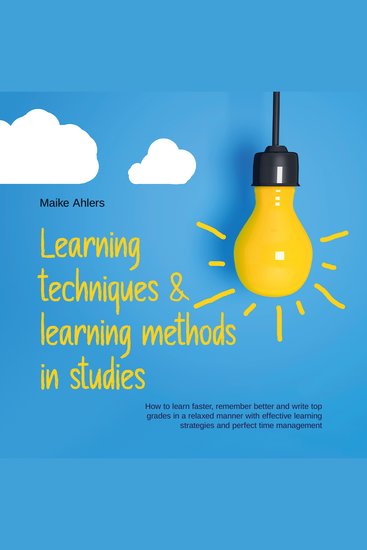
  • Learning techniques & learning methods in studies: How to learn faster remember better and write top grades in a relaxed manner with effective learning strategies and perfect time management - cover

    Learning techniques & learning...

    Lukas Glaser

    • 0
    • 0
    • 0
    Are you about to start studying and are you already feeling a good dose of creeping overwhelm in addition to anticipation at the thought of it? Have you just started and need some guidance on how to balance your studies and your free time as well as possible? Have you been wishing for a fresh start for a long time because the recurring cycle of motivation, procrastination and stressful learning is draining you? Do you no longer know what your real problem is and how to tackle it? Don't despair yet, because the knowledge you'll gain in this book can turn your entire studies upside down.
    Voir livre
  • Quiet Night Think - Poems & Essays - cover

    Quiet Night Think - Poems & Essays

    Gillian Sze

    • 0
    • 16
    • 0
    “One function of the poet at any time is to discover by his own thought and feeling what seems to him to be poetry at that time,” writes Wallace Stevens. In Quiet Night Think, award-winning poet Gillian Sze expresses her own definition.
    		 
    During the remarkable period of early parenthood, Sze’s new maternal role urges her to contemplate her own origins, both familial and artistic. Comprised of six personal essays, poems, and a concluding long poem, Quiet Night Think takes its title from a direct translation of an eighth-century Chinese poem by Li Bai, the subject of the opening essay. Sze’s memory of reading Li Bai’s poem as a child marks the beginning of an unshakable encounter with poetry. What follows is an intimate anatomization of her particular entanglement with languages and cultures.
    		 
    In her most generically diverse book yet, Sze moves between poetry and prose, mother and writer, the lyrical and the autobiographical, all the while inviting readers to meditate with her on questions of emergence and transformation: What are you trying to be? Where does a word break off? What calls to us throughout the night?
    Voir livre
  • Cambodia - History of Angkor Wat and the Khmer Empire (3 in 1) - cover

    Cambodia - History of Angkor Wat...

    Kelly Mass

    • 0
    • 0
    • 0
    Learn more about the history of those countries. The topics addressed will be these: 
    Angkor Wat-- The temple was built as the state temple for the Khmer Empire at the demand of Suryavarman II in the early 12th century in Yaodharapura (, contemporary Angkor), the Khmer Empire's capital. It was constructed in the early 12th century to honor the Hindu god Vishnu, but by the end of the century, it had been changed to a Buddhist temple. 
    Angkor Wat is a fascinating structure, dating back hundreds of years, and it’s impressive how much of it has remained intact. 
    The Khmer Empire--Historians describe Cambodia as the Khmer State or the Angkorian Empire (Khmer:) from the 9th century to the 15th century, when it was a Hindu/Buddhist empire in Southeast Asia. The empire, which developed from the old societies of Funan and Chenla, governed and/or "vassalized" the majority of mainland Southeast Asia and parts of Southern China, covering from the suggestion of the Indochinese Peninsula northward to modern-day Yunnan province in China, and from Vietnam westward to Myanmar. The Khmer Empire was greater at its peak than the Byzantine Empire (Eastern Roman Empire) that existed at the exact same period. 
    The Siamese-- Siam was just a much different name for what's now referred to as Thailand. The Siamese are the people who live there, though they're never ever called as such any longer. 
    Thailand is a fascinating country, with its own culinary arts, culture, history, royalty, infrastructure, and influence on the world. To learn more about these “Thai” people before they were called Thai, when they were Siamese, is to learn about those people’s roots.
    Voir livre
  • A Midsummer Night's Dream - cover

    A Midsummer Night's Dream

    William Shakespeare

    • 0
    • 0
    • 0
    What happens when love falls under a spell?
    
    A Midsummer Night's Dream is one of William Shakespeare's most beloved and imaginative comedies. Set in a moonlit forest filled with fairies and magic, the play weaves together the stories of four young lovers, a mischievous sprite, and a group of amateur actors whose plans are delightfully undone by enchantment.
    
    With mistaken identities, magical potions, and playful chaos, Shakespeare explores love in all its forms—romantic, foolish, and transformative. The result is a joyful blend of humor, fantasy, and lyrical language that has delighted audiences for over four centuries.
    
    This timeless comedy celebrates imagination, desire, and the thin line between dreams and reality, making it one of Shakespeare's most accessible and entertaining works.
    
    Inside this eBook, you'll experience:
    
    A sparkling romantic comedy filled with magic and mischief
    
    Memorable characters including Puck, Oberon, and Titania
    
    Themes of love, illusion, and transformation
    
    One of Shakespeare's most frequently performed plays
    
    Read in classrooms and performed on stages worldwide, A Midsummer Night's Dream remains essential reading for lovers of classic literature, theater, and fantasy.
    
    Step into the enchanted forest and let the dream begin. Buy now and enjoy one of Shakespeare's most magical plays.
    Voir livre
  • The Rise of Anarchism - From Historical Roots to Modern Movements - cover

    The Rise of Anarchism - From...

    Arlo Holders

    • 0
    • 0
    • 0
    Anarchism is a political philosophy that advocates for a society without rulers, where individuals are free to govern themselves without the interference of centralized authority. It is a broad and diverse ideology that challenges traditional systems of power, particularly the state, while emphasizing voluntary cooperation and mutual aid among individuals. Anarchism is rooted in the belief that human beings are capable of organizing themselves in non-hierarchical, egalitarian structures, and that the imposition of authority and coercive institutions is both unjust and unnecessary. 
    At its core, anarchism rejects the concept of a state or any institution that wields power over others. Anarchists argue that the state is inherently oppressive and coercive, often serving the interests of the powerful rather than the people it is supposed to protect. The state's monopoly on violence, enforcement of laws, and control over resources are seen as mechanisms of domination that restrict human freedom and dignity. Instead of these top-down systems, anarchism envisions decentralized, voluntary forms of organization where individuals and communities govern themselves through direct democracy and mutual aid. 
    The philosophy of anarchism is built on a commitment to freedom, autonomy, and the abolition of all forms of hierarchy, including not only state power but also social, economic, and cultural hierarchies. Anarchists seek to dismantle systems of oppression such as capitalism, patriarchy, and racism, which they view as intertwined with state power. The idea of freedom in anarchism is not just the absence of external constraints, but the presence of opportunities for people to fully develop their potential and live in harmony with others.
    Voir livre