Begleiten Sie uns auf eine literarische Weltreise!
Buch zum Bücherregal hinzufügen
Grey
Einen neuen Kommentar schreiben Default profile 50px
Grey
Jetzt das ganze Buch im Abo oder die ersten Seiten gratis lesen!
All characters reduced
Auguste Renoir - cover

Wir entschuldigen uns! Der Herausgeber (oder Autor) hat uns beauftragt, dieses Buch aus unserem Katalog zu entfernen. Aber kein Grund zur Sorge, Sie haben noch mehr als 500.000 andere Bücher zur Auswahl!

Auguste Renoir

Patrick Baude

Verlag: Parkstone International

  • 0
  • 0
  • 0

Beschreibung

Pierre-Auguste Renoir (1841-1919) is one of the most famous French impressionist painters. Influenced in his early works by Raphael, and creator of more than 6,000 paintings, Renoir gave more importance to the human figure than to the landscape. His works, enriched by a palette that was exclusive and unique to the artist, show us life in Paris at the time. His greatest masterpiece remains the Bal du Moulin de la Galette.
Verfügbar seit: 01.03.2023.
Drucklänge: 38 Seiten.

Weitere Bücher, die Sie mögen werden

  • Scotland in 100 Buildings - cover

    Scotland in 100 Buildings

    Roger Emmerson

    • 0
    • 0
    • 0
    Scotland in 100 Buildings by architect Roger Emmerson is a captivating journey through the architectural marvels of Scotland, seen uniquely through Emmerson's personal experiences.
    This isn't a dry history or textbook – it's a lively, intimate account where each building tells its own story. Emmerson has visited every site featured, offering first-hand insights that bring these places to life, from iconic landmarks to hidden gems. His reflections aim to inspire readers to explore for themselves, rather than simply inform, making this book easy to pick up at any page. 
    Ideal for architecture enthusiasts, travellers and locals alike, Scotland in 100 Buildings will appeal to anyone curious about Scotland's diverse buildings and the personal tales they inspire. It's perfect for those seeking an approachable and authentic look at Scotland's architectural legacy.
    Zum Buch
  • The Virginian - Adapted from the screenplay & performed for radio by the original film stars - cover

    The Virginian - Adapted from the...

    Mr Punch

    • 0
    • 0
    • 0
    Mr Punch Presents: THE VIRGINIAN, who falls in love with Molly the local schoolmarm, in this classic western starring Gary Cooper. He has to vie for her attention with his best friend Steve, who soon becomes involved with a band of outlaws led by the villainous Trampas. Captured for cattle rustling, the film climaxes with a showdown between Trampas and the Virginian in a classic shoot-out on a dusty western street.  
     
    This high-quality audiobook has been re-mastered and re-edited from the original radio broadcast. 
      
    Also available as part of the Hollywood Playhouse BOX SET, a collection of 14 Oscar winning ear-movies, adapted from the original screenplays & performed for the radio by many of the original film stars in front of a live studio audience. 
      
    These radio dramas were….to become as popular as the movies themselves. Hollywood Movie Memories 
      
    This is an excellent audio product that will appeal to the majority of audiobook listeners. Talking Business 
      
    A lovely series to add to any film, audio or crime lovers’ collection. Audio World
    Zum Buch
  • An Engineer Imagines - cover

    An Engineer Imagines

    Peter Rice

    • 0
    • 0
    • 0
    The long-awaited reissue of the autobiography of Peter Rice, one of the main structural engineers behind the Sydney Opera House, the Pompidou Centre, the Menil Collection and Lloyd's of London.
    
    'I am an engineer. Often people will call me an 'architect engineer' as a compliment. It is meant to signify a quality of engineer who is more imaginative and design-orientated than a normal engineer... To call an engineer an 'architect engineer' because he comes up with unusual or original solutions is essentially to misunderstand the role of the engineer in society.'
    An Engineer Imagines is a rare look into the professional creativity and philosophy of Peter Rice, who was widely acclaimed as the greatest structural engineer of his generation. He was a man who, in Renzo Piano's words, could design structures 'like a pianist who can play with his eyes shut'. Working with many of the world's greatest architects on buildings that became icons of contemporary architecture, he brought a uniquely poetic feeling to his work.
    Joining Ove Arup & Partners in 1956, Rice had heard that 'it was a place where an oddball could fit in.' Taking on Arup's theory of Total Design to heart, Rice writes about the role of the engineer in society, and how he himself applied his creativity to various projects. He admits he became an engineer by accident, tentatively feeling his way through a career without a natural instinct. But as he takes you through each of his projects, one-by-one, you can trace his development from graduate to veteran.
    Written in clear and poetic language, Rice's autobiography is perfect for those who want to better understand postwar buildings, our concrete environment, or are budding students of engineering and architecture.
    Zum Buch
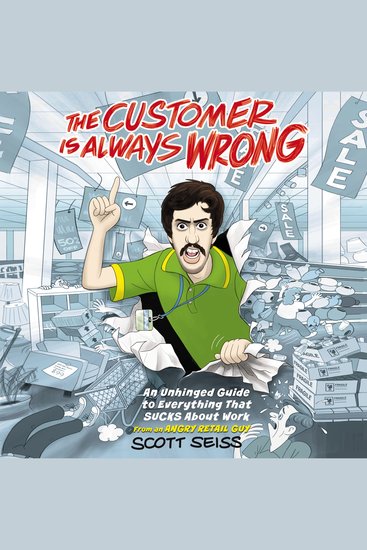
  • The Customer Is Always Wrong - An Unhinged Guide to Everything That Sucks About Work (from an Angry Retail Guy) - cover

    The Customer Is Always Wrong -...

    Scott Seiss

    • 0
    • 0
    • 0
    Read by the author. 
    Give the gift of funny to anyone in your life (maybe even yourself!) who could use a dose of irreverent humor about why work stinks. 
    Customers want you to magically produce something from the back room. Bosses schedule you on your day off. Corporate policies are mandated that make zero practical sense. Sound familiar? 
    If you've ever worked in customer service (or any job, really), you know that everyone else—the customer, the boss, the company—is always right, and never the employee. Well, lucky for you, the "Angry Retail Guy" is more furious—and funnier—than ever in this hilariously unhinged guide to all the things we wish we could say out loud at work . . . without getting fired. In The Customer Is Always Wrong, you'll laugh (and maybe cry) at this rant-filled, illustrated attack on all the frustrating things that suck about work. 
    Expanding on the ire-filled, laugh-out-loud viral videos that have made him a (whispered) workplace name, Scott Seiss joyfully eviscerates not only overbearing customers but every annoying aspect of work like purposeless job interview questions, debatable brand values, and the walking human trainwrecks that are our bosses. Scott guides you all the way from first applying to the job, to inevitably gritting your teeth and smiling on your last day when that one manager you despise says, “Come back and visit us!” 
    The Customer Is Always Wrong is for anyone who:Is tired of their "raise" being as close as scientifically possible to 0 percentWants to tell their boss that not even the self-checkout machines want to work hereIs prepared to tell the next customer who asks to see the manager that the manager has no idea what's going on eitherCalls in sick whenever their PTO request is deniedBelieves entering a store five minutes before it closes should be illegalExplains, on a weekly basis, why someone can't use a coupon that expired 17 years agoIs physically repulsed by the phrase, "At this company, we're a family. . . ." 
      
    This tongue-in-cheek commiseration for workers will make you laugh out loud at the things that drive you crazy in the workplace. With Scott's signature rants, funny anecdotes, and absurd musings, this book celebrates and empowers underpaid and overworked employees with an uproarious ode to what we really think about our jobs and the customers that come with them (except the ones who read this book, of course). 
    Comics and graphics can be found in the audiobook companion PDF download. 
     
    Zum Buch
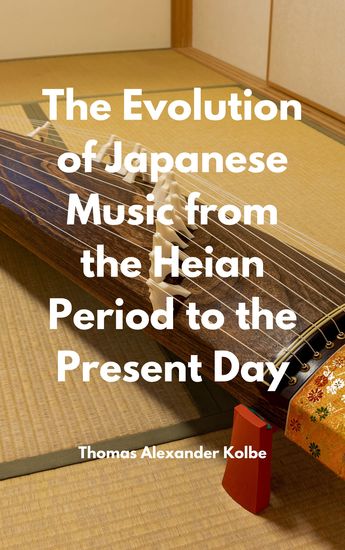
  • The Evolution of Japanese Music from the Heian Period to the Present Day - cover

    The Evolution of Japanese Music...

    Anonym

    • 0
    • 0
    • 0
    The ebook "The Evolution of Japanese Music from the Heian Period to the Present Day" covers the rich history and transformation of Japanese music across multiple periods. It explores key eras such as the Heian, Muromachi, Edo, and modern periods, focusing on how historical, political, and cultural shifts shaped musical forms.
    
    During the Heian period (794–1185), Gagaku (court music) and Bugaku (dance) dominated the scene, representing the pinnacle of classical Japanese music tied to the imperial court. Instruments like the biwa and koto became central to these traditions. As Japan entered the Muromachi period (1336–1573), new musical influences from Zen Buddhism emerged, particularly through the use of the shakuhachi, a bamboo flute used by monks for meditation. Popular and folk music such as *dengaku* and *sarugaku* also evolved, becoming the foundation for future theatrical traditions like Noh.
    
    The Azuchi-Momoyama period (1573–1603) saw continued development in Noh theater and the rise of Kabuki, a dynamic theatrical form combining music, dance, and drama. The introduction of Western music through European contact during this time brought new instruments like the guitar and harpsichord to Japan, although traditional instruments such as the shamisen became key to the emerging Bunraku puppet theater.
    
    By the Edo period (1603–1868), Japan's isolationist policies preserved and refined its musical traditions. Kabuki and Bunraku became major cultural forces, heavily integrating music into their performances. The shamisen played a central role in both forms. Gagaku and other courtly traditions persisted but gradually became more ceremonial.
    
    In the modern era, Western influences grew stronger, leading to a blending of traditional and contemporary styles, from classical Japanese music to the introduction of genres like J-pop and Enka, while maintaining the distinctiveness of traditional Japanese sound.
    
    This historical journey shows how Japanese music continuously adapted to external influences while preserving its ancient roots.
    Zum Buch
  • Realistic Painting with Alcohol Ink - Learn Intermediate and Advanced Techniques with 17 Animal Landscape Still Life and Portrait Projects - cover

    Realistic Painting with Alcohol...

    Laurie Williams, Sheryl Williams

    • 0
    • 0
    • 0
    A follow up to their extensive and introductory painting book, Alcohol Ink Guide, which teaches all the beginning techniques for those exploring alcohol ink, artists and instructors Laurie Williams and Sherry Williams return with this instructional resource for creating truly realistic art using this versatile medium. Learn and master the four main alcohol ink painting techniques that include blending, masking, creating a barrier layer, and painting on both sides. From there, tutorials are provided for painting skin tones, fur, stones, rocks, and water, botanical effects, trees, and animals. Also included are 10 realism projects to practice and put together the skills learned into stunning works of art. The authors have years of experience working with alcohol inks, mastering the brushes, blenders, masking, control, and layering that enables artists to create magnificent realistic art, from portraits to landscapes, still lives to photo realism.
    Zum Buch