Rejoignez-nous pour un voyage dans le monde des livres!
Ajouter ce livre à l'électronique
Grey
Ecrivez un nouveau commentaire Default profile 50px
Grey
Abonnez-vous pour lire le livre complet ou lisez les premières pages gratuitement!
All characters reduced
The Perils of Culture - cover

The Perils of Culture

Pasquale De Marco

Maison d'édition: Publishdrive

  • 0
  • 0
  • 0

Synopsis

In a world where cultures collide and intertwine, understanding the complexities of culture and its impact on society is more important than ever. This book delves into the fascinating relationship between culture and society, exploring the ways in which culture shapes our lives and how society, in turn, shapes culture.

With its comprehensive and thought-provoking approach, this book examines various facets of culture's influence, from the role of media and technology to the impact of globalization and diversity. It delves into the concept of commodification, counterculture, and resistance, shedding light on the dynamics that drive cultural change.

Through engaging and insightful analysis, this book provides a deeper understanding of the forces that shape our cultural landscape. It explores the challenges and opportunities that lie ahead, offering valuable insights into the future of culture and the role we can play in shaping it.

Whether you're a student of sociology, an avid reader interested in cultural studies, or simply someone who wants to expand their understanding of the world around them, this book is an essential resource. Its interdisciplinary approach and accessible writing style make it a valuable addition to any bookshelf.

With its in-depth examination of culture and society, this book promises to leave a lasting impression on readers, inspiring them to think critically about the world they live in and the role they play in shaping its cultural fabric.


If you like this book, write a review!
Disponible depuis: 02/06/2025.
Longueur d'impression: 160 pages.


D'autres livres qui pourraient vous intéresser

  • Seduction - Influencing Someone through Charm or Persuasion - cover

    Seduction - Influencing Someone...

    Cito Harder

    • 0
    • 0
    • 0
    Seduction is often perceived as an art form, one that blends charm, charisma, and influence. However, behind its allure lies a deep psychological foundation that shapes how and why individuals are drawn to one another. The psychology of seduction is rooted in our basic emotional and social needs, particularly the desire for connection, validation, and attraction. Understanding these underlying psychological mechanisms can shed light on how seduction functions both consciously and subconsciously in human interactions. 
    At its core, seduction taps into the psychological principle of attraction, which is influenced by a combination of innate and learned factors. Human beings are social creatures, and our brains are wired to respond to others in ways that promote bonding and intimacy. This attraction is not purely physical but can also be emotional, intellectual, and even social. For example, people often find others more attractive when they share similar interests, values, or experiences, which creates a sense of commonality and trust. This bond of similarity is a psychological catalyst in seduction, where individuals may use shared interests to create a sense of connection and mutual understanding. 
    Another psychological aspect of seduction lies in the concept of power dynamics. Seduction often involves a delicate balance of influence and control. The person who is seducing may use charm or persuasion to gain an upper hand, while the target of the seduction may either knowingly or unknowingly submit to the allure. Power, in this context, does not always have to be overt or manipulative. Sometimes, it can be subtle—through small gestures, compliments, or actions that invoke a sense of attraction or desire.
    Voir livre
  • Conquering Depression: A Guide to Recovery - A Group Discussion - cover

    Conquering Depression: A Guide...

    Vines Graener

    • 0
    • 0
    • 0
    Welcome to Conquering Depression: A Guide to Recovery. This audiobook is designed for anyone facing the challenges of depression or seeking to understand it more deeply. Inside, you’ll find practical steps, helpful insights, and encouragement to guide you on the path to healing. Whether you're just beginning your journey or are already taking steps toward recovery, remember that you are not alone, and that with time and effort, change is possible. Let’s begin this journey together, one step at a time.
    Voir livre
  • Na Scéalta Atá Fós Ann - cover

    Na Scéalta Atá Fós Ann

    Ciara Geraghty

    • 0
    • 0
    • 0
    Tá an tUasal Ó Sé agus a mhadra dílis, Seoirse, ag dul amach ar cuairt ghairid chuig na siopaí. Tá dearmad déanta ag an Uasal Ó Sé ar a chuid eochracha, ach beidh Bean Uí Shé ann, mar a bhíonn sí i gcónaí, chun iad a ligean isteach. Ach ar an mbealach ar ais, tugann Seoirse faoi deara go bhfuil rud éigin amú – chas siad faoi dheis nuair ba chóir dóibh casadh faoi chlé, rud atá á dtabhairt níos faide ó bhaile. Chun rudaí a dhéanamh níos measa, tá an chuma air go mbeidh báisteach ann. Buaileann na seanchairde an bóthar ar thuras trasna Bhaile Átha Cliath agus trína gcuid cuimhní, atá, de réir cosúlachta, ag imeacht ceann ar cheann… 
    Mr Bolton and his faithful dog, George, are just popping down to the shops. He forgot his keys, but Mrs Bolton will be there to let them in like always. But on the way back, George notices something wrong - they turned right when they should have turned left, bringing them farther from home. To make things worse, it's beginning to look like rain. The old friends set off on a journey across Dublin and through their memories, which seem to be disappearing one by one...
    Voir livre
  • Popular Works Volume 1 - The Vocation of the Scholar The Nature of the Scholar and The Vocation of Man - cover

    Popular Works Volume 1 - The...

    Johann Gottleib Fitche

    • 0
    • 0
    • 0
    History placed Johann Gottlieb Fichte (1762-1814) between two giants of German philosophy – Immanuel Kant (1724-1804) and Georg Hegel (1770-1831) – so it was not surprising that his light may have dimmed as the 19th century developed. It didn’t help that he also was regarded as one of the proponents of German nationalism, a legacy that spilled over into the darker times of the 20th century.  
    However, his singular character and his role in developing, (following Kant), transcendental idealism has resulted in a re-evaluation in recent years. His views on ethics, a practical approach towards the matter of free will, and the value he placed on culture, the intellect and the self, informed his output. 
    The three works in this collection, Volume 1, offer a steady insight into Fichte’s thought and personality. Many of his key works emerged in the form of lectures rather than books, and as such are eminently accessible: Fichte was certainly a popular speaker. When at the University of Jena (1794-1799) he drew large audiences for the five lectures which comprise The Vocation of the Scholar (1794). The main principles of the Enlightenment are examined here, in terms of culture, education, morality. As he writes in his Preface: ‘That the Ideal cannot be manifested in the Actual world, we know as well as they do, perhaps better. All we maintain is, that the Actual must be judged by the Ideal, and modified in accordance with it by those who feel themselves capable of such a task.’ 
    In 1799, he was dismissed from his post at Jena following accusations of atheism, and the last two works in this collection appeared while he was at the University of Berlin. The Nature of the Scholar and its Manifestations dates from 1806 and comprises 10 lectures which develop ideas initially presented in The Vocation of the Scholar. The final work here, The Vocation of Man, appeared in book form rather than as a series of lectures and is regarded as one of his most important. In it, Fichte sets out to examine ‘the true purpose of man’.  
    It is divided into three sections, Doubt, Knowledge, Faith. He addresses issues of free will and cause and effect, natural existence and perceived reality; and, finally, the ‘guiding’ matter of faith and God.
    Voir livre
  • Rare Recording of Carl Jung A - Volume 2 - cover

    Rare Recording of Carl Jung A -...

    Carl Jung

    • 0
    • 0
    • 0
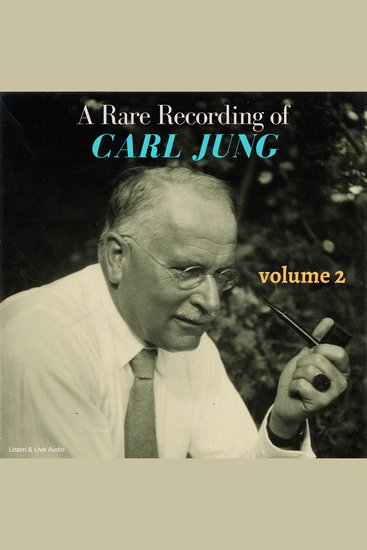
    Carl Gustav Jung (July 26, 1875 - June 6, 1961) was a Swiss psychiatrist and psychoanalyst who founded analytical psychology. Jung's work was influential in the fields of psychiatry, anthropology, archaeology, literature, philosophy, and religious studies. Working as a research scientist, Jung came to the attention of Sigmund Freud, and the two men conducted a lengthy correspondence for a while. However, while Jung worked on his Psychology of the Unconscious, tensions manifested between him and Freud because of various disagreements, including those concerning the nature of libido. While Jung did think libido was an important source for personal growth, unlike Freud, he did not believe that libido alone was responsible for the formation of the core personality.
    Voir livre
  • Choices We Make The: Philosophy in Everyday Decisions - cover

    Choices We Make The: Philosophy...

    Henry J. Howes

    • 0
    • 0
    • 0
    Description: "The Choices We Make: Philosophy in Everyday Decisions" 
    This topic delves into the profound yet practical ways philosophy shapes the decisions we make daily. It explores how moral reasoning, ethical frameworks, and critical thinking can guide choices about relationships, careers, finances, and personal values. By examining real-world dilemmas, the subject sheds light on the interplay between logic, emotion, and societal expectations in decision-making. It encourages readers to reflect on their own beliefs and habits, offering insights into how adopting philosophical perspectives can lead to more intentional, meaningful, and fulfilling lives.
    Voir livre