Rejoignez-nous pour un voyage dans le monde des livres!
Ajouter ce livre à l'électronique
Grey
Ecrivez un nouveau commentaire Default profile 50px
Grey
Abonnez-vous pour lire le livre complet ou lisez les premières pages gratuitement!
All characters reduced
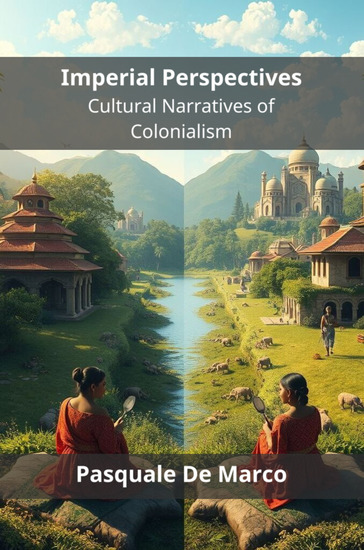
Imperial Perspectives - Cultural Narratives of Colonialism - cover

Imperial Perspectives - Cultural Narratives of Colonialism

Pasquale De Marco

Maison d'édition: Publishdrive

  • 0
  • 0
  • 0

Synopsis

This book embarks on an intellectual journey through the intricate relationship between colonialism and literature, shedding light on how literature has been shaped by, and has in turn shaped, colonial ideologies and experiences. Through a comprehensive analysis of literary works from diverse historical periods and cultural contexts, it unravels the complex interplay between power, identity, and representation in colonial societies.

One of the central themes explored in this book is the concept of the "colonial gaze." It delves into how colonizers have viewed and interpreted the colonized, often exoticizing and dehumanizing them. Literature has been a powerful tool for perpetuating this gaze, shaping how colonized peoples are perceived and understood. However, the book also highlights the ways in which literature has been used to resist and challenge the colonial gaze.

Indigenous writers, in particular, have used literature to reclaim their own narratives, challenge colonial stereotypes, and assert their cultural identities. Their works offer valuable insights into the lived experiences of colonized peoples and provide a counterpoint to the dominant colonial discourse. Furthermore, the book examines the role of literature in shaping postcolonial societies.

In the aftermath of colonialism, many writers have grappled with the legacies of colonialism and the challenges of building new, independent nations. Their works explore themes of identity, belonging, and the search for a sense of place in a world indelibly marked by colonialism. This book analyzes how literature has contributed to the formation of postcolonial identities and societies.

By delving into a wide range of literary texts, this book provides a comprehensive understanding of the multifaceted relationship between colonialism and literature. It illuminates how literature has been used to justify, resist, and ultimately deconstruct colonial ideologies. It also explores the role of literature in shaping postcolonial societies and the search for new identities and narratives in a world still grappling with the legacies of colonialism.


If you like this book, write a review!
Disponible depuis: 02/06/2025.
Longueur d'impression: 165 pages.
D'autres livres qui pourraient vous intéresser

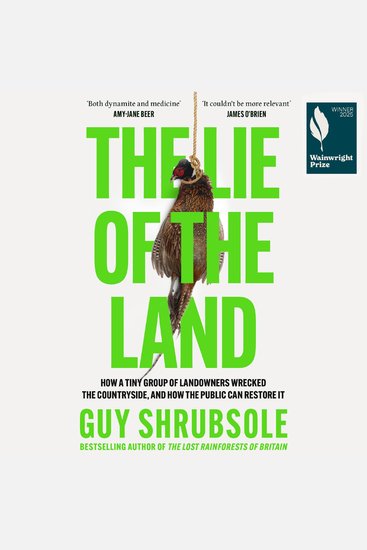
  • The Lie of the Land - cover

    The Lie of the Land

    Guy Shrubsole

    • 0
    • 0
    • 0
    WINNER OF THE WAINWRIGHT PRIZE FOR CONSERVATION 2025 
    A WATERSTONES AND GUARDIAN BEST BOOK OF 2024 
    'Both dynamite and medicine' AMY-JANE BEER 
    'Timely and rousing' THE TIMES 
    ________________________________ 
    The lie of the land: that Britain’s landowners care for the countryside. 
    Our landowning elite are paid billions of taxpayer pounds to be good stewards. But these same landowners have carelessly trampled over our best-loved landscapes, leaving the rivers polluted, fenlands drained, and moorlands burned. 
    Guy Shrubsole has travelled across Britain to expose the lie and meet the communities fighting back to restore our lost landscapes. This is a bold, shared vision for our nation’s wild places, and how we can treat them with the awe and care they deserve. 
    *Guy Shrubsole's The Lost Rainforests of Britain was a Sunday Times bestseller w/c 2023-04-30* 
    *SHORTLISTED FOR THE WESTMINSTER BOOK AWARDS* 
    *SHORTLISTED FOR THE UNWIN AWARD* 
    This Sunday Times bestseller is a must-read for anyone interested in environmental conservation and the protection of habitats. Shrubsole's non-fiction work is a deep dive into the science of ecosystems, the politics of agriculture, and the social implications of rural land management. 
    For fans of Robin Wall Kimmerer (The Democracy of Species), Derek Gow (Birds, Beasts and Bedlam), Christopher Hart (Hedgelands [US Edition]), Yanis Varoufakis (Technofeudalism), and Isabella Tree (Wilding). 
    HarperCollins 2024
    Voir livre
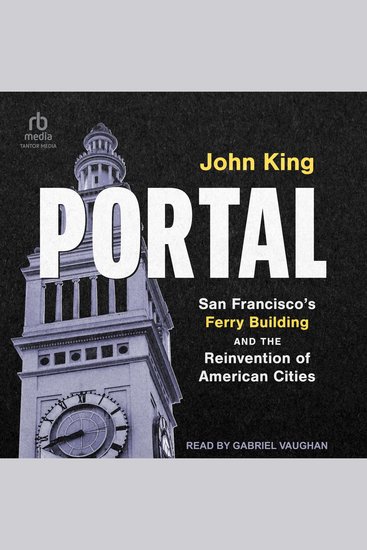
  • Portal - San Francisco's Ferry Building and the Reinvention of American Cities - cover

    Portal - San Francisco's Ferry...

    John King

    • 0
    • 0
    • 0
    A two-time Pulitzer finalist explores the story of American urban design through San Francisco's iconic Ferry Building. 


    Conceived in the Gilded Age, the Ferry Building opened in 1898 as San Francisco's portal to the world—the terminus of the transcontinental railway and a showcase of civic ambition. In silent films and World's Fair postcards, nothing said "San Francisco" more than its soaring clock tower. But as acclaimed architectural critic John King recounts, the rise of the automobile and double-deck freeways severed the city from its beloved structure. King's narrative spans the rise and fall and rebirth of the Ferry Building, introducing colorful figures who fought to preserve its character (and the city's soul)—from architect Arthur Page Brown and legendary columnist Herb Caen to poet Lawrence Ferlinghetti and Senator Dianne Feinstein. A microcosm of the changing American waterfront, the saga of the Ferry Building explores the tensions of tourism and development—and the threat that sea level rise poses to a landmark that in the twenty-first century remains as vital as ever.
    Voir livre
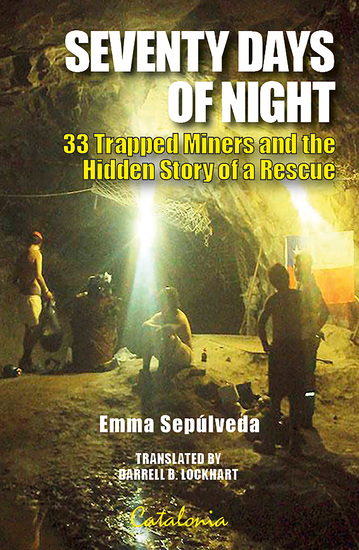
  • 70 Days of Night - 33 Trapped Miners and the Hidden Story of a Rescue - cover

    70 Days of Night - 33 Trapped...

    Emma Sepúlveda Pulvirenti

    • 0
    • 0
    • 0
    "I also remind you that it was us women who held strong when everything was lost to get them out, because we women are fighters. Pass this on to the other 32."
    
    Excerpt from a letter by Marta Salinas, wife of miner Jonni Barrios.
    
    "What happens in the mine, stays in the mine," said one of the 33 miners trapped in the tunnel of the San José mining site in northern Chile. But that wasn´t the case. Writer Emma Sepúlveda traveled to the scene of the accident from the very beginning and stayed for weeks, until the rescue, interviewing the wives of the trapped miners who played a decisive role in bringing them back alive. She also spoke with union leaders, government authorities, local parliamentarians, religious representatives, psychologists, miners, and dozens of temporary inhabitants of Camp Hope who were part of this unique epic.
    
    With countless testimonies and privileged access to letters sent from the depths of the mine, the author reconstructs the hidden side of the story: the causes of the accident, the intimate feelings of those trapped, the frantic search, and the maneuvered rescue. This book brings to light what was left unsaid and debates what was done without thinking. It exposes the media-political manipulation of the operation and reveals the true heroes of the story.
    Voir livre
  • What World Is This? - A Pandemic Phenomenology - cover

    What World Is This? - A Pandemic...

    Judith Butler

    • 0
    • 0
    • 0
    The pandemic compels us to ask fundamental questions about our place in the world: the many ways humans rely on one another, how we vitally and sometimes fatally breathe the same air, share the surfaces of the earth, and exist in proximity to other porous creatures in order to live in a social world. What we require to live can also imperil our lives. How do we think from, and about, this common bind? 


    Judith Butler shows how COVID-19 and all its consequences—political, social, ecological, economic—have challenged us to reconsider the sense of the world that such disasters bring about. Drawing on the work of Max Scheler, Maurice Merleau-Ponty, and critical feminist phenomenology, Butler illuminates the conditions in which we seek to make sense of our disorientation, precarity, and social bonds. What World Is This? offers a new account of interdependency in which touching and breathing, capacities that amid a viral outbreak can threaten life itself, challenge the boundaries of the body and selfhood. Criticizing notions of unlimited personal liberty and the killing forces of racism, sexism, and classism, this book suggests that the pandemic illuminates the potential of shared vulnerabilities as well as the injustice of pervasive inequalities.
    Voir livre
  • True Knights Templars - Secrets and Legends of the Medieval Warriors - cover

    True Knights Templars - Secrets...

    John Harpoon

    • 0
    • 0
    • 0
    The Knights Templar have captivated the imagination of historians, writers, and conspiracy theorists for centuries. Founded in the early 12th century, this powerful and mysterious order of warrior monks played a significant role in medieval Europe and the Crusades. While their military strength was formidable, the Templars’ influence extended far beyond the battlefield, reaching into politics, finance, and even the cultural identity of Europe. Their legacy continues to inspire fascination and debate.  
    The origins of the Knights Templar trace back to the aftermath of the First Crusade when Christian forces recaptured Jerusalem. Amidst the unstable region, a group of knights led by Hugues de Payens pledged to protect Christian pilgrims traveling to the Holy Land. These knights adopted strict vows of poverty, chastity, and obedience, dedicating their lives to both spiritual devotion and military service. With the support of the influential Bernard of Clairvaux, the Templars gained recognition from the Catholic Church, receiving papal backing and exemption from local laws.  
    Over the following two centuries, the Knights Templar grew into a powerful institution. They established a network of fortresses across Europe and the Middle East, serving as both military outposts and financial hubs. The Templars became known for their innovations in banking, offering secure ways for pilgrims and nobles to transfer funds across vast distances. This financial prowess allowed them to accumulate significant wealth, making them indispensable to monarchs and rulers across Europe. 
    Voir livre
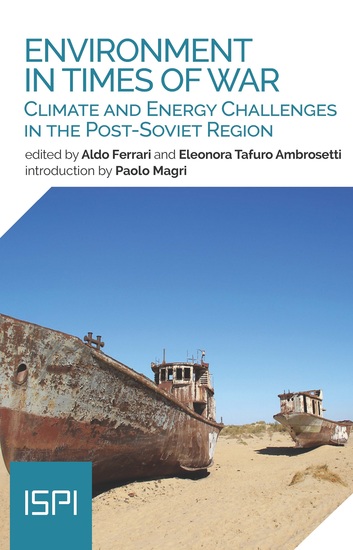
  • Enviroment in Times of War - Climate and Energy Challenges in the Post-Soviet Region - cover

    Enviroment in Times of War -...

    Aldo Ferrari, Eleonora Tafuro...

    • 0
    • 0
    • 0
    The impact of Russia's war against Ukraine has been devastating both politically and environmentally. On top of the environmental damage directly caused by military operations, the invasion has put an abrupt end to the EU-Russia "green cooperation", which had previously raised many hopes. At the same time, it has also shifted international attention away from climate and environmental concerns, which are particularly acute in the post-Soviet region.
    This Report analyses some of the main climate change and environmental issues in the post-Soviet space, providing an initial assessment of the invasion's impact. The bulk of the latest scholarly and policy production on these matters focuses on Russia – given the country's geopolitical and energy relevance. However, this analysis finds that environmental disasters such as the desertification of the Aral Sea transcend state borders and require a broader approach both from an analytic and policy standpoint.
    Voir livre