Begleiten Sie uns auf eine literarische Weltreise!
Buch zum Bücherregal hinzufügen
Grey
Einen neuen Kommentar schreiben Default profile 50px
Grey
Jetzt das ganze Buch im Abo oder die ersten Seiten gratis lesen!
All characters reduced
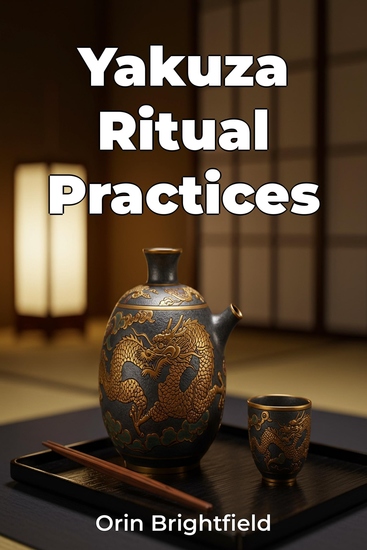
Yakuza Ritual Practices - cover

Yakuza Ritual Practices

Orin Brightfield

Übersetzer A AI

Verlag: Publifye

  • 0
  • 0
  • 0

Beschreibung

Yakuza Ritual Practices explores the traditional ceremonies and codes of conduct that define Japanese organized crime, revealing how these rituals maintain internal cohesion and project power. It delves into the enduring significance of tradition in shaping Yakuza identity, illustrating how practices like the sakazuki exchange (a ritualistic sake sharing) and elaborate irezumi (tattoos) reinforce group loyalty and hierarchical structures.

 
Understanding these rituals requires an appreciation of Japanese history and social values, as the book traces the Yakuza's origins and examines concepts like obligation and ancestor veneration. The book argues that these seemingly outdated practices actively cultivate belonging, legitimize authority, and distinguish the Yakuza from mainstream society.

 
Focusing on practices like initiation rites and yubitsume (finger cutting), the book analyzes their symbolic weight and functional role within the organization. By examining ethnographic studies, historical documents, and Yakuza memoirs, Yakuza Ritual Practices provides an in-depth analysis of how these rituals contribute to the Yakuza's resilience and ability to adapt across chapters, despite societal pressure and legal changes.
Verfügbar seit: 21.02.2025.
Drucklänge: 53 Seiten.
Weitere Bücher, die Sie mögen werden

  • Recovery From Gaslighting Narcissistic Abuse Codependency and Complex PTSD - Thrive After Emotional Hidden Abuse People-Pleasing and Toxic Relationships - cover

    Recovery From Gaslighting...

    Melanie Parker

    • 0
    • 0
    • 0
    Gaslighting? People Pleasing? Guilt Trips? Stonewalling? 
    Have you been emotionally, verbally, or psychologically abusive to someone you love AND you really want to change? …welcome. 
    Abuse isn’t just physical. More often, its hurtful words, insults, being yelled at or threatened. Abuse can also be emotional – being neglected, lied to, or manipulated. The truth is: No form of abuse is okay 
    Someone was manipulative or abusive to you. At first it just felt "unfair" or "difficult." 
    It may have started with your Mother, or Father. Even a sibling. Or maybe you had great family relationships and then fell in love as an adult and discovered too far in that this person was manipulative and every argument was a no-win. 
    The truth is, If you've been in an abusive relationship, you need insight and knowledge to heal the scar and prevent it from happening again. 
    Relationships are meant to feel safe, secure and loving. 
    Do you know the difference between a difficult time and emotional manipulation or emotional abuse? Most people don't. 
    The good news is that I can teach you: 
    - How to identify verbal and emotional abuse 
    - The causes of abusive behavior 
    - How to set boundaries with abusive people 
    - What is gaslighting? 
    - What is narcissistic abuse 
    - What is PTSD 
    - Why guilt trips are toxic and how to avoid them. 
    - Why you are attracted to Narcissists. 
    - How to identify your own role in manipulative cycles. 
    - Whether you are co-dependent. 
    - How to tell if you are being controlled or unknowingly controlling others. 
    If you're exhausted from toxic cycles in your life, Stop Them For Good. 
    Discover the Map that takes you from loneliness, heartbreak, fear or divorce... to the confidence and clarity to succeed in love.
    Zum Buch
  • Religious Freedom in a Secular Age - A Christian Case for Liberty Equality and Secular Government - cover

    Religious Freedom in a Secular...

    Michael F. Bird

    • 0
    • 0
    • 0
    Discover how to responsibly defend religious freedom for all without compromising your personal beliefs. 
    Religious freedom is a bitterly contested issue that spills over into political, public, and online spheres. It's an issue that's becoming ever more heated, and neither of the global political polarities is interested in protecting it. While the political left is openly hostile toward traditional religion, the political right seeks to weaponize it. 
    How can we ensure that "religious freedom" is truly about freedom of one's religion rather than serving an ethno-nationalist agenda? 
    In Religious Freedom in a Secular Age, Michael Bird (New Testament scholar and author of Evangelical Theology) has four main goals:To explain the true nature of secularism and help us to see it as one of the best ways of promoting liberty and mutual respect in a multifaith world.To dismantle the arguments for limiting religious freedom.To outline a biblical strategy for maintaining a Christian witness in a post-Christian society.To encourage Christians to participate in a new age of apologetics by being prepared to defend not only their own believes but also the freedom of all faiths. 
    While Bird does address the recent political administrations in the US, his focus is global. Bird—who lives in Melbourne, Australia—freely admits to his anxiety of the militant secularism surrounding him, but he also strongly critiques the marriage of national and religious identities that has gained ground in countries like Hungary and Poland. 
    The fact is that religion has a lot to contribute to the common good. Religious Freedom in a Secular Age will challenge readers of all backgrounds and beliefs not only to make room for peaceable difference, but also to find common ground on the values of justice, mercy, and equality.
    Zum Buch
  • Missy's Guide - How to transform dancing in shame to dancing in glory - cover

    Missy's Guide - How to transform...

    Melissa (Missy) Weikel

    • 0
    • 0
    • 0
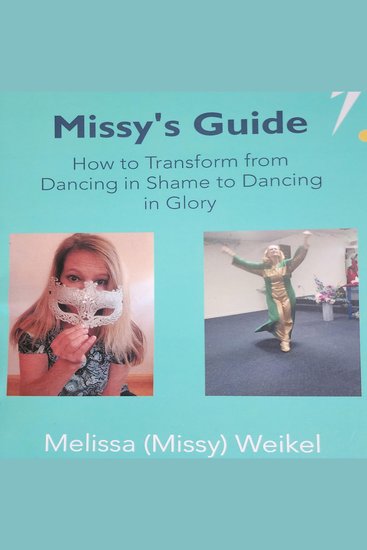
    Weikel inspires readers to dance for the Lord in this debut Christian work.For a time when she was younger, Weikel turned to stripping to support herself and her daughter. The shame she felt—rooted in sexual abuse she suffered as a child—was so great, she needed to numb the pain with drinking and drugs. It could have been enough to keep Weikel from ever dancing again, but she found ways to overcome her fears and dance like no one was watching—well, except for one being. “There is nothing more powerful than dancing with our heavenly father,” writes Weikel in her introduction. “Feeling his presence and love as I move across the floor is the ultimate high. I finally shed the care about what others think and know how much God loves me.” With this book, Weikel hopes to help others who feel trepidation about dancing find their inner Ginger Rogers. Dance, according to the author, is a form of worship—one that doubles as a source of healing for the dancer. Through personal anecdotes, explorations of Scripture, and dance exercises, Weikel encourages her readers to leave it all on the dance floor at the next wedding they attend or even to enjoy a solo dance party in the mirror. Weikel’s prose is enthusiastic and mystical, full of accounts of personal rituals and attestations about hearing God: “Today as I lit the final fire of the year and began to think about how the seasons change, I was overwhelmed by what the Holy Spirit downloaded as I was sweeping up the mess that the wood and paper make. God said, ‘You are approaching a new season, and I know you have felt all over the place like all this dust and dirt you are sweeping.’ ” It’s a short book at only 50 pages (including several full-page black-and-white photos). While probably not for everyone, Weikel’s open-hearted, judgment-free approach will undoubtedly speak to certain Christian readers who want a bit more dancing in their lives.A slim, inspiring work rooted in the author’s practice of dance-as-worship.
    Zum Buch
  • From Family Scapegoat to Summit - Shedding Labels and Paving Your Legacy - cover

    From Family Scapegoat to Summit...

    Emily Clark

    • 0
    • 0
    • 0
    Reclaim Your Identity & Conquer the Mountain of Family Labels With This Empowering Guide 
    Being cast as the family scapegoat is a burdensome journey filled with misunderstandings, misplaced blame, and a distorted self-image. The questions linger: “Why am I always blamed?”, “Do I truly matter?”, “How can I escape this cycle and find my true self?” 
    “From Family Scapegoat to Summit” is your compass amidst the fog, leading the way to self-awareness, healing, and empowerment. This eye-opening guide will not only illuminate the labyrinth of family dynamics but will also inspire you to ascend towards self-discovery and liberation. Remaining in the shadow of the scapegoat label only perpetuates the cycle and stifles your potential. 
    Embark on an enlightening journey up the mountain. This guide uncovers the concealed layers of family roles, offering insights like: 
    ✔️ Understanding the origins and intricacies of the scapegoat phenomenon 
    ✔️ Effective strategies to challenge the scapegoat label and set boundaries 
    ✔️ Recognizing and transforming the interactions with other family members 
    ✔️ Proactive steps to heal and redefine your life beyond the labels 
    ✔️ Rediscovering and nurturing your innate passions, strengths, and identity 
    ✔️ Therapeutic approaches to healing, underlining self-worth and self-love 
    ✔️ Tactics for cultivating healthy relationships and escaping the grasp of toxic dynamics 
    ✔️ Embracing your ascent to the summit, symbolizing growth and breaking free from the past 
    ✔️ And so much more… 
    The role of the scapegoat is isolating, pushing you into the margins of the family narrative while obscuring your true essence. Yet, just as one climbs a summit, you have the strength to rise above, embracing your unique legacy. It's time to prioritize your journey, rewrite your story, and stand tall at your personal summit. 
    Begin your ascent towards understanding and empowerment.
    Zum Buch
  • Death Ray The: The History and Conspiracy Theories Surrounding Nikola Tesla’s Futuristic Weapon - cover

    Death Ray The: The History and...

    Charles River Editors

    • 0
    • 0
    • 0
    Nikola Tesla was one of history’s greatest scientists, and though he is best known for his pioneering work with electricity, the fact that he is mostly remembered solely for that actually does a disservice to his legacy. Born a Serb in the Austrian Empire, Tesla came to the United States and worked in a laboratory for none other than the Wizard of Menlo Park, Thomas Edison. 
    Having established AC as an electrical supply system, Tesla became a global celebrity, and his devices and inventions fascinated people. Tesla tinkered with everything from X-rays to wireless communications and even attempted a primitive form of the radio. While Tesla was not able to successfully execute the devices and concepts he foresaw, his forward thinking in fields like wireless communication certainly proved prescient, and his futuristic devices and his later reputation for eccentricity helped create the “mad scientist” image that still remains a pop culture fixture. Tesla seemed to have come to grips with this aspect of his legacy late in life, noting, “The scientific man does not aim at an immediate result. He does not expect that his advanced ideas will be readily taken up." 
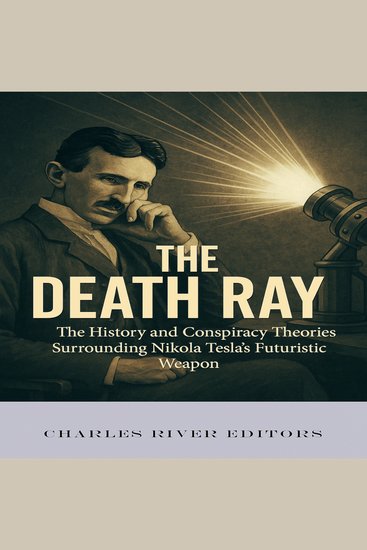
    During World War I, in December 1915, Tesla gave an interview to The New York Times in which he claimed he was working on something entirely new, a weapon that would use electrical power to instantly destroy a distant target. He explained that this weapon was “so far developed that great destructive effects can be produced at any point on the globe, determined beforehand and with great accuracy.” Tesla called this new weapon the “Teleforce,” and he would continue working on this project for the rest of his life, but he consistently refused to give details of its operation. Many people believed it was impractical, but with Tesla, it was never possible to be entirely certain.
    Zum Buch
  • Too Thin for a Shroud - The Last Untold Story of the Falklands War - cover

    Too Thin for a Shroud - The Last...

    Crispin Black

    • 0
    • 0
    • 0
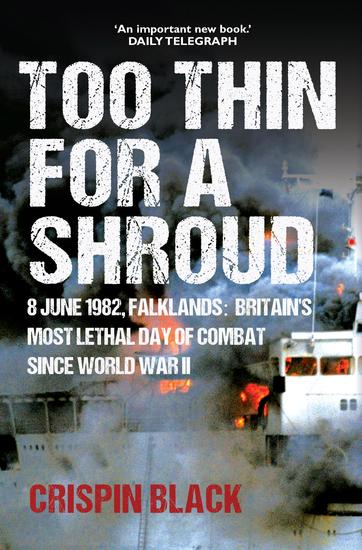
    'One of the best in the field.' JON SNOWOn 8 June, 1982, some 600 troops aged 17-22 were packed closely together on the Galahad at Fitzroy, 3 miles from the front line, to liberate Port Stanley on 10 June. They became the thunderbolt target of Argentine airforce attacks resulting in Britain's most devastating military day since 1945 with additional attacks on two Royal Navy ships, including frigate HMS Portsmouth struck by five 500lbs bombs.Written as a tribute to the bravery of the troops as they suddenly came under attack, this memoir is filled with first-hand recollections from officers under attack. The first history of that fateful day, it is also the first Falklands book based on the official June-Sept 1982 Royal Navy Inquiry, recently declassified and made accessible at Kew Archives. Too Thin for a Shroud casts an unmissable, gripping new light on this dramatic part of the land-campaign that has been misunderstood and overlooked for forty years.
    Zum Buch