Rejoignez-nous pour un voyage dans le monde des livres!
Ajouter ce livre à l'électronique
Grey
Ecrivez un nouveau commentaire Default profile 50px
Grey
Abonnez-vous pour lire le livre complet ou lisez les premières pages gratuitement!
All characters reduced
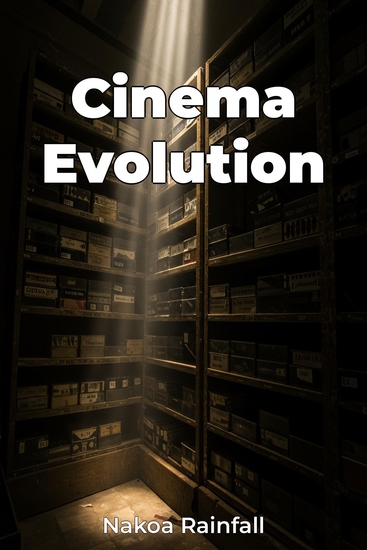
Cinema Evolution - cover

Cinema Evolution

Nakoa Rainfall

Traducteur A AI

Maison d'édition: Publifye

  • 0
  • 0
  • 0

Synopsis

Cinema Evolution explores the multifaceted journey of cinema from its early days as a mere novelty to its current status as a global art form and a powerful, multi-billion-dollar industry. The book highlights cinema's constant reinvention propelled by evolving technology and audience demands, considering how advancements like synchronized sound and the digital revolution fundamentally altered the landscape. It also examines the volatile industry transformations, such as the rise and fall of the studio system and the emergence of independent film. This comprehensive analysis emphasizes cinema's complex relationship with society, art, and commerce, providing valuable insights into navigating the future of visual storytelling. The book progresses chronologically, beginning with foundational technological innovations, then delving into the studio era, challenges to the studio system, the rise of digital technologies, and concluding with the evolving role of cinema in the 21st century. By incorporating historical context and analyzing how major events, like wars and social movements, have shaped cinematic content, the book offers a holistic view of cinema's development.
Disponible depuis: 19/02/2025.
Longueur d'impression: 70 pages.

D'autres livres qui pourraient vous intéresser

  • Warbody - A Marine Sniper and the Hidden Violence of Modern Warfare - cover

    Warbody - A Marine Sniper and...

    Alexander Lemons, Joshua Howe

    • 0
    • 0
    • 0
    A friendship between an environmental historian and a chronically ill US Marine yields a powerful exploration into the toxic effects of war on the human body. 


    Alexander Lemons is a Marine Corps scout sniper who, after serving multiple tours during the Iraq War, returned home seriously and mysteriously ill. Joshua Howe is an environmental historian who met Lemons as a student in one of his classes. Together they have crafted a vital book that challenges us to think beyond warfare's acute violence of bullets and bombs to the "slow violence" of toxic exposure and lasting trauma. 


    Lemons vividly describes his time in Fallujah and elsewhere during the worst of the Iraq War, his descent into a decade-long battle with mysterious and severe sickness, and his return to health; Howe explains the many toxicities to which Lemons was exposed and their potential consequences. Together they cover the whirlwind of toxic exposures military personnel face from the things they touch and breathe in all the time. They also consider PTSD and traumatic brain injury, which are endemic among the military and cause and exacerbate all kinds of physical and mental health problems. Finally, they explore how both mainstream and alternative medicine struggle to understand, accommodate, and address the vast array of health problems among military veterans.
    Voir livre
  • Men of Action - cover

    Men of Action

    Howard Akler

    • 0
    • 0
    • 0
    After his father, Saul, undergoes brain surgery and slips into a coma, Howard Akler begins to reflect on Saul's life, the complicated texture of consciousness, and Akler's struggles with writing and his own unpredictable mind. With echoes of Paul Auster's The Invention of Solitude and Philip Roth's Patrimony, Men of Action treads the line between memoir and meditation, and is at once elegiac, spare, and profoundly intimate.
       
    'Like Harley J. Spiller’s Keep the Change, Howard Akler’s Men of Action similarly compresses a great deal – whole lives – into a very few pages … As might be expected, Men of Action delves into the father-son relationship, while also encompassing the father’s life, the parents’ marriage and the son’s youth in Toronto, where Mr. Akler still lives. But its more submerged subject is the act of writing itself, which is demonstrated with the carefully observed, resonant economy of poetry.'
       
    – The New York Times Holiday 2015 Gift Guide
       
    ‘What makes someone who they are? What details and actions explain their inner thoughts? What moments matter in the telling of a life? These are futile questions, but what matters is that Akler is asking them in a way we haven’t previously seen. Men of Action not only gracefully succeeds in depicting the nature of human tragedy, but the inherent failures of language to capture it. The book’s brevity is its strength – a genuine testament to the writer’s talent that he is able to take us so far with so little.'
       
    – Stacey May Fowles, The Globe and Mail
       
    ‘Men of Action is an insightful and heartbreaking exploration of consciousness, familial relationships, and the sense of self. As he and his family stand a restless vigil through his father's post-operative coma, Howard Akler explores and reorganizes the past, present, and future of his relationship with his father. Immensely relatable, this collection of essays delves fearlessly into loss, grief, and the understanding that often the moments in which we choose to be completely still are when we take the most important actions.’
       
    – 2016 Toronto Book Awards Jury Citation
    Voir livre
  • Dive into the fascinating story of the Koch brothers - This gripping narrative unfolds against the backdrop of incredible achievements family conflicts and relentless endeavors to shape the course of American politics - cover

    Dive into the fascinating story...

    Vines Graener

    • 0
    • 0
    • 0
    Fred, the patriarch and visionary behind the Koch brothers' legacy, blazed a trail in the oil industry. In 1925, his foresight led him to acquire a one-third stake in a Wichita engineering firm, a pivotal move that laid the foundation for the eventual behemoth, Koch Industries. From these modest beginnings, Fred's entrepreneurial spirit set the stage for a family saga marked by astounding success, familial discord, and a profound impact on the American political landscape. 
    The year 1933 witnessed the union of Fred and Mary Koch, marking the commencement of their familial odyssey. The arrival of their firstborn, Frederick, in 1934, was followed by the birth of Charles in 1935. The family's expansion continued in 1940 with the arrival of fraternal twins, David and Bill, completing the Koch family circle. These formative years were crucial in shaping the dynamics that would later shape the Koch brothers' relationships and individual trajectories. 
    Despite the burgeoning success of Fred's investments, he was steadfast in his resolve not to raise entitled children. Financial lessons were woven into their upbringing, with the children receiving only a modest allowance for completing household chores. Luxuries deemed unnecessary, such as television, were intentionally excluded from their lives. This deliberate approach aimed to instill in them a strong work ethic, rooted in humility, that would serve as the cornerstone of their future endeavors. 
    Fred's commitment to molding resilient individuals was further underscored by his emphasis on manual labor and impromptu history lessons at the family dinner table. Through these unconventional but impactful methods, he sought to impart a broader understanding of the world to his children, transcending the traditional bounds of formal education.
    Voir livre
  • White Poverty - How Exposing Myths about Race and Class Can Reconstruct American Democracy - cover

    White Poverty - How Exposing...

    Reverend Dr. William Barber II,...

    • 0
    • 0
    • 0
    A generational work with far-ranging social and political implications, White Poverty promises to be one of the most influential books in recent years. 


    One of the most pernicious and persistent myths in the United States is the association of Black skin with poverty. Though there are forty million more poor white people than Black people, most Americans, both Republicans and Democrats, continue to think of poverty—along with issues like welfare, unemployment, and food stamps—as solely a Black problem. Why is this so? What are the historical causes? And what are the political consequences that result? 


    These are among the questions that the Reverend Dr. William J. Barber II, a leading advocate for the rights of the poor and the "closest person we have to Dr. King" (Cornel West), addresses in White Poverty, a groundbreaking work that exposes a legacy of historical myths that continue to define both white and Black people, creating in the process what might seem like an insuperable divide. Analyzing what has changed since the 1930s, when the face of American poverty was white, Barber, along with Jonathan Wilson-Hartgrove, addresses white poverty as a hugely neglected subject that just might provide the key to mitigating racism and bringing together tens of millions of working class and impoverished Americans.
    Voir livre
  • I am a God : Reclaiming Your Inner Divinity and Beyond Masks and Limitations Awakening the God Within - Discover the God Within: Awaken Your True Potential and Transform Your Life - cover

    I am a God : Reclaiming Your...

    Beshoy Mahrous

    • 0
    • 0
    • 0
    This audiobook is narrated by an AI Voice.   
    Embark on a transformative journey of self-discovery and empowerment with "I Am a God." This groundbreaking book transcends conventional wisdom, inviting you to reclaim your inner divinity and awaken your true potential. Unveil the masks and limitations that have hindered your growth, and embrace the authentic essence of your being. 
    🌌 Dive Into the Depths of Your Soul: "I Am a God" delves into the profound concepts of divinity, exploring creation myths, defining the nature of God, and unraveling the mysteries of existence. Through introspective chapters like "Where is God?" and "Who is God?" you'll embark on a soul-stirring quest to unravel the essence of divine consciousness. 
    🌟 Explore the Uniqueness of Your Journey: This book is not just about abstract theories—it's about your personal journey to self-realization. Each chapter guides you through a transformative process, empowering you to awaken the god within and manifest your divine potential. From "Do I Am a God?" to "Manifesting the Divine," you'll embark on a journey of self-discovery unlike any other. 
    🔍 Navigate Through the Complexities: As you navigate through the challenges of life, "I Am a God" serves as your trusted companion, offering wisdom and guidance every step of the way. From navigating romantic relationships in "In the Image of God" to demystifying life's detours in "Demystifying the Detours," this book empowers you to overcome obstacles and embrace your true power. 
    🌈 Embrace Your Authenticity: "I Am a God" celebrates your authenticity, encouraging you to embrace every aspect of yourself. Through chapters like "Unfurling the God Within" and "Embracing the Wabi-Sabi," you'll learn to love and accept yourself unconditionally, transcending societal expectations and embracing your unique journey.
    Voir livre
  • Byzantium and Constantinople: The History of the Ancient Greek City that Became the Byzantine Empire’s Capital - cover

    Byzantium and Constantinople:...

    Editors Charles River

    • 0
    • 0
    • 0
    Due to the importance of the Roman Empire and the offshoot Byzantine Empire, it’s often forgotten that Constantinople wasn’t chosen at random; in fact, the city already existed, and it lent its name to the empire that was subsequently centered there. Byzantium, known originally as Byzantion, was an ancient Greek city centuries before it became known as Constantinople, and the etymology of Byzantion/Byzantium is still unknown. It has been suggested that Byzantion is of Thracian origin and may be derived from the Thracian personal name Byzas, which means “he-goat.” Ancient Greek legend refers to King Byzas as the leader of the Megaran colonists and the founder of the city, but the earliest name for a city on the site is “Lygos,” which likely corresponds to an earlier Thracian settlement described by Pliny the Elder in his seminal work, Natural History: “On leaving the Dardanelles we come to the Bay of Casthenes, ...and the promontory of the Golden Horn, on which is the town of Byzantium, a free state, formerly called Lygos; it is 711 miles from Durazzo.” 
    Pliny went on to explain that Lygos was a Thracian settlement founded between the 13th and 11th centuries BCE. The site, however, was probably abandoned well before Megara founded Byzantion around 657 BCE across from Chalcedon on the Asiatic side of the Bosphorus. The city was briefly renamed Augusta Antonina in the early 3rd century CE by the Emperor Septimius Severus, who razed the city to the ground in 196 CE for supporting a rival contender in the civil war and had it rebuilt in honor of his son and successor, Marcus Aurelius Antoninus, known as Caracalla. This new name appears to have been quickly forgotten and abandoned, with the city reverting to Byzantium after the assassination of Caracalla in 217 CE, and that’s how it would be known when Constantine fatefully moved the seat of power there over a century later.
    Voir livre