Begleiten Sie uns auf eine literarische Weltreise!
Buch zum Bücherregal hinzufügen
Grey
Einen neuen Kommentar schreiben Default profile 50px
Grey
Jetzt das ganze Buch im Abo oder die ersten Seiten gratis lesen!
All characters reduced
The Jurassic Era - An Interesting History From Beginning to End - cover

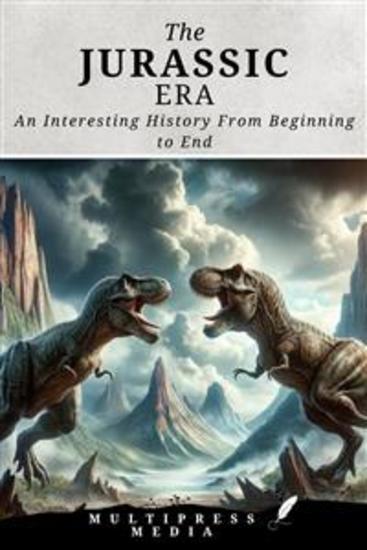
The Jurassic Era - An Interesting History From Beginning to End

MultiPress Media

Verlag: Quick Reads

  • 0
  • 0
  • 0

Beschreibung

Discover the incredible history of the Jurassic Era...

The Jurassic Era was a time of extraordinary biodiversity, shaping the world we know today. Dominated by towering dinosaurs and vast, evolving ecosystems, this period witnessed the rise of some of the most iconic creatures to ever walk the Earth. But the Jurassic wasn't just about the land giants; the seas teemed with marine reptiles, and the skies were ruled by pterosaurs, creating a planet unlike anything seen before or since.

In this captivating book, explore the fascinating details of how dinosaurs became the dominant force on Earth, the flourishing of diverse plant life, and the emergence of early mammals in the shadow of the dinosaurs. Delve into the discovery of remarkable fossils that provide a window into life millions of years ago, and trace the ecological shifts that eventually led to the Jurassic’s end.

Discover a plethora of topics such as:

* The Age of Dinosaurs and their ecological dominance
* The evolution of marine life and Jurassic seas
* The rise of early mammals and their survival strategies
* Pterosaur dominance in the skies
* The climate and environment that shaped Jurassic life
And much more...!

So, if you want a concise and informative book on the Jurassic Era, simply scroll up and click the "Buy now" button for instant access!
Verfügbar seit: 01.10.2024.

Weitere Bücher, die Sie mögen werden

  • Emile or On Education - cover

    Emile or On Education

    Jean-Jacques Rousseau

    • 0
    • 0
    • 0
    "Emile, or On Education" is a novel written by Jean-Jacques Rousseau and published in 1762. The book is a treatise on education and focuses on the development of a single individual, Emile, from infancy to adulthood. 
    Rousseau's novel is notable for its emphasis on natural education, or the idea that children should be allowed to learn through their own experiences and interactions with the world around them. The book is divided into five sections, each of which focuses on a different stage of Emile's life and the corresponding education he should receive. 
    In the first section, Rousseau argues that children should be allowed to develop naturally and that their education should be based on their own interests and abilities. He also emphasizes the importance of physical education and the need for children to learn through play. 
    In the second section, Rousseau discusses the importance of developing Emile's sense of morality and character, emphasizing the need for him to learn to be honest, courageous, and independent. 
    The third section focuses on Emile's intellectual education, including the importance of developing his reasoning abilities and critical thinking skills. 
    In the fourth section, Rousseau discusses Emile's social education, including his interactions with other people and the importance of developing his empathy and understanding of others. 
    Finally, in the fifth section, Rousseau discusses the importance of Emile's religious education and the role that religion should play in his life. 
    Overall, "Emile, or On Education" is a significant work in the history of educational philosophy, and it continues to be studied and debated by scholars and educators today.
    Zum Buch
  • The Fall of the Berlin Wall - End of the Cold War - cover

    The Fall of the Berlin Wall -...

    Nova Ashford

    • 0
    • 0
    • 0
    The fall of the Berlin Wall in 1989 marked the dramatic end of an era that had shaped global politics for nearly half a century. The Cold War, a period of intense ideological, political, and military tension between the United States and the Soviet Union, had divided the world into two distinct blocs. At the heart of this division stood Germany, and within it, the iconic Berlin Wall—a physical symbol of the separation between East and West. For much of the post-World War II period, this wall was not just a barrier dividing a city but a vivid representation of the ideological conflict between communism and capitalism, between Soviet control and Western freedom.  
    The Cold War began shortly after the end of World War II, as the victorious Allied powers, particularly the United States and the Soviet Union, emerged as the world's superpowers. The ideological rift between these two nations—one advocating for a free-market economy and democracy, the other for a centrally controlled, one-party state—became a defining feature of global politics. The division of Germany into East and West in 1949 symbolized the larger division between East and West, and Berlin, split into sectors controlled by the Allies, became the focal point of this division. 
    The Berlin Wall was erected in 1961 to prevent East Germans from fleeing to the West. It quickly became one of the most visible manifestations of the Cold War. The wall separated families, prevented personal freedoms, and symbolized the repressive nature of the East German regime. For decades, it seemed an unmovable part of the geopolitical landscape. However, by the late 1980s, the winds of change were beginning to stir. Gorbachev’s reforms in the Soviet Union, including policies of glasnost (openness) and perestroika (restructuring), sparked a wave of political change throughout Eastern Europe. As these reforms loosened Soviet control, the call for more political freedom and reform became louder in East Germany.
    Zum Buch
  • How to Recognize Toxic Friendships - cover

    How to Recognize Toxic Friendships

    Olivia Werner

    • 0
    • 0
    • 0
    [How to Recognize Toxic Friendships] delves into the intricate dance of human connection, where the lines between support and suffocation blur in the most subtle ways. With unflinching precision and raw emotional honesty, this exploration peels back the layers of seemingly normal friendships to reveal the quiet erosion that occurs when toxicity masquerades as care. Through a masterful examination of the invisible threads that bind us—from the weight of unspoken expectations to the currency of shared secrets—the book illuminates the complex patterns that transform connection into constraint. Written with a devastating clarity that echoes through everyday moments of friendship, this work doesn't just describe toxic relationships; it maps the delicate territory between loyalty and self-preservation, offering readers a mirror to recognize their own experiences in the soft violence of manipulated intimacy.
    Zum Buch
  • Emotional Energy in Business - cover

    Emotional Energy in Business

    Warren Hilton

    • 0
    • 0
    • 0
    "Emotional Energy in Business" by Warren Hilton explores the potent influence of emotions on professional achievements. It dissects how emotional energy drives decisions, leadership, and interactions. With actionable insights, the book navigates emotional management, fostering improved relationships, communication, and overall efficacy in the corporate sphere. Read in English, unabridged.
    Zum Buch
  • A Rare Recording of Dan Smoot Explaining Why America Is A Constitutional Republic - cover

    A Rare Recording of Dan Smoot...

    Dan Smoot

    • 0
    • 0
    • 0
    Dan Smoot (October 5, 1913 - July 24, 2003), born in East Prairie, MO, was an FBI agent turned conservative political commentator. From 1956 to 1971, he published The Dan Smoot Report, which was a weekly newsletter and radio program. Smoot wrote four books, including The Invisible Government (1962), concerning early members of the Council on Foreign Relations. In the following recording, Smoot explains the importance of America as a Constitutional Republic.
    Zum Buch
  • Kincora: Britain's Shame - cover

    Kincora: Britain's Shame

    Chris Moore

    • 0
    • 0
    • 0
    For over four decades the story of the extraordinary evil that occurred at the Kincora Boys’ Home in East Belfast in the 1970s and the shocking attempts by MI5 to cover it up have haunted our political and social terrain for decades. Award-winning former BBC journalist Chris Moore has been working on the story since it first emerged in 1980, and has uncovered a horrific catalogue of failed opportunities to put an end to the sadistic activities of the men who were running the home, in particular those of prominent Orangeman and MI5 source William McGrath. 
     
    What has emerged over the course of Moore’s investigation, in which he has gained exclusive access to witnesses, secret documents and whistleblowers within the British intelligence services, is that not only were the boys in Kincora systematically sexually abused, but that some were forced into a countrywide paedophile ring, whose members included Lord Louis Mountbatten. Moore also exposes MI5’s attempts to cover up what actually happened and that the organisation knew as early as the 1970s that the boys in Kincora were being abused. 
     
    Kincora is a shocking exposé of how the British state failed to protect some of its most vulnerable members.
    Zum Buch