




HöRPROBE ABSPIELEN

The Fall of the Berlin Wall - End of the Cold War
Nova Ashford
Erzähler Christina Foremans
Verlag: Cammy Fetchens LLC
Beschreibung
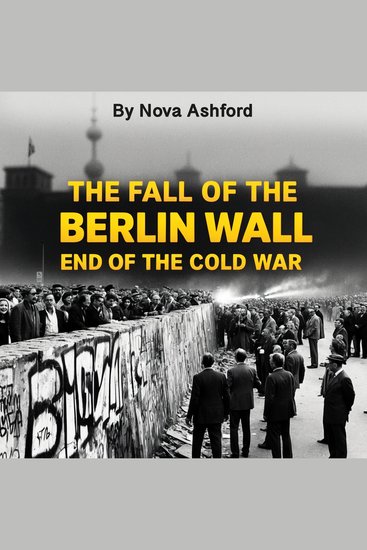
The fall of the Berlin Wall in 1989 marked the dramatic end of an era that had shaped global politics for nearly half a century. The Cold War, a period of intense ideological, political, and military tension between the United States and the Soviet Union, had divided the world into two distinct blocs. At the heart of this division stood Germany, and within it, the iconic Berlin Wall—a physical symbol of the separation between East and West. For much of the post-World War II period, this wall was not just a barrier dividing a city but a vivid representation of the ideological conflict between communism and capitalism, between Soviet control and Western freedom.
The Cold War began shortly after the end of World War II, as the victorious Allied powers, particularly the United States and the Soviet Union, emerged as the world's superpowers. The ideological rift between these two nations—one advocating for a free-market economy and democracy, the other for a centrally controlled, one-party state—became a defining feature of global politics. The division of Germany into East and West in 1949 symbolized the larger division between East and West, and Berlin, split into sectors controlled by the Allies, became the focal point of this division.
The Berlin Wall was erected in 1961 to prevent East Germans from fleeing to the West. It quickly became one of the most visible manifestations of the Cold War. The wall separated families, prevented personal freedoms, and symbolized the repressive nature of the East German regime. For decades, it seemed an unmovable part of the geopolitical landscape. However, by the late 1980s, the winds of change were beginning to stir. Gorbachev’s reforms in the Soviet Union, including policies of glasnost (openness) and perestroika (restructuring), sparked a wave of political change throughout Eastern Europe. As these reforms loosened Soviet control, the call for more political freedom and reform became louder in East Germany.
Dauer: etwa 2 Stunden (01:46:20)
Veröffentlichungsdatum: 16.04.2025; Unabridged; Copyright Year: — Copyright Statment: —




