Rejoignez-nous pour un voyage dans le monde des livres!
Ajouter ce livre à l'électronique
Grey
Ecrivez un nouveau commentaire Default profile 50px
Grey
Abonnez-vous pour lire le livre complet ou lisez les premières pages gratuitement!
All characters reduced
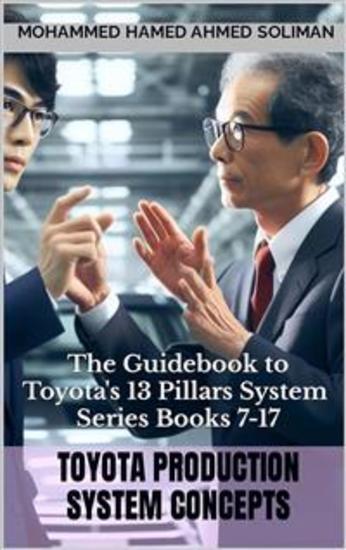
Toyota Production System Concepts - The Guidebook to Toyota's 13 Pillars System - Series Books 7 to 17 - cover

Toyota Production System Concepts - The Guidebook to Toyota's 13 Pillars System - Series Books 7 to 17

Mohammed Hamed Ahmed Soliman

Maison d'édition: Personal-lean.org

  • 0
  • 0
  • 0

Synopsis

Toyota Motor Corporation made a system to make good products, save money, and make things faster by using less waste. TPS has two main parts, just-in-time and jidoka. It is often shown as a "house" image. To improve TPS and keep it running well, we use a process called PDCA or the scientific method. We do this by doing the same tasks over and over again and making small improvements called kaizen.

TPS was created by Taiichi Ohno, who managed production at Toyota after World War II. Ohno began using TPS at Toyota in the 1950s and 1960s, starting with machining work. Then, he started using it in other parts of the company and also shared it with other suppliers in the 1960s and 1970s. Outside of Japan, the spread of Toyota and General Motors partnership called NUMMI began in California in 1984.

The concepts of just-in-time (JIT) and jidoka were created before the war. A long time ago, Sakichi Toyoda created the idea of jidoka, and he also started the Toyota group of companies. He added a machine to his looms that would stop the loom if a thread broke. This improved the quality of things and let people concentrate on more important tasks instead of just checking machines for quality. Over time, this basic idea became a part of every machine, every production line, and every Toyota operation.

Kiichiro Toyoda, who is the son of Sakichi and the founder of Toyota, came up with the idea of JIT (Just-in-Time) in the 1930s. He said Toyota should not have too many cars sitting unsold, and they should try to work with their suppliers to make the same number of cars all the time. Ohno was in charge of making JIT, a special system to control how much we make and to avoid making too much.

TPS was well-known after The Machine That Changed the World was published in 1990. This book took five years to make, and it was researched by the Massachusetts Institute of Technology. The researchers at MIT found that TPS was faster and more efficient than regular mass production. It was a very different way of doing things, so they called it lean production.
Disponible depuis: 25/06/2024.

D'autres livres qui pourraient vous intéresser

  • Tommy French - How British First World War Soldiers Turned French into Slang - cover

    Tommy French - How British First...

    Julian Walker

    • 0
    • 1
    • 0
    ‘Napoo’, ‘compray’, ‘san fairy ann’, ‘toot sweet’ are anglicized French phrases that came into use on the Western Front during the First World War as British troops struggled to communicate in French. Over four years of war they created an extraordinary slang which reflects the period and brings the conflict to mind whenever it is heard today.  Julian Walker, in this original and meticulously researched book, explores the subject in fascinating detail. In the process he gives us an insight into the British soldiers’ experience in France during the war and the special language they invented in order to cope with their situation.  He shows how French place-names were anglicized as were words for food and drink, and he looks at what these slang terms tell us about the soldiers’ perception of France, their relationship with the French and their ideas of home. He traces the spread of ‘Tommy French’ back to the Home Front, where it was popularized in songs and on postcards, and looks at the French reaction to the anglicization of their language.
    Voir livre
  • Experiencing Inner Peace - cover

    Experiencing Inner Peace

    Raja Yogi Yogesh Sharda

    • 0
    • 0
    • 0
    For some of us there is the feeling that it is an impossible to be able to slow down and to attain a sense of inner peace. However, this is in fact something that every human being can achieve with guidance and concentration. Raja Yogi Yogesh Sharda provides this set of 10 meditation commentaries that lead the human spirit back to its natural peace. We learn how to dis-entangle ourselves from the many worries and responsibilities that we allow to dominate our thoughts and shows how we can reach a beautiful peace that dwells deep within. 
    Voir livre
  • Empire of God - How the Byzantines Saved Civilization - cover

    Empire of God - How the...

    Robert Spencer

    • 0
    • 0
    • 0
    Western civilization is generally regarded as the child of Athens, Jerusalem, and Rome. That is, in the West, our philosophical and political thought is derived from that of the ancient Greeks; our Christian religion comes from the Jewish religion, and both of these came to us via the Roman Empire. 


    Western society has other forefathers as well: we would be unwise to give the Byzantine Empire short shrift. The ways in which it has influenced our world for the good, and indeed, created the parameters of our society at its healthiest and strongest, are insufficiently appreciated today. 


    If the United States were to last as long as the Roman Empire, including its Byzantine period, it would have to continue as an independent country until the year 2899. To maintain a unified nation state for over eleven hundred years is a remarkable achievement by any standard, and the Romans accomplished it while facing existential threats and efforts to extinguish their polity during virtually every period of their existence. Now, nearly six hundred years after the demise of the empire, its influence still resonates in a number of fields. 


    There is no arguing with success. It's time we took notice.
    Voir livre
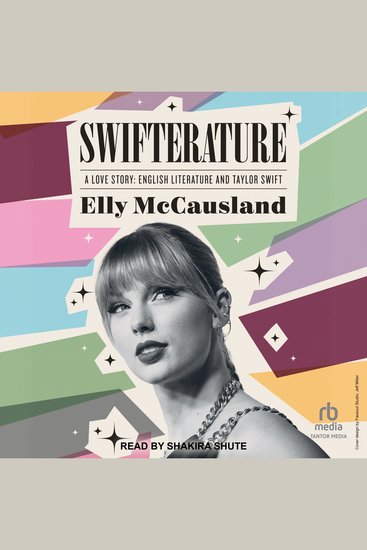
  • Swifterature - A Love Story: English Literature and Taylor Swift - cover

    Swifterature - A Love Story:...

    Elly McCausland

    • 0
    • 0
    • 0
    A daring literary fusion of pop culture and feminism, Swifterature captures the special connection between English literature and the worldwide phenomenon of Taylor Swift. 
    Swifterature captures a unique fusion of different elements: fandom, feminism, and a defense of both literature and popular culture. 
    The narrative is split into thirteen chapters that use Swift's lyrics as departure points. The listener experiences the inspiring influence of English literature as Swift’s lens breathes new vitality and urgency into older texts. McCausland also writes about her own experiences as she copes with intense media scrutiny and is forced to defend her academic integrity. 
    She argues that Swift, through her self-conscious engagement with classic works of literature and her extraordinary popularity, invites us to reflect not only on the culture of our past but also of our present. Swifterature shows how Swift’s place on the world’s stage can teach us about many things, from feminism to politics, nature to childhood. In the process the book makes a compelling case that studying Taylor Swift also turns us into better readers, not only of literature but of ourselves and each other.
    Voir livre
  • Witness to Roswell 75th Anniversary Edition - Unmasking the Government's Biggest Cover-up - cover

    Witness to Roswell 75th...

    Thomas Carey, Donald Schmitt

    • 0
    • 0
    • 0
    "When I finished Witness to Roswell, I said to myself, 'Case closed!' for the very wealth and sheer weight of eyewitness testimony."—George Noory, host, Coast to Coast AM This classic in the field of UFOology is filled with hard-hitting eyewitness testimony of one of the most important events of all time: the actual recovery of a UFO outside of Roswell, New Mexico, in 1947. For more than 70 years, government authorities have led us to believe the wreckage was merely a very conventional weather balloon—but the witnesses who were there continue to tell a different story.Witness to Roswell once again provides a "can't put down" written account of what really transpired in Roswell decades ago. It pries loose the truth the government doesn't want us to know including the revelations of Walter Haut. This edition includes: •A growing litany of deathbed confessions describing the "little people" recovered at the crash site.•The most comprehensive time line of events ever published on this seminal event.•The identity of the Boeing engineer called in to examine the exotic wreckage from the crash.•What really took place at the Roswell base hospital and what nurse actually ordered the children's caskets.•The story of the soldier who wore gloves at the dinner table after guarding the "bodies."Clearly, the implications of this information are foreboding. One need only look at the fact that officials now have four explanations for this historic event—but to which one do all the witnesses testify on their deathbeds?Witness to Roswell once again demonstrates to the world that no statute of limitation applies to the truth: We are not alone. This anniversary edition includes a new introduction by the authors and additional material.
    Voir livre
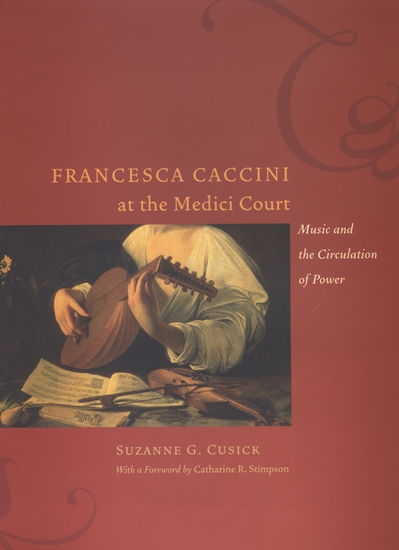
  • Francesca Caccini at the Medici Court - Music and the Circulation of Power - cover

    Francesca Caccini at the Medici...

    Suzanne G. Cusick

    • 0
    • 0
    • 0
    A “priceless” study of the life and career of the Renaissance-era Italian who was the first woman to have composed an opera (Gender & History).“Extraordinary in its breadth, its detail, its insight, and its worth to all participants in early music…. Its contribution is not limited to the musical world, however, as Cusick’s remarkable command and analysis of her material…has immense value for scholars engaged in cultural studies, performance studies, history, politics, or the study of difference.”—Renaissance Quarterly A contemporary of Shakespeare and Monteverdi, and a colleague of Galileo and Artemisia Gentileschi at the Medici court, Francesca Caccini was a dominant musical figure there for thirty years. Dazzling listeners with the transformative power of her performances and the sparkling wit of the music she composed for more than a dozen court theatricals, Caccini is best remembered today as the first woman to have composed opera. Francesca Caccini at the Medici Court reveals for the first time how this multitalented composer established a fully professional musical career at a time when virtually no other women were able to achieve comparable success. Suzanne G. Cusick argues that Caccini’s career depended on the usefulness of her talents to the political agenda of Grand Duchess Christine de Lorraine, Tuscany’s de facto regent from 1606 to 1636. Drawing on Classical and feminist theory, Cusick shows how the music Caccini made for the Medici court sustained the culture that enabled Christine’s power, thereby also supporting the sexual and political aims of its women. In bringing Caccini’s surprising story so vividly to life, Cusick ultimately illuminates how music making functioned in early modern Italy as a significant medium for the circulation of power.
    Voir livre