

Rejoignez-nous pour un voyage dans le monde des livres!
Ajouter ce livre à l'électronique
Grey
Ecrivez un nouveau commentaire Default profile 50px
Grey
Abonnez-vous pour lire le livre complet ou lisez les premières pages gratuitement!
All characters reduced
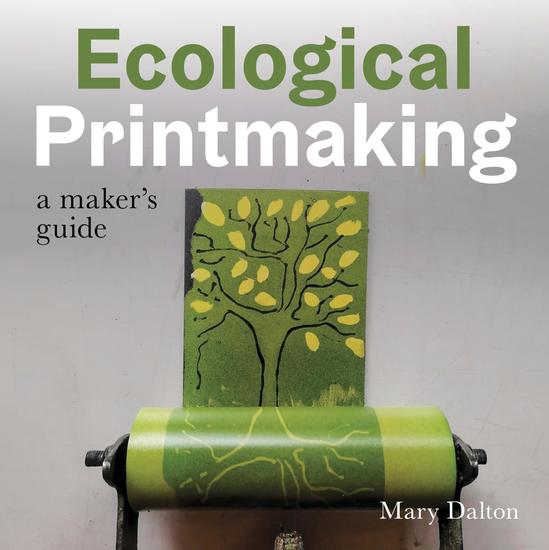
Ecological Printmaking - A Maker's Guide - cover

Ecological Printmaking - A Maker's Guide

Mary Dalton

Maison d'édition: The Crowood Press

  • 0
  • 0
  • 0

Synopsis

This practical book explains how printmakers can be more ecological in their practice. It suggests small changes an artist can make from, for example, tracking their materials to making ink from home-sourced pigment. In meaningful ways, it inspires art practices that benefit the environment and enrich understanding of the making process. Above all, it encourages ways of exploring the potential of print in expressive and challenging ways that do not hurt the planet.
Disponible depuis: 28/03/2025.
Longueur d'impression: 144 pages.

D'autres livres qui pourraient vous intéresser

  • The Quick & Dirty Guide to the Home Voiceover Industry - cover

    The Quick & Dirty Guide to the...

    Andrew Scott Montgomery

    • 0
    • 0
    • 0
    The Quick and Dirty Guide to the Home Voiceover Industry is a look into the home-based voiceover business, a booming field in the new "gig" economy. Professional independent voice artist and audiobook narrator Andrew Scott Montgomery walks you through the decision-making process to help you decide if home-based VO work is a potential business—or even a hobby—that might fit you well. Full of real-world anecdotes, laughs, and hard truths, this book is less "how to" and more "should you?" but with plenty of useful insights into the real world of pro voiceover work. With foreword by Mike DelGaudio (of YouTube's BOOTH JUNKIE channel), Andrew aims to aid those considering this field of work by helping them make a well-informed decision before even plugging in a mic.
    Voir livre
  • Roy Orbison - King of Hearts - cover

    Roy Orbison - King of Hearts

    Jeff Apter

    • 0
    • 0
    • 0
    Clad in black with dark shades, Roy Orbison had a mystique, style, and voice that were unmistakable and singularly different from his famous peers of the 1950s and '60s. Born in Vernon, Texas, Roy was the son of a guitar-playing oil worker. Already a music fan by age six, Roy went on to form a high school band. Honky-tonk gigs followed. Then a contract at Elvis Presley's label, Sun Records, where Roy found mentors and friends among the likes of Carl Perkins. Following a shift to Monument Records, he shared a bill with a group called the Beatles, who were huge fans of his.After experimenting with different styles, Roy edged closer to a sound all his own. He found it with smash hits, including "Only the Lonely," "Crying," and "Oh, Pretty Woman," songs heavy with pathos and remarkable vocals. It was gold. But what lay ahead was a professional downswing, and personal tragedy with the death of his wife and two sons. Twenty lean years followed. Yet Roy Orbison was far from over. Amid the rockabilly revival of the 1980s and the formation of the British-American supergroup the Traveling Wilburys, Roy's comeback was legendary. Asked how he'd like to be remembered, Roy said, "One day when they are mentioning people who had an impact, if they just mention me among the rest of the guys and gals, it would be great." He got his wish. Roy Orbison: King of Hearts seals it.
    Voir livre
  • Cunk on Everything - The Encyclopedia Philomena - cover

    Cunk on Everything - The...

    Philomena Cunk

    • 0
    • 0
    • 0
    From the creator and star of the “deeply funny, unexpectedly informative” (The Daily Beast) Netflix mockumentary Cunk on Earth, a helpful guide covering every single topic in the known universe, from Adam and Eve to Top Gun. Once in a blue moon, a book comes along that changes the world. The Origin of Species. War and Peace. 1984. And now, Cunk on Everything: The Encyclopedia Philomena, by Philomena Cunk. Philomena Cunk is one of the greatest thinkers of the 21st century, and in Cunk on Everything she turns her attention to our biggest issue: why are there so many books? Wouldn't it be better if there was just one? This is that book — an encyclopedia of all human knowledge, delving into not only life's greatest mysteries but our most important political figures and cultural touchstones.  Read it, and you'll never have to read another book again.
    Voir livre
  • William Shakespeare - cover

    William Shakespeare

    Mitansh

    • 0
    • 0
    • 0
    Love looks not with the eyes, but with the mind; And therefore is wing'd Cupid painted blind. Nor hath love's mind of any judgment taste; Wings and no eyes figure unheedy haste: And therefore is love said to be a child, Because in choice he is so oft beguil'd.
    Voir livre
  • Fire Flurries - Confessions of a Small Town Rockstar - cover

    Fire Flurries - Confessions of a...

    Sandi MarLisa

    • 0
    • 0
    • 0
    Sandi MarLisa is your favorite small town rockstar. She also happens to be a newly divorced ex-minister, mother of two children, and published author in her hometown of Panama City, Florida. After surviving category five Hurricane Michael and the Covid-19 pandemic, she enters the dating scene in her hometown while also making it as a professional musician with big dreams and fiery Floridian spirit. Fire Flurries takes you through the gut-wrenching ups-and-downs of Sandi MarLisa's wild year as she navigates her feelings on love, friendship, motherhood, dating and other modern events in this rollercoaster stream of consciousness novel. Deeply reflective thinkers will appreciate the insightfulness of her deepest ruminations, but her writing has a passion and rawness that will appeal to the masses. Her story ebbs and flows through time just like the rhythmic currents of her beloved Floridian coastal waters. From storms, to lapping tides, to gentle rain... they are all moments that shape us and simultaneously act as a heartbeat calling us to LIVE... really LIVE!
    Voir livre
  • Warhol - cover

    Warhol

    Eric Shanes

    • 1
    • 3
    • 0
    Andy Warhol was an artist who undoubtedly put his finger on the pulse of modern culture. Through pioneering a variety of techniques, but principally by means of the visual isolation of imagery, its repetition and enforced similarity to printed images, and the use of garish colour to denote the visual garishness that is often encountered in mass culture, he threw much direct or indirect light upon modern anomie or world-weariness, nihilism, materialism, political manipulation, economic exploitation, conspicuous consumption, media hero-worship, and the creation of artificially-induced needs and aspirations. Moreover, in his best paintings and prints he was a very fine creator of images, with a superb colour sense and a brilliant feel for the visual rhythm of a picture which resulted from his intense awareness of the pictorial potentialities inherent in forms. Initially, his images might appear rather simple. Yet because of that very simplicity they not only enjoy a high degree of immediate visual impact, but also possess the rare power of projecting huge implications through the mental associations they set in motion. For example, the visual repetition that Warhol employed within a great many of his images was intended, associatively, to parallel the vast repetition of images that are employed in a mass-culture in order to sell goods and services. This includes vehicles of communication such as movies and TV programmes. By incorporating into his images the very techniques of mass production that are central to a modern industrial society, Warhol directly mirrored larger cultural uses and abuses, while emphasising, to the point of absurdity, the complete detachment from emotional commitment that he saw everywhere around him. Moreover, in addition to employing imagery derived from popular culture in order to offer a critique of contemporary society, Warhol also carried forward the assaults on art and bourgeois values that the Dadaists had earlier pioneered; by manipulating images and the public persona of the artist he was able to throw back in our faces the contradictions and superficialities of contemporary art and culture. Ultimately, it is the trenchancy of his cultural critique, as well as the vivaciousness with which he imbued it, that will surely lend his works their continuing relevance long after the particular objects he represented – such as Campbell’s Soup cans and Coca-Cola bottles – have perhaps become technologically outmoded, or the outstanding people he depicted, such as Marilyn Monroe, Elvis Presley and Mao Zedong, have come to be regarded merely as the superstars of yesterday.
    Voir livre
