Begleiten Sie uns auf eine literarische Weltreise!
Buch zum Bücherregal hinzufügen
Grey
Einen neuen Kommentar schreiben Default profile 50px
Grey
Jetzt das ganze Buch im Abo oder die ersten Seiten gratis lesen!
All characters reduced
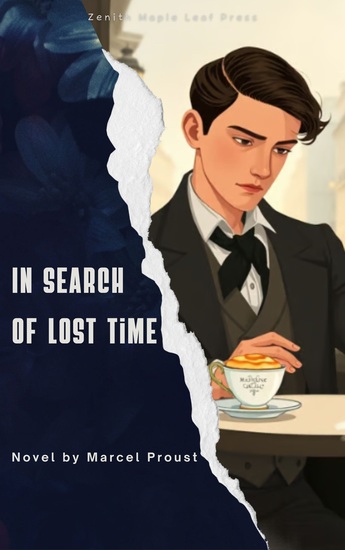
In Search of Lost Time - cover

In Search of Lost Time

Marcel Proust

Übersetzer C. K. Scott Moncrieff, Stephen Hudson

Verlag: Zenith Maple Leaf Press

  • 0
  • 0
  • 0

Beschreibung

Memory, time, love, and art — one of the greatest novels ever written.

Marcel Proust's In Search of Lost Time (À la recherche du temps perdu) is a monumental work of modern literature, spanning seven volumes. Blending memory and imagination, Proust explores childhood, society, desire, jealousy, and the nature of time itself with unmatched depth and beauty.

Often called the longest novel ever written — and one of the most profound — this masterpiece reshaped literature with its psychological insight, lyrical style, and philosophical reflections.

Why readers love it:

A complete edition. All seven volumes of Proust's masterpiece in one collection.

Timeless themes. Love, art, memory, and identity resonate across generations.

A literary landmark. Admired by writers such as Virginia Woolf, James Joyce, and Vladimir Nabokov.

A journey unlike any other
More than a novel, Proust's work is an exploration of what it means to live, to remember, and to create. For over a century, In Search of Lost Time has been celebrated as one of the pinnacles of world literature.

✨ Lose yourself in Proust's extraordinary meditation on life and memory.

👉 Click "Buy Now" and own In Search of Lost Time by Marcel Proust—a definitive collection of one of literature's greatest achievements.
Verfügbar seit: 27.08.2025.
Drucklänge: 3723 Seiten.


Weitere Bücher, die Sie mögen werden

  • Don't Panic Pivot! - How to Pivot Your Skills to Thrive During Layoffs and the AI Era - cover

    Don't Panic Pivot! - How to...

    Rhonda Scarbrough

    • 0
    • 0
    • 0
    This audiobook is narrated by an AI Voice.   
    Layoffs. AI disruption. Economic uncertainty. 
    If your career suddenly feels unstable, Don’t Panic, Pivot! delivers the clarity and confidence you need to move forward—without starting over. 
    This audiobook is a practical guide for professionals navigating career disruption in an AI-driven economy. Whether you’re facing a layoff, anticipating change, or questioning your long-term job security, this listen helps you regain control by showing you how to pivot your existing skills into new opportunities. 
    Drawing on real-world workforce transformation experience, Don’t Panic, Pivot! walks you through identifying transferable skills, spotting growth industries, and repositioning yourself strategically—rather than emotionally. You’ll learn how to quiet the panic, make confident decisions, and take decisive action even when the job market feels unpredictable. 
    This audiobook isn’t motivational fluff or vague advice. It’s a steady voice reminding you that career disruption doesn’t mean career failure—it means career redirection. 
    If you’re ready to stop spiraling, start thinking clearly, and move forward with purpose, this audiobook will meet you exactly where you are—and help you take your next step with confidence.
    Zum Buch
  • Montford Point Marines The: The History of America’s First Black Marines in World War II - cover

    Montford Point Marines The: The...

    Charles River Editors

    • 0
    • 0
    • 0
    In the summer of 1942, the first group of African American recruits stepped off a bus into the pine woods of North Carolina, bound for an experiment the Marine Corps had long vowed never to attempt. Their destination - Montford Point, a hastily constructed satellite to the new Camp Lejeune - was more than a training ground. It was a compromise with democracy, a segregated doorway into an institution that had defined itself for generations by who could not enter. The Corps’ exclusivity had a racial edge: unlike the Army, which had long employed segregated black regiments, and the Navy, which at least allowed African Americans to serve as stewards and messmen, the Marines had barred black men outright from 1798 into the Second World War. (Nalty 1995) 
    	Between 1942 and 1949, nearly 20,000 black men trained at Montford Point. They endured tar-paper barracks that baked in summer heat and leaked in coastal storms, learned to drill to the cadence of instructors who sometimes doubted their right to wear the uniform, and mastered skills that would carry them to the beaches and supply trails of Saipan, Iwo Jima, and Okinawa. Their story illuminated the paradox of wartime America, a republic that preached freedom abroad while policing hierarchies at home. 
    	In the process, Montford Point became both a threshold and a proving ground. It marked the reluctant admission of black men to a branch that had defined itself against them, and it tested a proposition central to mid-century American life: whether citizenship could be earned, displayed, and finally recognized through service. The soldiers’ stories can’t be branded as hagiography or indictment, but they offer a clear view of how a segregated experiment altered an institution and, over time, the nation the soldiers served.
    Zum Buch
  • Balance - How It Works and What It Means - cover

    Balance - How It Works and What...

    Paul Thagard

    • 0
    • 0
    • 0
    Living is a balancing act. Ordinary activities like walking, running, or riding a bike require the brain to keep the body in balance. A dancer’s poised elegance and a tightrope walker’s breathtaking performance are feats of balance. Language abounds with expressions and figures of speech that invoke balance. People fret over work-life balance or try to eat a balanced diet. The concept crops up from politics—checks and balances, the balance of power, balanced budgets—to science, in which ideas of equilibrium are crucial. Why is balance so fundamental, and how do physical and metaphorical balance shed light on each other? 
     
    Paul Thagard explores the physiological workings and metaphorical resonance of balance in the brain, the body, and society. He describes the neural mechanisms that keep bodies balanced and explains why their failures can result in nausea, falls, or vertigo. Thagard connects bodily balance with leading ideas in neuroscience, including the nature of consciousness. He analyzes balance metaphors across science, medicine, economics, the arts, and philosophy, showing why some aid understanding but others are misleading or harmful. Thagard contends that balance is ultimately a matter of making sense of the world. In both literal and metaphorical senses, balance is what enables people to solve the puzzles of life by turning sensory signals or an incongruous comparison into a coherent whole. 
     
    Bridging philosophy, psychology, and neuroscience, Balance shows how an unheralded concept’s many meanings illuminate the human condition.
    Zum Buch
  • Crime and Punishment in the American Colonies: The History of the Legal Systems in North America Before the Revolutionary War - cover

    Crime and Punishment in the...

    Charles River Editors

    • 0
    • 0
    • 0
    Even though the colonists eventually broke free from Great Britain, plenty of British customs and practices affected the fledgling United States, particularly when it came to law. While the most notable ramifications can be found in the Fourth Amendment to the Constitution, which forbids illegal searches and seizures by the government, the extensive legal background from Britain impacted how American lawyers and courts operated as well, even as legal codes differed considerably from colony to colony because of their charters. The local codes had to broadly conform with the current laws in England, and the early equivalent of the Colonial Office examined colonial laws if someone sued. Laws found to be inconsistent with English practice were sometimes voided.  
    	On paper, the New England codes were extremely harsh, but in practice, they were often mildly enforced, if enforced at all. One law on the books was that a son could be executed if he cursed his parents, but no one was ever executed for it. Many crimes were offenses against public decorum, but there was a wide range of things considered misbehaviors. Punishments varied but tended to be either financial or public, with humiliation and shame being a large part of it.  
    	Conversely, while the New Englanders tended to base their codes on the Old Testament, in Pennsylvania, the Quaker establishment sought to reform criminals rather than punish them. Consequently, they probably had the least number of capital offenses of any place in the English-speaking world. Furthermore, over time, the list of what constituted crimes changed somewhat, as did the emphasis. The fast growth of populations brought large numbers of immigrants and indentured servants and a more complex society. Diversity increased, and the rise of slavery concentrated in (but was not limited to) the Southern colonies, bringing with it codes of law to control slaves and deal with offenses committed by them.
    Zum Buch
  • Salton Sea The: The History of America’s Most Unique Lake - cover

    Salton Sea The: The History of...

    Editors Charles River

    • 0
    • 0
    • 0
    In the list of popular American geological oddities and attractions, one sizeable phenomenon remains surprisingly unfamiliar to the average citizen. This may be due in part to its remote desert location, but perception of the Salton Sea in southern California is also laden with environmental concerns and is in a constant state of flux. The extensive body of inland saltwater hides a glorious commercial past and has served as an important wildlife preserve but approaches a seemingly inevitable crisis in the coming decade. 
    	The Salton Sea in not directly “on the way” to anything substantial or iconic, and is situated one hour’s drive from Palm Springs, 30 miles to the south of Indio, California on Highway 111. Its distance from Los Angeles and San Diego is approximately three hours driving time. The most recognizable natural phenomenon of Imperial and Riverside counties, it is surrounded by a rural area comprised of predominantly migrant farm workers and located in the southern Colorado desert area known as the Salton Trough, or Salton Sink. 
    	Despite being a natural occurrence filling and emptying intermittingly throughout history, the current presence of this large inland sea surrounded by sand was created accidentally in the early 20th century. First formed around 700 CE, the original and much larger version of the great inland lake was called Lake Cahuilla, connected to the Sea of Cortez. By the time the first Europeans arrived in the 16th century, the basin was completely dry as Don Juan Bautista led the first party across the basin’s expanse.  
    	The “accidental” creation of the lake’s modern version was a product of the rising Colorado that destroyed a crucial section of the canal system designed to help farmers. Millions of gallons of water were forced into the lowland area. Beyond the one breach, the entire volume of the river flowed into the Salton lowlands for nearly two years before engineers finally stopped it.
    Zum Buch
  • Bringing Unconditional Love To Ourselves - cover

    Bringing Unconditional Love To...

    Ph.D. Robyn Posin

    • 0
    • 0
    • 0
    This dialogue explores how we may become more consistently gentle, more kind, and more tender with ourselves in this mad-paced world. How may we develop the habit of listening to that little voice inside that is so often ignored in the name of expediency? Robyn Posin suggests that we make an agreement with ourselves to take some part of every week to just listen. She says it’s important to make a habit of taking the time to sit quietly with ourselves, and reminds us that it’s also important to keep that commitment no matter what. 
    Rather than taking a large chunk of time, we need to allow ourselves just the right amount of time that we can stick to. It’s better to bite off something small that you can absolutely abide by than to take on something large. The idea is to keep the promise you’ve made to yourself. At first we may not hear that small voice inside because, as she states, “those parts of you have been abandoned and neglected and have managed without your attention for many years.” By being persistent and keeping your promise to sit on a regular basis you will be able to hear the voice that’s been longing to be heard. Posin also talks about how to know the difference between going as slow as that littlest voice inside is telling us to go, and procrastination. She also shares why she’s firmly opposed to compromise. (hosted by Justine Willis Toms)
    Zum Buch