




RIPRODURRE CAMPIONE

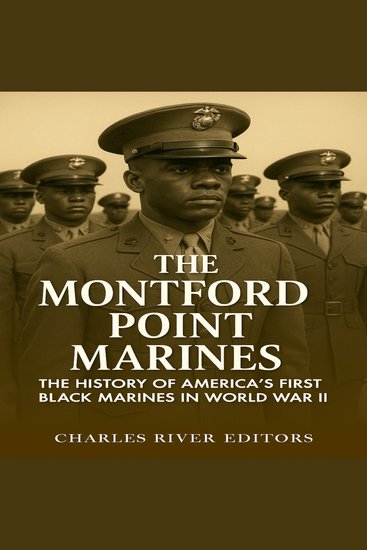
Montford Point Marines The: The History of America’s First Black Marines in World War II
Charles River Editors
Narratore Kc Wayman
Casa editrice: Charles River Editors
Sinossi
In the summer of 1942, the first group of African American recruits stepped off a bus into the pine woods of North Carolina, bound for an experiment the Marine Corps had long vowed never to attempt. Their destination - Montford Point, a hastily constructed satellite to the new Camp Lejeune - was more than a training ground. It was a compromise with democracy, a segregated doorway into an institution that had defined itself for generations by who could not enter. The Corps’ exclusivity had a racial edge: unlike the Army, which had long employed segregated black regiments, and the Navy, which at least allowed African Americans to serve as stewards and messmen, the Marines had barred black men outright from 1798 into the Second World War. (Nalty 1995)
	Between 1942 and 1949, nearly 20,000 black men trained at Montford Point. They endured tar-paper barracks that baked in summer heat and leaked in coastal storms, learned to drill to the cadence of instructors who sometimes doubted their right to wear the uniform, and mastered skills that would carry them to the beaches and supply trails of Saipan, Iwo Jima, and Okinawa. Their story illuminated the paradox of wartime America, a republic that preached freedom abroad while policing hierarchies at home.
	In the process, Montford Point became both a threshold and a proving ground. It marked the reluctant admission of black men to a branch that had defined itself against them, and it tested a proposition central to mid-century American life: whether citizenship could be earned, displayed, and finally recognized through service. The soldiers’ stories can’t be branded as hagiography or indictment, but they offer a clear view of how a segregated experiment altered an institution and, over time, the nation the soldiers served.
Durata: circa un'ora (01:26:26)
Data di pubblicazione: 16/10/2025; Unabridged; Copyright Year: — Copyright Statment: —




