Join us on a literary world trip!
Add this book to bookshelf
Grey
Write a new comment Default profile 50px
Grey
Subscribe to read the full book or read the first pages for free!
All characters reduced
Erotic Literature - cover

Erotic Literature

Lucas Powell

Translator A AI

Publisher: Publifye

  • 0
  • 0
  • 0

Summary

Erotic Literature explores the captivating history of sensuality in narrative, examining its profound influence on literary traditions and societal norms. This collection of essays delves into how desire, power, and cultural expression intertwine throughout history, highlighting erotic narratives as vital cultural artifacts.

 
The book reveals that societal values have consistently shaped the boundaries of what is considered acceptable or taboo, influencing the creation and reception of erotic literature across different eras and cultures.

 
The book progresses through historical periods and cultural traditions, such as ancient Near Eastern love poetry and classical Greek eroticism, to the Kama Sutra and the emergence of modern erotic literature. By adopting a comparative approach, the essays reveal common threads and unique characteristics of erotic expression globally.

 
Erotic Literature offers a comprehensive overview of a topic often misunderstood, providing a lens to understand cultural norms and power dynamics related to sexuality.
Available since: 02/26/2025.
Print length: 72 pages.

Other books that might interest you

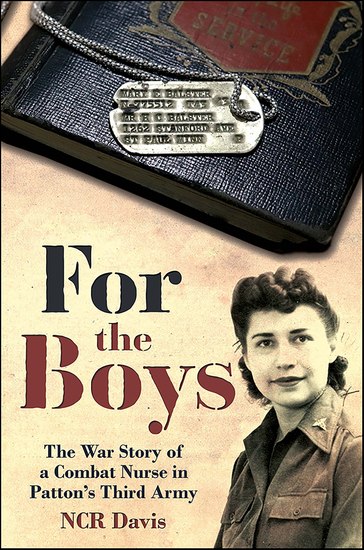
  • For the Boys - The War Story of a Combat Nurse in Patton’s Third Army - cover

    For the Boys - The War Story of...

    NCR Davis

    • 0
    • 0
    • 0
    "This novelistic narrative captures both the violence and trauma of WWII and its subject’s remarkable heroism."— Publishers Weekly
    
    A month after her 24th birthday, Lt. Mary Elizabeth Balster collapses among the rubble of a shelled supply room. Has the young nurse finally succumbed to the mounting emotional toll caused from months of caring for the sick and wounded just behind the front lines of General Patton’s Third Army? On the night of November 30, 1944, holed up in the Heinrich Himmler Barracks in Morhange, France, Lt. Balster’s evac receives a typical patient load (over 200 soldiers, including wounded enemy), but this time one of the admissions is a 19-year-old tanker she’d nursed back to health five months before in Normandy. The charge nurse on Surgical gently informs the lieutenant that the private is critical, admitted with two gunshot wounds and almost half his body consumed by burns. Rising determined to save him, Balster limps toward the shelled supply room determined to search for any blood plasma bottles still intact after Luftwaffe strafing.
    
    Recaptured from her mother’s reminiscences and letters home, N. C. R. Davis takes the reader through every heat-of-battle harrowing moment as Balster lived it, achieving a rare glimpse of one nurse’s point of view during the latter part of the European conflict.
    
    The book mixes Lt. Balster’s observations, memories, and dreams to re-tell the true story of a richly rebellious and intense woman trying to navigate her life and nurture her sanity while nursing the wounded and dying frontline soldiers of the Third Army. Her strong-willed, beguiling personality fosters the grit necessary for her success as a combat nurse, but these same characteristics cause two men to fall in love with her. And the personal cost of war comes to a heartrending conclusion, as she must choose one man over the other to save herself.
    Show book
  • Children's Short Works Vol 018 - cover

    Children's Short Works Vol 018

    Various

    • 0
    • 0
    • 0
    Librivox's Children's Short Works Collection 018: a collection of 15 short works for children in the public domain read by a variety of Librivox members.
    Show book
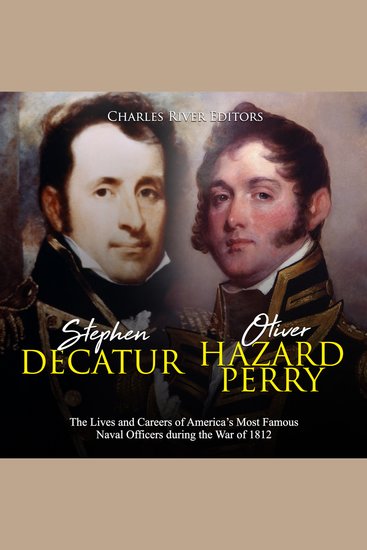
  • Stephen Decatur and Oliver Hazard Perry: The Lives and Careers of America’s Most Famous Naval Officers during the War of 1812 - cover

    Stephen Decatur and Oliver...

    Charles River Editors

    • 0
    • 0
    • 0
    Americans had few things to celebrate during the Barbary Wars or the War of 1812, but one of them was the growing prestige of the U.S. Navy, and among those who were instrumental in its development, few were as influential as Stephen Decatur Jr. Decatur had an impact on nearly every war America fought in between the 1780s until his death in 1820, and his stardom ensured that he was a fixture among Washington, D.C.’s elite in his own lifetime. As with John Paul Jones during the American Revolution, Decatur’s activities helped instantly associate his name with the fledgling country’s success at sea. 
    	One of the only major victories the Americans won throughout the War of 1812 came at the Battle of Lake Erie in September 1813, and that action made Oliver Hazard Perry, a veteran of the Barbary Wars and commander of the USS Lawrence, a legend whose name has endured for over 200 years. Perry was so instrumental in the victory that British historian C.S. Forester noted “it was as fortunate for the Americans that the Lawrence still possessed a boat that would float, as it was that Perry was not hit." As one of the biggest naval battles of the war, the results meant that America maintained control of Lake Erie, an important location from which they could recover Detroit and be better positioned to confront the British and Shawnee leader Tecumseh’s confederacy. For his part, Perry would forever be remembered as the “Hero of Lake Erie,” even as he and compatriot Captain Jesse Elliot would feud over their respective actions during the battle for the rest of Perry’s life. 
    	Perry received a Congressional Gold Medal and the Thanks of Congress for compelling the surrender of the entire British squadron, the first time that had ever happened, but he wouldn’t have much time to enjoy it. He fought in the Second Barbary War in 1815 but died of yellow fever while on a mission in Venezuela in 1819.
    Show book
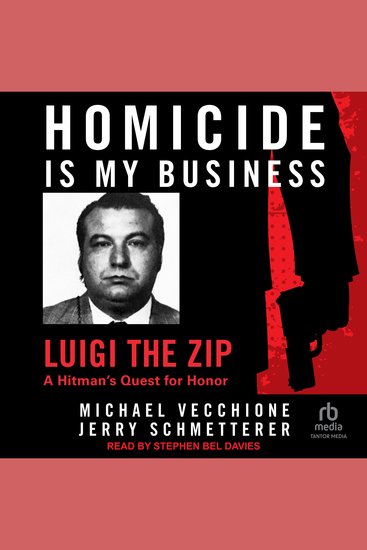
  • Homicide Is My Business - Luigi the Zip: A Hitman’s Quest For Honor - cover

    Homicide Is My Business - Luigi...

    Jerry Schmetterer, Michael...

    • 0
    • 0
    • 0
    The story of Luigi Ronsisvalle is an intimate look at the life of a professional killer. It is, in some ways, the story of all workingmen and women with ambition who never achieve their ultimate goal. But what makes Luigi unique is that, for him to achieve his goal, people had to die. His ambition, from when he was twelve years old, was to be a made man in the Mafia. He once told a presidential commission, "American child falls in love with baseball, I fall in love with Mafia." 


    Coauthor Michael Vecchione spent months interviewing the hitman about his life in the Sicilian and American Mafia, finally becoming his confidant. Those days, weeks, and months together brought Luigi to realize that, despite the concept of omertà—the code of silence ingrained in him from an early age—the road to a truly honorable life meant turning on those he once admired. 


    Luigi had done everything asked of him by his Mafia bosses. This included the murder of thirteen people. But unlike other hitmen, Luigi was denied the Mafia recognition he felt he deserved. Drawing on personal files, handwritten notes, and official sources, this book attempts to explain his complicated life. 


    Contains mature themes.
    Show book
  • Last One Walking - The Life of Cherokee Community Leader Charlie Soap - cover

    Last One Walking - The Life of...

    Greg Shaw, Wilma Mankiller,...

    • 0
    • 0
    • 0
    You probably know the story of the late Wilma Mankiller, the first woman to serve as principal chief of the Cherokee Nation. You might not recognize the name of her husband, Charlie Soap, yet his role as a Native community organizer is no less significant. Last One Walking charts for the first time the life and work of this influential Cherokee. 


    Author and former journalist Greg Shaw gives voice to his sources. He draws on his many travels and interviews with Soap and on previously unpublished writings. Shaw offers a rich profile of Soap's singular career—particularly as a champion of water rights. 


    In managing public infrastructure projects, housing assistance, and water development in the Cherokee Nation, Soap has exemplified ga-du-gi, the Cherokee word for community members working together for the collective good. 


    Charlie Soap's name in Cherokee, Ohni ai, translates as "the last one walking." In the Cherokee wolf clan, this is the member who trails the rest of the pack to watch for danger and opportunity. 


    The Native American fight for land has been well chronicled, but the fight for water has not. Last One Walking helps to fill that void with a narrative that is also deeply moving.
    Show book
  • Home Movies - cover

    Home Movies

    Michael Wheaton

    • 0
    • 0
    • 0
    Home Movies is an essay about the day-to-day realities and unrealities of its author’s hypermediated consumer life as a teacher and parent in Orlando, Florida. In each of the essay’s seven sections, Wheaton explores his relationships to new media and old tech, and the people around him, with thoughtful ambivalence and humor. Altogether, the various threads of Home Movies—image, tangibility, fame, nostalgia, simulation, marijuana, and cinema history—pull together into a moving attempt to accept the tensions between watching/being watched and life/art.
    Show book