

Begleiten Sie uns auf eine literarische Weltreise!
Buch zum Bücherregal hinzufügen
Grey
Einen neuen Kommentar schreiben Default profile 50px
Grey
Jetzt das ganze Buch im Abo oder die ersten Seiten gratis lesen!
All characters reduced
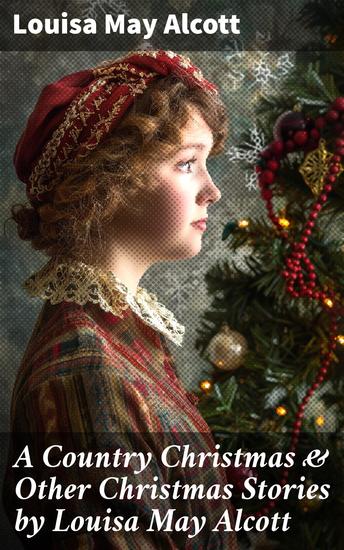
A Country Christmas & Other Christmas Stories by Louisa May Alcott - Christmas Specials Series - cover

A Country Christmas & Other Christmas Stories by Louisa May Alcott - Christmas Specials Series

Louisa May Alcott

Verlag: Good Press

  • 0
  • 0
  • 0

Beschreibung

In "A Country Christmas & Other Christmas Stories," Louisa May Alcott crafts a series of heartwarming tales that illuminate the spirit of the season through a lens of familial love and moral integrity. Richly detailed and brimming with vivid imagery, Alcott'Äôs prose combines realism with a touch of sentimentalism, capturing the essence of 19th-century American holiday traditions. The narratives weave together personal reflection and social commentary, emphasizing themes of generosity, community, and the innocence of childhood, which resonate deeply with the Victorian ethos of her time. Louisa May Alcott, best known for her seminal work "Little Women," was profoundly shaped by her own experiences growing up in a transcendentalist household, where discussions on art, morality, and equality were commonplace. Her penchant for social reform and advocacy for women's rights permeates her stories, revealing her aspiration to convey lessons of empathy and selflessness to her readers. Alcott'Äôs background as a writer, influenced by her familial relationships, further enriches the emotional depth of her Christmas tales. This collection is highly recommended for readers seeking both nostalgic charm and insightful reflections on the holiday spirit. Alcott'Äôs unique blend of warmth, humor, and social awareness makes these stories not only delightful seasonal reading but also a timeless exploration of human values, making it a perfect addition to anyone's festive literary repertoire.
Verfügbar seit: 11.12.2023.
Drucklänge: 179 Seiten.
Weitere Bücher, die Sie mögen werden

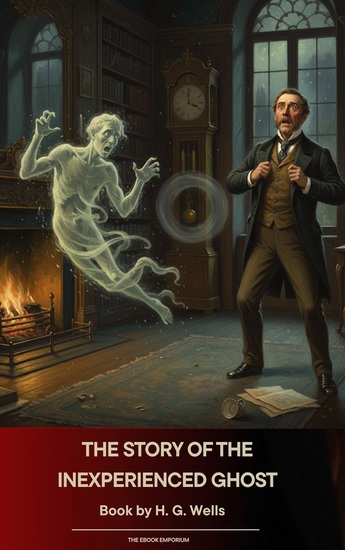
  • The Story of the Inexperienced Ghost - cover

    The Story of the Inexperienced...

    H. G. Wells

    • 0
    • 0
    • 0
    "He wasn't a terrifying ghost; he was a pathetic one. He had forgotten how to haunt."
    
    In the cozy, smoke-filled atmosphere of the Meridian Club, a man named Clayton recounts a remarkable encounter. He recently found himself face-to-face with a ghost—not a shrieking specter, but a shy, stuttering young man who had died of "inanition" and was now failing miserably at being scary. The ghost has forgotten the complex "passes" and gestures required to disappear back into the spirit world. As Clayton attempts to help the spirit regain his "spectral footing," the story takes a turn from the humorous to the chillingly profound, questioning the thin veil between the living and the dead.
    
    A Satire of the Gothic Tradition: Wells subverts every trope of the 19th-century ghost story. His phantom is a "low-grade" spirit who is self-conscious about his lack of haunting skills. By treating the afterlife as a bureaucratic or technical skill that one must master, Wells brings a grounded, modern sensibility to the supernatural, making the ghost's plight relatable and strangely human.
    
    The Fatal Curiosity: The narrative tension peaks when Clayton decided to demonstrate the ghost's secret gestures to his skeptical friends. Wells masterfully builds a sense of dread as the "inexperienced" ghost's struggle becomes a real-world danger. It is a cautionary tale about the arrogance of the living when dealing with the mysteries of the beyond.
    
    Discover the lighter—and darker—side of the supernatural. Purchase "The Story of the Inexperienced Ghost" today and master the pass.
    Zum Buch
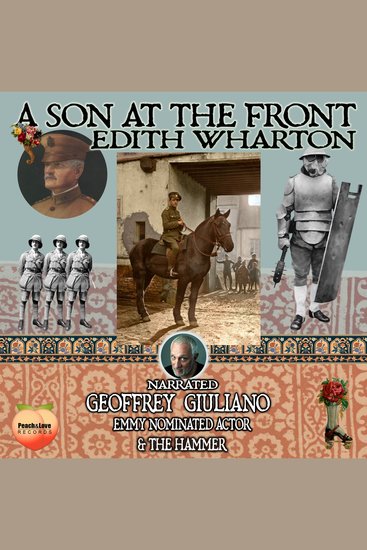
  • A Son At The Front - cover

    A Son At The Front

    Edith Wharton

    • 0
    • 0
    • 0
    In the realm of classic literature, there exists a treasure trove of stories that capture the essence of human emotions and experiences during times of conflict. One such masterpiece is "A Son at the Front," a novel written by Edith Wharton and published in 1923. This poignant work of fiction delves into the lives of its characters against the backdrop of World War I, weaving a narrative that explores themes of love, sacrifice, and the unrelenting toll of war. 
     
    The story primarily revolves around the protagonist, John Campton, an American painter residing in Paris. John is a devoted father, and his world revolves around his beloved son, George. The novel traces John's inner turmoil as he wrestles with his desire to protect his son from the horrors of war while also coming to terms with his own artistic ambitions. 
     
    As the novel unfolds, we witness the complex interplay of personal and societal forces on the characters. John Campton's internal conflict reflects the broader dilemma faced by countless individuals during the Great War. The choice between pursuing one's creative aspirations and succumbing to the overwhelming demands of duty and patriotism is a recurring theme that resonates with readers even today. 
     
    Edith Wharton, celebrated for her incisive social commentary and keen insight into human nature, portrays the characters in "A Son at the Front" with depth and nuance. John's struggles are a testament to the emotional turmoil experienced by parents who see their children heading to the frontlines of battle. The fear, anxiety, and helplessness that John grapples with are emotions that transcend time and place, making his character all the more relatable to modern readers.
    Zum Buch
  • Buddenbrooks - The Decline of a Family - cover

    Buddenbrooks - The Decline of a...

    Thomas Mann

    • 0
    • 0
    • 0
    Buddenbrooks is a 1901 novel by Thomas Mann, chronicling the decline of a wealthy north German merchant family over the course of four generations, incidentally portraying the manner of life and mores of the Hanseatic bourgeoisie in the years from 1835 to 1877. Mann drew deeply from the history of his own family, the Mann family of Lübeck, and their milieu.
    It was Mann's first novel, published when he was twenty-six years old. With the publication of the second edition in 1903, Buddenbrooks became a major literary success. Its English translation by Helen Tracy Lowe-Porter was published in 1924. The work led to a Nobel Prize in Literature for Mann in 1929; although the Nobel award generally recognises an author's body of work, the Swedish Academy's citation for Mann identified "his great novel Buddenbrooks" as the principal reason for his prize.
    Mann began writing the book in October 1897, when he was twenty-two years old. The novel was completed three years later, in July 1900, and published in 1901. His objective was to write a novel on the conflicts between businessman and artist's worlds, presented as a family saga, continuing in the realist tradition of such 19th-century works as Stendhal's Le Rouge et le Noir (1830; The Red and the Black). Buddenbrooks is his most enduringly popular novel, especially in Germany, where it has been cherished for its intimate portrait of 19th-century German bourgeois life.
    Before Buddenbrooks Mann had written only short stories, which had been collected under the title Der kleine Herr Friedemann (1898, Little Herr Friedemann). They portrayed spiritually challenged figures who struggle to find happiness in (or at the margins of) bourgeois society. Similar themes appear in the Buddenbrooks, but in a fully developed style that already reflects the mastery of narrative, subtle irony of tone, and rich character descriptions of Mann's mature fiction.
    The exploration of decadence in the novel reflects the influence of Schopenhauer's The World as Will and Representation (1818, 1844) on the young Mann. The Buddenbrooks of successive generations experience a gradual decline of their finances and family ideals, finding happiness increasingly elusive as values change and old hierarchies are challenged by Germany's rapid industrialisation. The characters who subordinate their personal happiness to the welfare of the family firm encounter reverses, as do those who do not.
    The city where the Buddenbrooks live shares so many street names and other details with Mann's native town of Lübeck that the identification is unmistakable, although the novel makes no mention of the name. The young author was condemned for writing a scandalous, defamatory roman à clef about (supposedly) recognisable personages. Mann defended the right of a writer to use material from his own experience.
    The years covered in the novel were marked by major political and military developments that reshaped Germany, such as the Revolutions of 1848, the Austro-Prussian War, and the establishment of the German Empire. Historic events nevertheless generally remain in the background, having no direct bearing on the lives of the characters.
    Zum Buch
  • Medea - (National Theatre of Scotland version) - cover

    Medea - (National Theatre of...

    Euripides

    • 0
    • 0
    • 0
    'She's chucked out like an old coat that nae langer fits him…'
    Medea and Jason, clinging together as refugees in Corinth, have struggled to bring up their beloved offspring in this alien and unsympathetic society. Now Jason has a plan to better integrate himself. Unfortunately, this involves abandoning his wife, the mother of his children…
    Spurned, destitute, desperate, Medea exacts her terrible retribution.
    Liz Lochhead's Scots-inflected version of Euripides' classic revenge tragedy was first performed by Theatre Babel in 2000 and won the Saltire Society Scottish Book of the Year Award. It was revived by the National Theatre of Scotland as part of the 2022 Edinburgh International Festival, with Adura Onashile as Medea, directed by Michael Boyd.
    Zum Buch
  • Tono-Bungay - Book the Second: The Rise of Tono-Bungay (Unabridged) - cover

    Tono-Bungay - Book the Second:...

    H. G. Wells

    • 0
    • 0
    • 0
    Herbert George "H. G." Wells (1866 - 1946) was an English writer.
    He was prolific in many genres, including the novel, history, politics, social commentary, and textbooks and rules for war games. Wells is now best remembered for his science fiction novels and is called a "father of science fiction"
    BOOK THE SECOND: THE RISE OF TONO-BUNGAY: I came to live in London, as I shall tell you, when I was nearly twenty-two. Wimblehurst dwindles in perspective, is now in this book a little place far off, Bladesover no more than a small pinkish speck of frontage among the distant Kentish hills; the scene broadens out, becomes multitudinous and limitless, full of the sense of vast irrelevant movement. I do not remember my second coming to London as I do my first, for my early impressions, save that an October memory of softened amber sunshine stands out, amber sunshine falling on grey house fronts I know not where. That, and a sense of a large tranquillity.
    Zum Buch
  • Crystal Egg The (Unabridged) - cover

    Crystal Egg The (Unabridged)

    H. G. Wells

    • 0
    • 0
    • 0
    "The Crystal Egg" is a science fiction short story written by H. G. Wells in 1897. - The story tells of a shop owner, named Mr. Cave, who finds a strange crystal egg that serves as a window into the planet Mars. - The story was written the same year in which Wells was serializing "The War of the Worlds" in Pearson's Magazine, a year before it was published as a novel. Because of the vaguely similar descriptions of the Martians and their machines, "The Crystal Egg" is often considered a precursor to "The War of the Worlds", though there is no clear foreshadowing of the events that transpire in the novel.
    Zum Buch
