

Begleiten Sie uns auf eine literarische Weltreise!
Buch zum Bücherregal hinzufügen
Grey
Einen neuen Kommentar schreiben Default profile 50px
Grey
Jetzt das ganze Buch im Abo oder die ersten Seiten gratis lesen!
All characters reduced
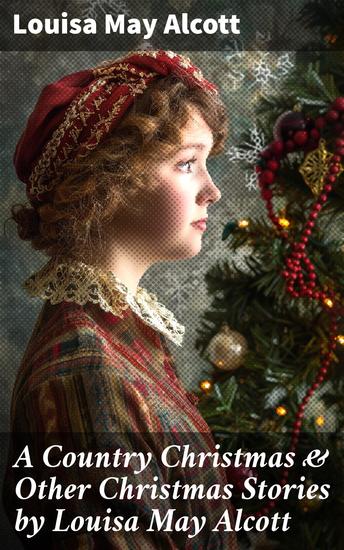
A Country Christmas & Other Christmas Stories by Louisa May Alcott - Christmas Specials Series - cover

A Country Christmas & Other Christmas Stories by Louisa May Alcott - Christmas Specials Series

Louisa May Alcott

Verlag: Good Press

  • 0
  • 0
  • 0

Beschreibung

In "A Country Christmas & Other Christmas Stories," Louisa May Alcott crafts a series of heartwarming tales that illuminate the spirit of the season through a lens of familial love and moral integrity. Richly detailed and brimming with vivid imagery, Alcott'Äôs prose combines realism with a touch of sentimentalism, capturing the essence of 19th-century American holiday traditions. The narratives weave together personal reflection and social commentary, emphasizing themes of generosity, community, and the innocence of childhood, which resonate deeply with the Victorian ethos of her time. Louisa May Alcott, best known for her seminal work "Little Women," was profoundly shaped by her own experiences growing up in a transcendentalist household, where discussions on art, morality, and equality were commonplace. Her penchant for social reform and advocacy for women's rights permeates her stories, revealing her aspiration to convey lessons of empathy and selflessness to her readers. Alcott'Äôs background as a writer, influenced by her familial relationships, further enriches the emotional depth of her Christmas tales. This collection is highly recommended for readers seeking both nostalgic charm and insightful reflections on the holiday spirit. Alcott'Äôs unique blend of warmth, humor, and social awareness makes these stories not only delightful seasonal reading but also a timeless exploration of human values, making it a perfect addition to anyone's festive literary repertoire.
Verfügbar seit: 11.12.2023.
Drucklänge: 179 Seiten.
Weitere Bücher, die Sie mögen werden

  • The Prince - cover

    The Prince

    Niccolo Machiavelli

    • 0
    • 0
    • 0
    In a world where power is both fragile and fiercely fought for, one figure rises to prominence—The Prince. Machiavelli's iconic work is not just a guide to ruling with cunning and force; it's a blueprint for navigating the treacherous game of ambition, betrayal, and survival.
    
    As relevant today as it was in the Renaissance, this is a must-read for anyone seeking to understand the art of power in its rawest, most exhilarating form.
    Zum Buch
  • A Chameleon - From their pens to your ears genius in every story - cover

    A Chameleon - From their pens to...

    Anton Chekhov

    • 0
    • 0
    • 0
    Anton Pavlovich Chekhov was born on 29th January 1860 in Taganrog, on the south coast of Russia.  
    His family life was difficult; his father was strict and over-bearing but his mother was a passionate story-teller, a subject Chekhov warmed to. As he later said; ‘our talents we got from our father, but our soul from our mother’.  
    At school Chekhov was distinctly average. At 16 his father mis-managed his finances and was declared bankrupt. His family fled to Moscow. Chekhov remained and eked out a living by various means, including writing and selling short sketches to newspapers, to finish his schooling. That completed and with a scholarship to Moscow University obtained he rejoined his family. 
    He was able to help support them by selling satirical sketches and vignettes of Russian lifestyles and gradually obtained further commissions. In 1884, he qualified as a physician and, although it earned him little, he often treated the poor for free, he was fond of saying ‘Medicine is my lawful wife, and literature is my mistress.’ 
    His own health was now an issue as he began to cough up blood, a symptom of tuberculosis.  Despite this his writing success enabled him to move the family into more comfortable accommodation.  
    Chekhov wrote over 500 short stories which included many, many classics including ‘The Kiss’ and ‘The Lady with a Dog’.  His collection ‘At Dusk’ won him the coveted Pushkin Prize when was only 26.  
    He was also a major playwright beginning with the huge success of ‘Ivanov’ in 1887.   
    In 1892 Chekhov bought a country estate north of Moscow. Here his medical skills and money helped the peasants tackle outbreaks of cholera and bouts of famine. He also built three schools, a fire station and a clinic.  It left him with less time for writing but the interactions with real people gained him detailed knowledge about the peasantry and their living conditions for his stories.  
    His most famous work, ‘The Seagull’ was received disastrously at its premiere in St Petersburg. It was later restaged in Moscow to highlight its psychological aspects and was a huge success. It led to ‘Uncle Vanya’, ‘The Three Sisters’ and ‘The Cherry Orchard’.  
    Chekhov suffered a major lung hemorrhage in 1897 while visiting Moscow. A formal diagnosis confirmed tuberculosis and the doctors ordered changes to his lifestyle.  
    Despite a dread of weddings the elusive literary bachelor quietly married the actress Olga Knipper, whom he had met at rehearsals for ‘The Seagull’, on 25th May 1901. 
    By May 1904 with his tuberculosis worsening and death imminent he set off for the German town of Badenweiler writing cheerful, witty letters to his family and assuring them his health was improving.  
    On 15th July 1904 Anton Chekhov died at Badenweiler.  He was 44.
    Zum Buch
  • A Troublesome Visitor - cover

    A Troublesome Visitor

    Anton Chekhov

    • 0
    • 0
    • 0
    A Troublesome Visitor is a story by Anton Pavlovich Chekhov. Written in 1886, first published in 1886 in the Petersburg Newspaper No. 190 dated July 14, signed by A. Chekhonte.
    Zum Buch
  • Loss of Breath - cover

    Loss of Breath

    Edgar Allan Poe

    • 0
    • 0
    • 0
    Loss of Breath is a humorous short story by Edgar Allan Poe that first appeared in a 1832 issue of The Philadelphia Saturday Courier.
    Zum Buch
  • Casting the Runes - From their pens to your ears genius in every story - cover

    Casting the Runes - From their...

    M R James

    • 0
    • 0
    • 0
    Montague Rhodes James is cited as perhaps the greatest English writer of ghost stories, an opinion few would disagree with. 
    James was born on 1st August 1862 at Goodnestone Parsonage in Kent, where his father was Curate but at age 3 the family went to live at Livermere, near Bury St Edmunds in East Anglia.  
    From early childhood he had a passion for mediaeval books and antiques. He was educated initially as a boarder at Temple Grove School in East Sheen, west London, before gaining a scholarship to Eton and thence Cambridge where he gained a double first, becoming a distinguished linguist and mediaevalist.  
    Before the Great War vacations were usually spent touring Europe absorbing cultures and references for his later writing. 
    A man of enormous knowledge it was said he timed his breakfast egg whilst he completed the Times crossword.  
    Many of his elegant yet terrifying tales were created by discarding the prevailing gothic cliches and placing his characters and narrative in a realistic setting.  Thereby the stories gained atmosphere and menace on a grand scale and he was famed as the originator of the antiquarian ghost story. 
    Although story-telling and writing these 30 or so tales was a hobby, when published their effect transformed the genre and still chill the bones in our more modern times. 
    James was also a medievalist scholar and translator whose work remains highly respected. He was also Provost of Eton College between 1918 and 1936. 
    M R James died on 12th June 1936 at Eton in Buckinghamshire.  He was 73.
    Zum Buch
  • The Classic A Christmas Carol - cover

    The Classic A Christmas Carol

    Charles Dickens

    • 0
    • 0
    • 0
    "A Christmas Carol" follows the transformation of Ebenezer Scrooge, a miserly and cold-hearted old man, throughout one magical Christmas Eve. The narrative begins with Scrooge, a wealthy but stingy moneylender, dismissing the Christmas season with contempt and refusing to give to charity. He dislikes the idea of Christmas joy and generosity, considering them a waste of time and money. On Christmas Eve, as Scrooge is visited by the ghost of his former business partner, Jacob Marley. Marley, burdened with heavy chains as punishment for his greed and selfishness in life, warns Scrooge that he will suffer a similar fate unless he changes his ways. 
     
    Marley tells Scrooge that he will be visited by three spirits that night. The first the Ghost of Christmas Past, takes Scrooge on a journey through his childhood and early adulthood. Scrooge witnesses scenes from his past, including his lonely and neglected childhood, lost love, and moments when he chose money over relationships. The second spirit, the Ghost of Christmas Present, shows Scrooge scenes of people joyfully celebrating Christmas in the present. Scrooge is particularly moved by the Cratchit family, especially Bob Cratchit and his son Tiny Tim, who is ill. Despite their poverty, the Cratchits find happiness in each other and embody the true spirit of Christmas. The third spirit, the Ghost of Christmas Yet to Come (or the Ghost of Christmas Future), shows Scrooge a bleak future if he continues on his current path. Scrooge sees his lonely death and the lack of mourning from those around him. He also witnesses Tiny Tim's death, which is a result of the family's inability to afford proper medical care. 
    Frightened and remorseful, Scrooge pleads for a chance to change. He promises to embrace the Christmas spirit and become a better person. Awakening on Christmas morning, Scrooge is overjoyed to discover that he has been given a second chance
    Zum Buch
