Begleiten Sie uns auf eine literarische Weltreise!
Buch zum Bücherregal hinzufügen
Grey
Einen neuen Kommentar schreiben Default profile 50px
Grey
Jetzt das ganze Buch im Abo oder die ersten Seiten gratis lesen!
All characters reduced
A Few Practical Suggestions - Society for Pure English Tract 03 (1920) - cover

A Few Practical Suggestions - Society for Pure English Tract 03 (1920)

Logan Pearsall Smith, English Society for Pure

Verlag: DigiCat

  • 0
  • 0
  • 0

Beschreibung

A Few Practical Suggestions, curated by the Society for Pure English and Logan Pearsall Smith, presents a compelling exploration of language, rhetoric, and the nuances of English style. This anthology assembles an eclectic array of essays and writings, reflecting a commitment to the refinement and purity of English prose. The works span a diverse spectrum, from prescriptive grammar advice to meditative pieces on linguistic evolution, showcasing both classic and avant-garde literary techniques. Each contribution pushes the boundaries of traditional and modern literary discourse, encouraging readers to appreciate the beauty and complexity inherent in the English language. This collection's strength lies in its capacity to illuminate the subtle interplay between linguistic precision and creative expression. The contributing Society members, under the aegis of Logan Pearsall Smith, represent a broad cross-section of early 20th-century linguistic thought leaders committed to the development and preservation of English's richness and vibrancy. Reflecting the cultural movements of their time, these scholars provide a critical dialogue on the role of language in shaping intellect and culture. Their dedication to linguistic purity and innovation places this collection at the intersection of historical and contemporary literary criticism, providing insights into the shifts in linguistic philosophy and practice. For readers seeking to enhance their understanding of English's literary potential, A Few Practical Suggestions offers a gateway into a world where language is both muse and lens. This anthology provides an invaluable educational resource that stimulates intellectual curiosity and encourages readers to engage in a broader conversation about the evolution of language. Ideal for literary aficionados, students, and academics alike, this collection invites reflection upon how language molds society and thought, presenting a unique opportunity to explore language in its most profound and artful forms.
Verfügbar seit: 15.09.2022.
Drucklänge: 19 Seiten.

Weitere Bücher, die Sie mögen werden

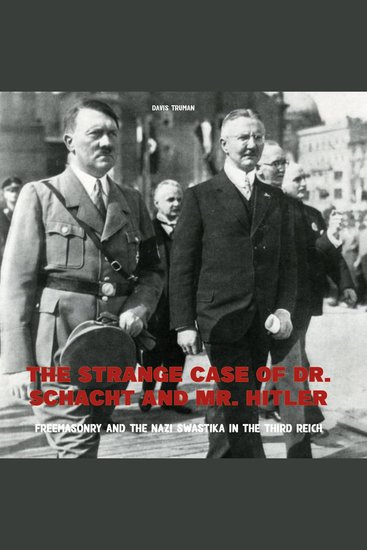
  • The Strange Case of Dr Schacht And Mr Hitler - Freemasonry and the Nazi Swastika in the Third Reich - cover

    The Strange Case of Dr Schacht...

    Davis Truman

    • 0
    • 0
    • 0
    In the darkest years of the 20th century, Adolf Hitler's Nazi regime cast a long and terrifying shadow over the world. The swastika, the symbol of Nazi power and oppression, became synonymous with hatred and brutality. However, a curious and enigmatic figure was hidden within this sinister regime, occupying a paradoxical position. Dr. Hjalmar Schacht, a prominent economist and financial wizard, emerged as an intriguing character at the heart of the Third Reich, navigating the treacherous terrain of Hitler's inner circle while harboring a mysterious secret of his own. 
    "The Strange Case of Dr. Schacht and Mr. Hitler: Freemasonry and the Nazi Swastika in the Third Reich" explores the perplexing relationship between Schacht, Hitler, and the clandestine world of Freemasonry that operated within Nazi Germany. Authored by esteemed historians and researchers, this groundbreaking book delves into the depths of historical archives and uncovers a compelling narrative that sheds light on the intricate connections between Freemasonry and the rise of the Nazi regime. 
    "The Strange Case of Dr. Schacht and Mr. Hitler" unveils the clandestine connections between Freemasonry and the Nazi Swastika, challenging conventional understandings of Nazi ideology. It delves into the secretive world of Masonic lodges. It explores the paradoxical coexistence of the Freemasons within the Third Reich, whose beliefs and principles appeared opposed to Hitler's fascist regime. 
    Through a captivating narrative, this book traces the origins and evolution of Freemasonry in Germany and unravels the intricate web of influence that the fraternity wielded. From its members who occupied influential positions within the Nazi Party to the covert networks that operated under darkness, this investigation sheds light on the enigmatic relationship between Freemasonry and the Third Reich.
    Zum Buch
  • The Noble Eightfold Path - Way to the End of Suffering - cover

    The Noble Eightfold Path - Way...

    Bhikkhu Bodhi

    • 0
    • 0
    • 0
    The Buddha's teachings center around two basic principles. One is the Four Noble Truths, in which the Buddha diagnoses the problem of suffering and indicates the treatment necessary to remedy this problem. The other is the Noble Eightfold Path, the practical discipline he prescribes to uproot and eliminate the deep underlying causes of suffering.
     
    This book offers a concise and thorough explanation of the Eightfold Path. Bhikkhu Bodhi examines each factor of the path to determine what it implies in the way of practical training. In the concluding chapter, he shows how all factors of the path function in unison to bring about the realization of the goal of liberation.
     
    From the preface by the author:
     
    "The essence of the Buddha's teaching can be summed up in two principles: the Four Noble Truths and the Noble Eightfold Path. The first covers the side of doctrine, and the primary response its elicits is understanding; the second covers the side of discipline, in the broadest sense of that word, and the primary response it calls for is practice."
    Zum Buch
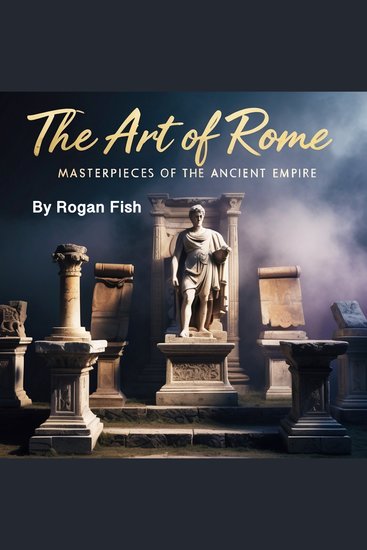
  • The Art of Rome - Masterpieces of the Ancient Empire - cover

    The Art of Rome - Masterpieces...

    Rogan Fish

    • 0
    • 0
    • 0
    The art of ancient Rome was shaped by a blend of cultural influences, evolving through a combination of native traditions and foreign influences, most notably from the Etruscans and Greeks. Early Roman art was heavily influenced by the Etruscans, who occupied central Italy before the rise of Rome. Etruscan art was characterized by its religious themes, vibrant frescoes, and elaborate tomb paintings, which had a significant impact on the early Roman artistic style. These early Roman artists often adopted Etruscan methods but began incorporating their own innovations, creating a distinctive blend of the two cultures. 
    Greek art also played a crucial role in the development of Roman art. As Rome expanded and conquered Greece, it absorbed many aspects of Greek culture, including their artistic styles. Greek sculptural ideals of beauty, proportion, and harmony were emulated by Roman artists. However, while Greek art favored idealized forms and perfection, Roman art took a more realistic approach, focusing on depicting individuals as they truly appeared. Roman portraiture, for example, was known for its attention to detail, capturing the wrinkles, facial expressions, and other characteristics that defined a person’s likeness. This move toward realism was a major shift from the idealized forms of Greek art, and it became a hallmark of Roman artistry. 
    In the early stages of Roman art, the primary medium was sculpture, often used to commemorate important figures or events. The Romans developed a talent for creating lifelike statues and busts, which were displayed in homes and public spaces to honor ancestors and gods. These sculptures, often made from marble or bronze, served as a means of preserving the memory of individuals or celebrating military victories.
    Zum Buch
  • The Fall of the Berlin Wall - End of the Cold War - cover

    The Fall of the Berlin Wall -...

    Nova Ashford

    • 0
    • 0
    • 0
    The fall of the Berlin Wall in 1989 marked the dramatic end of an era that had shaped global politics for nearly half a century. The Cold War, a period of intense ideological, political, and military tension between the United States and the Soviet Union, had divided the world into two distinct blocs. At the heart of this division stood Germany, and within it, the iconic Berlin Wall—a physical symbol of the separation between East and West. For much of the post-World War II period, this wall was not just a barrier dividing a city but a vivid representation of the ideological conflict between communism and capitalism, between Soviet control and Western freedom.  
    The Cold War began shortly after the end of World War II, as the victorious Allied powers, particularly the United States and the Soviet Union, emerged as the world's superpowers. The ideological rift between these two nations—one advocating for a free-market economy and democracy, the other for a centrally controlled, one-party state—became a defining feature of global politics. The division of Germany into East and West in 1949 symbolized the larger division between East and West, and Berlin, split into sectors controlled by the Allies, became the focal point of this division. 
    The Berlin Wall was erected in 1961 to prevent East Germans from fleeing to the West. It quickly became one of the most visible manifestations of the Cold War. The wall separated families, prevented personal freedoms, and symbolized the repressive nature of the East German regime. For decades, it seemed an unmovable part of the geopolitical landscape. However, by the late 1980s, the winds of change were beginning to stir. Gorbachev’s reforms in the Soviet Union, including policies of glasnost (openness) and perestroika (restructuring), sparked a wave of political change throughout Eastern Europe. As these reforms loosened Soviet control, the call for more political freedom and reform became louder in East Germany.
    Zum Buch
  • Eddie Would Go - The Story of Eddie Aikau Hawaiian Hero and Pioneer of Big Wave Surfing - cover

    Eddie Would Go - The Story of...

    Stuart Holmes Coleman

    • 0
    • 0
    • 0
    From surfer and writer Stuart Holmes Coleman, Eddie Would Go is the compelling story of Eddie Aikau's legendary life and legacy, a pipeline into the exhilarating world of surfing, and an important chronicle of the Hawaiian Renaissance and the emergence of modern Hawaii. 


    In the 1970s, a decade before bumper stickers and T-shirts bearing the phrase Eddie Would Go began popping up all over the Hawaiian islands and throughout the surfing world, Eddie Aikau was proving what it meant to be a "waterman." As a fearless and gifted surfer, he rode the biggest waves in the world; as the first and most famous Waimea Bay lifeguard on the North Shore, he saved hundreds of lives from its treacherous waters; and as a proud Hawaiian, he sacrificed his life to save the crew aboard the voyaging canoe Hokule'a.
    Zum Buch
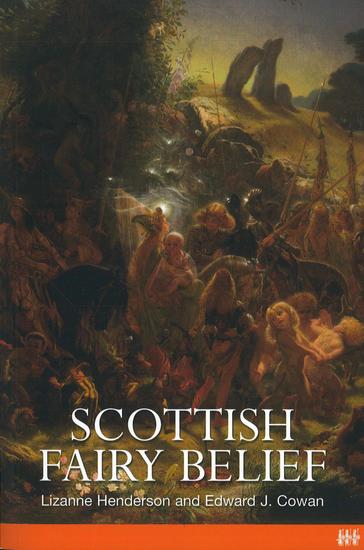
  • Scottish Fairy Belief - A History from the Fifteenth to the Nineteenth Century - cover

    Scottish Fairy Belief - A...

    Lizanne Henderson

    • 0
    • 0
    • 0
    The authorities told folk what they ought to believe, but what did they really believe? Throughout Scottish history, people have believed in fairies. They were a part of everyday life, as real as the sunrise, and as incontrovertible as the existence of God. While fairy belief was only a fragment of a much larger complex, the implications of studying this belief tradition are potentially vast, revealing some understanding of the worldview of the people of past centuries.
    This book, the first modern study of the subject, examines the history and nature of fairy belief, the major themes and motifs, the demonising attack upon the tradition, and the attempted reinstatement of the reality of fairies at the end of the seventeenth century, as well as their place in ballads and in Scottish literature.
    Zum Buch