Rejoignez-nous pour un voyage dans le monde des livres!
Ajouter ce livre à l'électronique
Grey
Ecrivez un nouveau commentaire Default profile 50px
Grey
Abonnez-vous pour lire le livre complet ou lisez les premières pages gratuitement!
All characters reduced
The Story Girl - cover

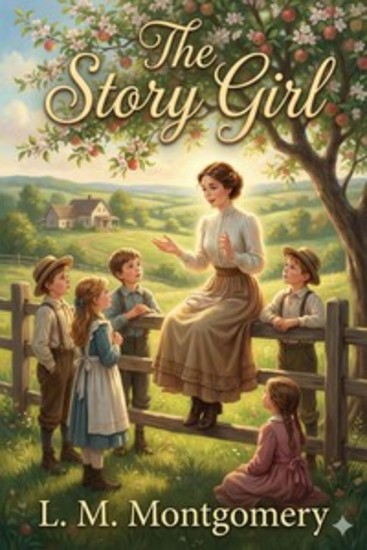
The Story Girl

L. M. Montgomery

Maison d'édition: Bu Classics Books

  • 0
  • 0
  • 0

Synopsis

A charismatic storyteller enchants a group of cousins with her tales of local legends and family lore, turning a mundane summer into a series of magical adventures. Her narratives weave a tapestry of wonder that binds the children together even as the realities of the adult world beckon.
Disponible depuis: 06/03/2026.
Longueur d'impression: 350 pages.
D'autres livres qui pourraient vous intéresser

  • Aunt Kipp - cover

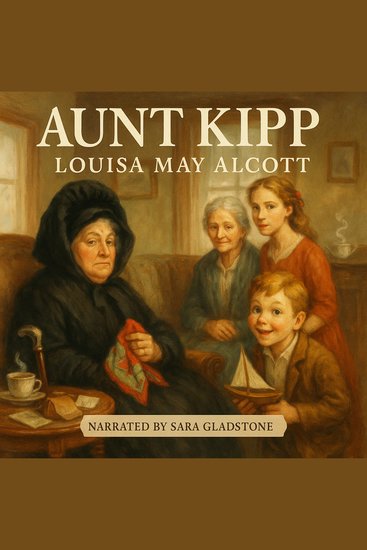
    Aunt Kipp

    Louisa May Alcott

    • 0
    • 0
    • 0
    Louisa May Alcott’s Aunt Kipp is a warm and witty tale of family trials, truth-telling children, and the reform of a difficult relative. 
    Polly Snow, her frail mother, and her mischievous younger brother “Toady” struggle to make ends meet while depending on the uncertain goodwill of their wealthy but domineering Aunt Kipp. With her towering black bonnet, sharp tongue, and constant reminders of her fragile health, Aunt Kipp seems to hold her fortune—and their future—over them like a storm cloud. But through humor, honesty, and unexpected affection, this domestic comedy reveals the power of kindness and change of heart. 
    Filled with Alcott’s trademark blend of sentiment, humor, and social observation, Aunt Kipp is both a sharp portrait of Victorian family life and a heartwarming reminder that it’s never too late to love and be loved.
    Voir livre
  • Siddhartha - cover

    Siddhartha

    Hermann Hesse

    • 0
    • 0
    • 0
    "Wisdom is not communicable. The wisdom which a wise man tries to communicate always sounds foolish."
    
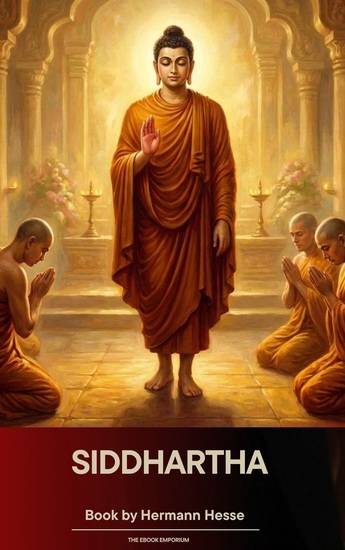
    Set in Ancient India during the time of the Buddha, Siddhartha tells the story of a young Brahmin who leaves his home, his family, and his privileged life to find the meaning of existence. His journey is not a straight line; it takes him from the asceticism of the forest-dwelling Samanas to the sensual temptations of the city, and from the heights of worldly wealth to the quiet humility of a ferryman's hut. Siddhartha learns that truth cannot be taught by a master—not even by the enlightened Gotama himself—but must be experienced through the "river" of life. Hesse's novel is a beautiful, meditative exploration of the unity of all things and the courage it takes to listen to one's own soul.
    
    The Symbolism of the River: The most enduring image of the novel is the river, which Siddhartha eventually learns to "listen" to. It represents the eternal cycle of life—the idea that time is an illusion and that every moment contains the past, present, and future simultaneously. The river is both the path and the destination.
    
    A Personal Path to Truth: The novel's power lies in its celebration of the individual. Siddhartha's ultimate realization is that "knowledge" can be passed on, but "wisdom" must be lived. This message has made the book a foundational text for seekers, students, and dreamers for over a hundred years.
    
    Why It Is a Global Classic: Siddhartha is a short book with a massive heart. It addresses the universal human hunger for purpose and peace without being preachy or dogmatic. Whether you are at a crossroads in your life or simply love beautiful storytelling, Siddhartha offers a sanctuary of calm and a map for the soul.
    
    Find your own river. Purchase "Siddhartha" today.
    Voir livre
  • Fading Voices - From their pens to your ears genius in every story - cover

    Fading Voices - From their pens...

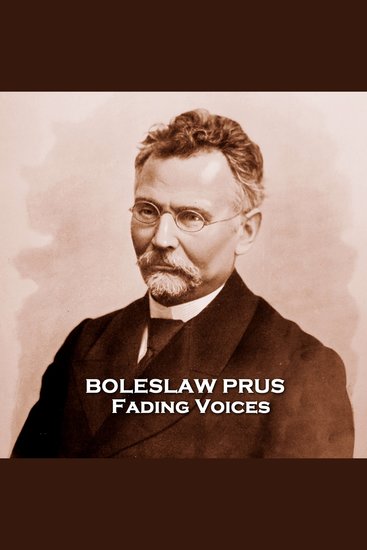
    Boleslaw Prus

    • 0
    • 0
    • 0
    Aleksander Głowacki who wrote under the nom de plume Boleslaw Prus was born on 20th August 1847 at Hrubieszów in the Kingdom of Poland, at that time, controlled by the Russian Empire. 
    At three his mother died and then at nine his father.  Female relatives helped raise him but at 15 he joined the Polish uprising against the might of Imperial Russia.  Wounded on the battlefield, arrested and imprisoned, he was later released into the care of a relative and resumed secondary school and then Warsaw University but poverty forced him to leave after two years.  At some point he developed agoraphobia which often caused problems. 
    In 1869, he enrolled in the Forestry Department at Puławy but was soon sacked and so he began a system of self-education that led to work as a newspaper columnist on a wide-ranging series of topics that eventually became the ‘Weekly Chronicles’ and spanned 40 years. 
    With his finances now stabilized he married and then adopted his late brother-in-law’s son.  
    It seems he had doubts as to the scale of his talents and early on adopted the name ‘Boleslaw Prus’ for both his journalistic and literary offerings. 
    His work as a short-story writer met with much acclaim. He wrote several dozen of them, originally published in newspapers and ranging in length from micro-story to novella. His keen observation of everyday life and sense of humor are evident in them.  
    During his career he also wrote novels. After ‘Pharoah’, in 1895, he embarked on a four-month journey taking in Berlin, Dresden, Nuremberg, Rapperswil in Switzerland, where he stayed for two months, and his final destination, Paris.  Here his agoraphobia was so bad he couldn’t cross the Seine.  
    However, his writing continued and in 1911 his novel ‘Changes’, though uncompleted, began to be serialised.  It was never finished. 
    Boleslaw Prus died on 19th May 1912, at his Warsaw apartment.  He was 64.  A National Hero, thousands attended both his funeral service and interment.
    Voir livre
  • The Star - From their pens to your ears genius in every story - cover

    The Star - From their pens to...

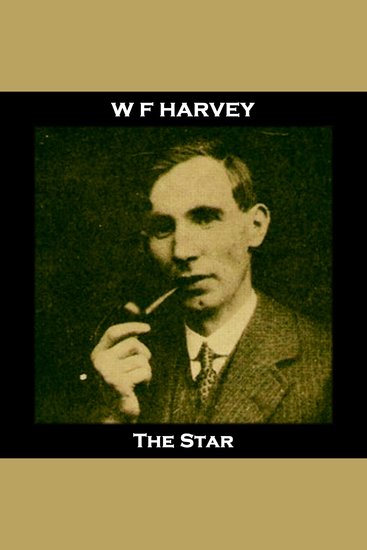
    W F Harvey

    • 0
    • 0
    • 0
    William Fryer Harvey AM was born on 14th April 1885 into a wealthy Quaker family in Leeds, West Yorkshire. 
    He was educated at the Quaker Bootham School in Yorkshire and Leighton Park School in Reading before university at Balliol College, Oxford.  
    His health was fragile and he poured his energies into writing short stories and in 1910 published his first collection ‘Midnight House’. 
    In the Great War he was with the Friends' Ambulance Unit and then served as a surgeon-lieutenant in the Royal Navy.  There he received the Albert Medal for Lifesaving but lung damage received at that time troubled him for the rest of his life. 
    He continued to write short stories, and even a memoir, but by 1925 ill health had forced his retirement to any outside work.  Three years later he published his second collection which contained his macabre classic ‘The Beast with Five fingers’, only one more collection would come from his pen in his lifetime. 
    For many years of his life he now lived in Switzerland with his wife but a yearning to be home saw them come back to England in 1935. 
    W F Harvey died in Letchworth on the 4th June 1937. He was 52.
    Voir livre
  • The Monkey's Paw - cover

    The Monkey's Paw

    W.W. Jacobs

    • 0
    • 0
    • 0
    The Monkey's Paw is a classic horror short story written by author W. W. Jacobs, published in England in 1902. In the story, the paw of a dead monkey is a talisman that grants its possessor three wishes, but the wishes come with an enormous price.
    Voir livre
  • Scarecrow of Oz The [The Wizard of Oz series #9] - cover

    Scarecrow of Oz The [The Wizard...

    L. Frank Baum

    • 0
    • 0
    • 0
    Cap'n Bill and Trot journey to Oz and, with the help of the Scarecrow, the former ruler of Oz, overthrow the villainous King Krewl of Jinxland. This was allegedly L. Frank Baum's personal favourite Oz book.
    Voir livre