Begleiten Sie uns auf eine literarische Weltreise!
Buch zum Bücherregal hinzufügen
Grey
Einen neuen Kommentar schreiben Default profile 50px
Grey
Jetzt das ganze Buch im Abo oder die ersten Seiten gratis lesen!
All characters reduced
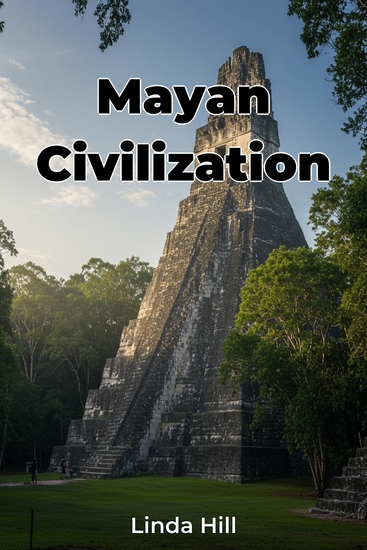
Mayan Civilization - cover

Mayan Civilization

Linda Hill

Übersetzer A Ai

Verlag: Publifye

  • 0
  • 1
  • 0

Beschreibung

Mayan Civilization explores the fascinating world of the Maya and their profound impact on Mesoamerican history. The book reveals that Mayan society wasn't a single entity but a collection of diverse city-states, like Tikal, constantly interacting through trade and warfare. These interactions fostered a rich tapestry of regional identities and cultural expressions.

 
The Maya made remarkable advancements in calendrical systems and monumental architecture, reflecting their complex worldview. This book examines Mayan civilization from its Preclassic origins to its Postclassic transformations, offering insights into their political structures, social hierarchies, and cultural achievements. It highlights the significance of Mayan hieroglyphs in documenting royal histories and religious beliefs.

 
By drawing on archaeological excavations and epigraphic inscriptions, the book presents a balanced perspective on Mayan society, acknowledging both its achievements and limitations. Structured in three parts, the book first introduces the geographic and temporal setting of the Maya, then delves into their political and social systems, and finally explores their cultural accomplishments. This approach provides a comprehensive understanding of Mayan civilization, making it a valuable resource for anyone interested in Mesoamerican history and the dynamics of complex societies.
Verfügbar seit: 19.03.2025.
Drucklänge: 62 Seiten.

Weitere Bücher, die Sie mögen werden

  • Hannibal - The True Story of the Life & Time of the Ancient Military Leader - cover

    Hannibal - The True Story of the...

    Liam Dale

    • 0
    • 0
    • 0
    Interested in Hannibal's remarkable life but short on time for lengthy biographies? Join The History Journals for an hourly history tour. 
     
    Hannibal, the mighty Carthaginian leader who boldly marched 37 war elephants across the Alps to challenge the Roman Empire, remains an enduring inspiration. Discover the man behind the legend in this history journal. 
     
    Setting aside modern associations, Hannibal predates "Hannibal the Cannibal" and has influenced historical military leaders like Napoleon and the Duke of Wellington. 
     
    Dive into: 
    - Hannibal's life from start to finish 
    - His use of war elephants 
    - How he inspired leaders like Napoleon 
    - Carthaginian prowess in war and trade 
    - His role in the Punic Wars 
     
    Explore the fascinating life of Hannibal, a military genius whose legacy endures.
    Zum Buch
  • Alaskan History: A Captivating Guide to Alaska's Past and the Story of Its Native Peoples - cover

    Alaskan History: A Captivating...

    Captivating History

    • 0
    • 0
    • 0
    Explore Alaska’s Bold Past, from Pioneers and Gold Rushes to the Lives of Alaska’s Native Peoples 
    Two manuscripts in one book:History of Alaska: A Captivating Guide to Historical Events and Facts You Should Know About Alaskan HistoryAlaska Natives: A Captivating Guide to the History of the Indigenous Peoples of Alaska 
    In the first part, History of Alaska, you’ll learn about:The First Alaskans: Who first lived in Alaska, and how did they shape the land?Explorers and Adventures: Why did explorers risk their lives in Alaska’s freezing wilderness, and what did they find?The Gold Rush: How did the hunt for gold change Alaska’s towns and economy forever?War and Defense: Why was Alaska key in World War II and the Cold War?The Alaska Pipeline: What challenges came with building one of the biggest oil pipelines, and how did it change the state?Alaska Today: How is Alaska leading in protecting nature and Native rights? 
    In the second part, Alaska Natives, you’ll discover:Origins of Alaska Natives: Learn where they came from and their early connections with Europe.Survival in Harsh Conditions: Discover how Alaska Natives thrived in tough lands.Traditions and Land: See how Alaska’s landscapes shaped Native cultures.The Russian Era: Explore how Native tribes resisted and survived Russian rule.Alaska Natives under U.S. Rule: Find out what changed when the U.S. took control. 
    Scroll up and click “Add to Cart” to learn more about Alaska’s history!
    Zum Buch
  • Anger Management - Techniques for Control and Emotional Balance - cover

    Anger Management - Techniques...

    Coral Nunez

    • 0
    • 0
    • 0
    Anger is a powerful emotion that can impact our lives in profound ways. It can arise in moments of frustration, disappointment, or perceived injustice, and, if left unchecked, can lead to regrettable actions and damaged relationships. While anger is a natural and normal response, learning to manage it effectively is crucial for maintaining healthy connections, achieving personal growth, and finding inner peace. When we allow anger to control us, it can fuel conflicts, impact our mental and physical health, and create barriers to personal and professional success. 
    Effective anger management is about more than suppressing or ignoring angry feelings; it’s about understanding, channeling, and transforming those feelings in constructive ways. This requires self-awareness, discipline, and a commitment to self-improvement. Through recognizing the underlying causes of anger, we can begin to address the root issues rather than simply reacting to the symptoms. Mastering anger management allows us to regain control over our emotional responses and, ultimately, our lives. 
    This book provides a comprehensive approach to managing anger by combining practical techniques, psychological insights, and real-life applications. Whether you’re someone who frequently experiences intense anger or simply looking to improve emotional balance, this guide offers tools to help you navigate challenging situations with clarity and control. Each chapter is designed to address different aspects of anger, from recognizing triggers and practicing immediate calming techniques to implementing long-term strategies for lasting emotional balance.
    Zum Buch
  • Kindheartedness - The Warm Spirit - Approaching Life with a Tender Heart - cover

    Kindheartedness - The Warm...

    Esther Jameson

    • 0
    • 0
    • 0
    Kindheartedness is the quality of being compassionate, gentle, and considerate toward others, often displayed through acts of generosity and understanding. At its core, it involves recognizing the humanity in others and approaching the world with an open heart. When we choose to live with a kind heart, we invite warmth, connection, and healing into our lives. But understanding true kindheartedness goes beyond simply being nice or polite. It requires a deep sense of empathy and the ability to relate to the experiences, struggles, and joys of those around us. 
    The essence of kindness lies in how we treat others, especially when they least expect it or when they are vulnerable. It’s about offering a listening ear, a helping hand, or even a simple smile. However, kindness isn’t always easy, especially when we face personal challenges or interact with people who may not always treat us kindly. It’s in these moments that the true strength of kindheartedness is revealed. The choice to act with compassion, even in the face of adversity, is what sets kindness apart from mere politeness or conformity. 
    Kindheartedness also involves understanding that people’s actions are often shaped by their own experiences, fears, and pain. It’s about looking beyond the surface and seeing the deeper reasons behind people’s behavior. This doesn’t mean excusing harmful actions, but it does encourage us to respond with a sense of understanding and patience rather than judgment. When we approach others with an open heart, we create space for healing and growth—for both them and ourselves.
    Zum Buch
  • A Country Called Prison - Mass Incarceration and the Making of a New Nation Second Edition - cover

    A Country Called Prison - Mass...

    John D. Carl, Mary D. Looman

    • 0
    • 0
    • 0
    In the first edition of A Country Called Prison, Mary Looman and John Carl presented persuasive data calling for downsizing of America's prisons. Their novel approach continues in their second edition, shifting the beliefs many people have about prisons and their role in the American society. Since the original edition was published, the landscape of incarceration has been changing. 


    In their second edition, Carl and Looman discuss the significant world events, such as the COVID epidemic, that impacted the American society in the past decade, which lead to an overall twenty percent reduction in prison populations across the board. The second edition includes a new chapter covering the history of prisons that clearly establishes the fact that prisons have always been about making money and less about rehabilitating offenders. They also introduce the new era of decarceration and desistance, encouraging courts to defer sentences and keep minor offenders at home with their families and in their communities while they work, attend education classes, and receive mental health treatment. Once again Carl and Looman end their book with a rational and daring proposal—Marshall Plan 2024—that envisions a way to bring the criminal justice system into the twenty-first century focusing on social equity and humane compassion for those who want to emigrate out.
    Zum Buch
  • Conquistadors: The Lives and Legacies of Hernán Cortés and Francisco Pizarro - cover

    Conquistadors: The Lives and...

    Editors Charles River

    • 0
    • 0
    • 0
    During the Age of Exploration, some of the most famous and infamous individuals were Spain’s best known conquistadors. Naturally, as the best known conquistador, Hernán Cortés is also the most controversial. Like Christopher Columbus before him, Cortés was lionized for his successes for centuries without questioning his tactics or motives, while indigenous views of the man have been overwhelmingly negative for the consequences his conquests had on the Aztecs and other natives in the region. Just about the only thing everyone agrees upon is that Cortés had a profound impact on the history of North America. Of course, the lionization and demonization of Cortés often take place without fully analyzing the man himself, especially because there are almost no contemporaneous sources that explain what his thinking and motivation was. If anything, Cortés seemed to have been less concerned with posterity or the effects of the Spanish conquest on the natives than he was on relations with the Mother Country itself.  
    	If Columbus and Cortés were the pioneers of Spain’s new global empire, Pizarro consolidated its immense power and riches, and his successes inspired a further generation to expand Spain’s dominions to unheard of dimensions. Furthermore, he participated in the forging of a new culture: like Cortés, he took an indigenous mistress with whom he had two mixed-race children, and yet the woman has none of the lasting fame of Cortés’s Doña Marina. With all of this in mind, it is again remarkable that Pizarro remains one of the less well-known and less written about of the explorers of his age. On the other hand, there are certain factors that may account for the conqueror of Peru’s relative lack of lasting glory. Cortés’s reputation was built on being the first to overthrow a great empire, so Pizarro’s similar feat, even if it bore even greater fruit in the long run, would always be overshadowed by his predecessor’s precedent. 
    Zum Buch