Rejoignez-nous pour un voyage dans le monde des livres!
Ajouter ce livre à l'électronique
Grey
Ecrivez un nouveau commentaire Default profile 50px
Grey
Abonnez-vous pour lire le livre complet ou lisez les premières pages gratuitement!
All characters reduced
From the Earth to the Moon - cover

From the Earth to the Moon

Jules Verne

Maison d'édition: CLXBX

  • 0
  • 0
  • 0

Synopsis

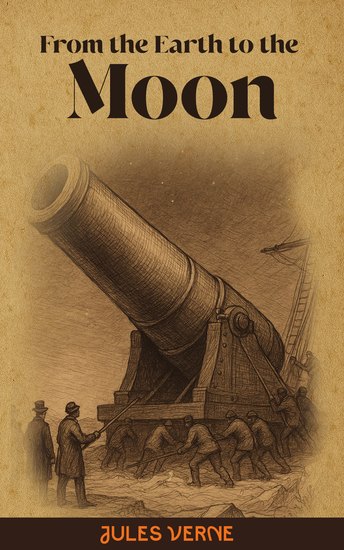
From the Earth to the Moon is one of Jules Verne's most visionary and influential novels, a pioneering work of science fiction that astonishingly anticipates humanity's real journey into space. Set in post–Civil War America, the story centers on the members of the Baltimore Gun Club, a group of inventive artillery enthusiasts who turn their talents toward an audacious new goal: launching a projectile to the Moon.

Led by the bold and charismatic Impey Barbicane, the Gun Club devises an unprecedented plan to construct a massive cannon capable of firing a space-bound capsule beyond Earth's atmosphere. As scientific debates, engineering challenges, and international rivalries unfold, the novel blends technical detail with humor, satire, and a deep fascination with human ambition. The arrival of the eccentric Frenchman Michel Ardan adds a daring twist that transforms the project from a theoretical experiment into a manned lunar expedition.

More than a tale of invention, From the Earth to the Moon is a celebration of scientific curiosity and imaginative daring. Verne's remarkable attention to mathematics, physics, and astronomy—combined with his flair for storytelling—makes the novel both intellectually stimulating and thrillingly entertaining. A cornerstone of classic science fiction, this timeless work continues to inspire readers with its bold vision of exploration, innovation, and the limitless reach of the human imagination.
Disponible depuis: 05/02/2026.
Longueur d'impression: 151 pages.
D'autres livres qui pourraient vous intéresser

  • Vanity Fair - Audiobook - cover

    Vanity Fair - Audiobook

    William Makepeace Thackeray,...

    • 0
    • 0
    • 0
    William Makepeace Thackeray's Vanity Fair is a monumental satire of nineteenth-century English society. Subtitled "A Novel Without a Hero," it chronicles the rise and fall of Becky Sharp, a clever, ambitious, and morally ambiguous woman determined to secure wealth and status in a world driven by greed, vanity, and hypocrisy. Alongside her, the virtuous but naïve Amelia Sedley provides a striking contrast, embodying the traditional values of love and loyalty.Through its vivid cast of characters, from aristocrats to soldiers, Thackeray exposes the follies and pretensions of a society obsessed with appearances and material success. His biting wit, sharp observations, and refusal to glorify any single character make the novel both a mirror of Victorian life and a timeless commentary on human weakness.Endlessly entertaining and profoundly insightful, Vanity Fair remains a classic of world literature. Its mixture of humor, irony, and moral questioning continues to captivate readers and listeners, reminding us of the eternal dance between ambition and virtue.
    Voir livre
  • The Canterville Ghost - cover

    The Canterville Ghost

    Oscar Wilde

    • 0
    • 0
    • 0
    It's a disaster! Sir Simon, the vaunted Canterville Ghost, has had years of success haunting the family mansion, centuries of wailing moans, rattling chains and phantasmagoria... and what should the Canterville family do, but sell up the house! 
    But it gets worse! 
    They've sold the house to Americans! And they aren't impressed by his tricks! They tell him to oil his chains! They throw pillows at his head! They ambush him in the parlour! They even removed the much vaunted bloodstain of Lady Caterville with detergent cleaner! 
    What is a self respecting spook to do!? This can't go on! 
    Published in 1887 by Oscar Wilde and Narrated by Michael Ward.
    Voir livre
  • Pudd'nhead Wilson - cover

    Pudd'nhead Wilson

    Mark Twain

    • 0
    • 0
    • 0
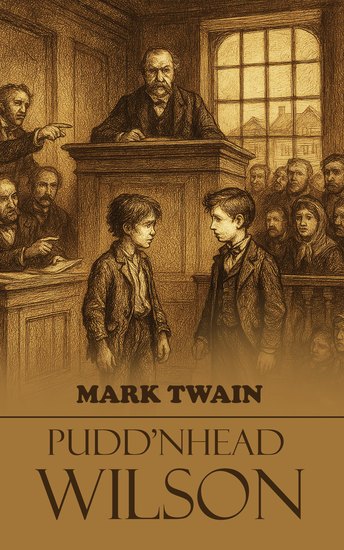
    "Pudd'nhead Wilson" by Mark Twain is a bold, darkly comic novel that blends satire, mystery, and social critique into one of the author's most provocative works. Set in a small Missouri town along the Mississippi River, the story explores identity, race, and morality in pre–Civil War America through a gripping and unconventional narrative.
    
    The novel centers on David "Pudd'nhead" Wilson, a sharp-minded lawyer whose reputation is ruined early in life after a misunderstood remark leads the townspeople to dismiss him as a fool. Living on the margins of society, Wilson spends his time collecting fingerprints—an unusual hobby that later proves crucial to unraveling a shocking crime.
    
    Running parallel to Wilson's story is the powerful and unsettling tale of two boys—one born enslaved and the other born free—who are secretly switched at birth by a desperate mother. As they grow up, the consequences of this deception expose the absurdity and cruelty of racial classifications and social hierarchies. Twain uses this dramatic premise to challenge the idea that race determines character, intelligence, or worth.
    
    Part courtroom drama, part social satire, Pudd'nhead Wilson examines how prejudice, hypocrisy, and rigid social norms distort justice and human relationships. Twain's use of fingerprint evidence—one of the earliest appearances of forensic science in fiction—adds a surprising modern element to the story.
    
    Serious, unsettling, and often ironic, Pudd'nhead Wilson stands apart from Twain's more lighthearted novels, revealing his willingness to confront the moral failures of American society. It is an essential read for lovers of classic literature, social commentary, and thought-provoking fiction that remains strikingly relevant today.
    Voir livre
  • Secret Garden The - Audiobook - cover

    Secret Garden The - Audiobook

    Frances Hodgson Burnett, Classic...

    • 0
    • 0
    • 0
    The Secret Garden is a timeless children's classic that tells the story of Mary Lennox, a spoiled and lonely girl who is sent to live with her uncle in a gloomy manor on the Yorkshire moors after the death of her parents. Surrounded by mystery and sadness, Mary discovers a hidden, neglected garden locked behind high walls. With the help of new friends—Dickon, a boy who understands animals, and her sickly cousin Colin—Mary brings the garden back to life.As the garden flourishes, so do the children. The once-sullen Mary grows kinder and more joyful, Colin begins to heal from both physical and emotional wounds, and the secret garden becomes a symbol of renewal and the magic of nature. Full of wonder, friendship, and transformation, The Secret Garden is a heartwarming tale of how hope can grow in the most unexpected places.
    Voir livre
  • Gulliver’s Travels (Legend Classics) - cover

    Gulliver’s Travels (Legend...

    Jonathan Swift

    • 0
    • 0
    • 0
    “Every man desires to live long, but no man wishes to be old.” 
    As a survivor of a shipwreck, Lemuel Gulliver encounters some entirely absurd things – at first, he is in the land of Lilliputians, the tiny men; but later he ventures to the land of the giants. The tale continues to oscillate between the extremes as he meets immensely wise and scientifically aware people before being faced with excessive self-preoccupation and ignorance. Whatever that societal order, Gulliver consistently is a witness to the abuse of power. The satire often overemphasises the contraries in order to accentuate our individual and societal flaws and proneness to being corrupt and biased. In such a distinct way it rebukes human narrow-mindedness and accentuates our subjectivity. 
    The novel’s multivalence has made it a celebrated children’s bedtime read – in particular, the first book – as well as a treasury of satirical metaphors and allusions that expose human and societal flaws in general and those of the English nobility in particular. The novel is an answer to Robinson Crusoe – it mocks Defoe’s protagonist’s too-good-to-be-true human aptness and reason. While some might find Swift’s modus operandi misanthropic, others will see him as a pragmatist who exemplifies how the excesses and polarities are detrimental and yet inescapable. Silly and bizarre, thought-provoking and alarming, this work is meant to be read and re-read as equally a jolly story and a philosophical or political collage of insights. 
    The Legend Classics series:Around the World in Eighty DaysThe Adventures of Huckleberry FinnThe Importance of Being EarnestAlice's Adventures in WonderlandThe MetamorphosisThe Railway ChildrenThe Hound of the BaskervillesFrankensteinWuthering HeightsThree Men in a BoatThe Time MachineLittle WomenAnne of Green GablesThe Jungle BookThe Yellow Wallpaper and Other StoriesDraculaA Study in ScarletLeaves of GrassThe Secret GardenThe War of the WorldsA Christmas CarolStrange Case of Dr Jekyll and Mr HydeHeart of DarknessThe Scarlet LetterThis Side of ParadiseOliver TwistThe Picture of Dorian GrayTreasure IslandThe Turn of the ScrewThe Adventures of Tom SawyerEmmaThe TrialA Selection of Short Stories by Edgar Allan PoeGrimm Fairy TalesThe AwakeningMrs DallowayGulliver’s TravelsThe Castle of OtrantoSilas MarnerHard Times
    Voir livre
  • The Waste Land - cover

    The Waste Land

    T.S. Eliot

    • 0
    • 0
    • 0
    The Waste Land is a poem by T. S. Eliot, widely regarded as one of the most important poems of the 20th century and a central work of modernist poetry. Published in 1922, the 434-line poem first appeared in the United Kingdom in the October issue of Eliot's The Criterion and in the United States in the November issue of The Dial. It was published in book form in December 1922. Eliot's poem loosely follows the legend of the Holy Grail and the Fisher King combined with vignettes of contemporary British society. Eliot employs many literary and cultural allusions from the Western canon, Buddhism and the Hindu Upanishads. The poem shifts between voices of satire and prophecy featuring abrupt and unannounced changes of speaker, location, and time and conjuring a vast and dissonant range of cultures and literatures.The poem's structure is divided into five sections. The first section, "The Burial of the Dead," introduces the diverse themes of disillusionment and despair. The second, "A Game of Chess," employs alternating narrations, in which vignettes of several characters address those themes experientially. "The Fire Sermon," the third section, offers a philosophical meditation in relation to the imagery of death and views of self-denial in juxtaposition influenced by Augustine of Hippo and eastern religions. After a fourth section, "Death by Water," which includes a brief lyrical petition, the culminating fifth section, "What the Thunder Said," concludes with an image of judgment.
    Voir livre