Begleiten Sie uns auf eine literarische Weltreise!
Buch zum Bücherregal hinzufügen
Grey
Einen neuen Kommentar schreiben Default profile 50px
Grey
Jetzt das ganze Buch im Abo oder die ersten Seiten gratis lesen!
All characters reduced
The Government of God - Enriched edition - cover

The Government of God - Enriched edition

John Taylor

Verlag: DigiCat

  • 0
  • 0
  • 0

Beschreibung

In "The Government of God," John Taylor intricately examines the intersection of divine sovereignty and human governance through a theologically enriched lens. The book is marked by its engaging prose, blending philosophical discourse with scriptural references, all while effectively situating itself within the broader context of 19th-century religious thought. Taylor draws upon historical precedents, allegorical interpretations, and contemporary societal challenges, crafting an argument that advocates for governance aligned with divine principles. This scholarly work not only invites readers into a deep exploration of biblical mandates but also prompts reflection on how such mandates can be actualized in modern political frameworks. John Taylor, an influential figure in the Latter-day Saint movement, was profoundly shaped by the theological debates of his time, as well as his commitment to establishing a society reflective of divine governance ideals. His role as a leader within his religious community and his historical engagements further complemented his pursuit of harmonizing faith with practical administration. Taylor's experiences, coupled with his intellectual rigor, provided a fertile ground for the ideas presented in this compelling text. This thought-provoking study is highly recommended for scholars of theology, political science, and history alike. Readers will find themselves challenged to consider how governance can be effectively rooted in spiritual principles, making this work not only relevant but essential for anyone exploring the interplay between faith and societal organization.

In this enriched edition, we have carefully created added value for your reading experience:
- A succinct Introduction situates the work's timeless appeal and themes.
- The Synopsis outlines the central plot, highlighting key developments without spoiling critical twists.
- A detailed Historical Context immerses you in the era's events and influences that shaped the writing.
- A thorough Analysis dissects symbols, motifs, and character arcs to unearth underlying meanings.
- Reflection questions prompt you to engage personally with the work's messages, connecting them to modern life.
- Hand‐picked Memorable Quotes shine a spotlight on moments of literary brilliance.
- Interactive footnotes clarify unusual references, historical allusions, and archaic phrases for an effortless, more informed read.
Verfügbar seit: 10.11.2023.
Drucklänge: 121 Seiten.


Weitere Bücher, die Sie mögen werden

  • Political Uncertainty - A Comparative Exploration - cover

    Political Uncertainty - A...

    Gergana Dimova

    • 0
    • 0
    • 0
    Overall, this book furnishes important insights into uncertainty in political life and how the discipline of political science is coming to terms with it.
    Zum Buch
  • Soviet Union Spy Operations - Learn About the Soviet Union's Most Notorious Spy Organization and Its Lasting Impact on World History (2022 Guide for Beginners) - cover

    Soviet Union Spy Operations -...

    Roger Holt

    • 0
    • 0
    • 0
    The KGB is one of the most well-known abbreviations of the twentieth century, and it has come to represent the shadowy and often violent activities of the Soviet Union's secret police and internal security agencies. 
      
     Indeed, it has frequently been used to refer to the Soviet state security agencies throughout its history, from the formation of the Cheka (Extraordinary Commission) in 1917 to the official demise of the KGB in 1992. The KGB has long been viewed as the West's biggest bogeyman during the second half of the twentieth century, whether it's associated with the excesses of the Russian Civil War, Stalin's purges, or even Vladimir Putin. 
      
    The KGB: The History and Legacy of the Soviet Union's Notorious Spy Agency delve into the history of one of history's most notorious agencies. You will learn about the KGB like never before, thanks to images depicting important people, places, and events. 
      
    ...And Much More! 
      
    What are you waiting for? 
      
    Don't let that chance pass you by... 
      
    Get Your Copy Today by Clicking the "BUY NOW" Button! 
     
    Zum Buch
  • Enemy Feminisms - TERFs Policewomen and Girlbosses Against Liberation - cover

    Enemy Feminisms - TERFs...

    Sophie Lewis

    • 0
    • 0
    • 0
    In recent years, "white feminism" and girlboss feminism have taken a justified beating. We know that leaning in won't make our jobs any more tolerable and that white women have proven to be, at best, unreliable allies. But in a time of rising fascism, ceaseless attacks on reproductive justice, and violent transphobia, we need to reckon with what Western feminism has wrought if we have any hope of building the feminist world we need. 


    Sophie Lewis offers an unflinching tour of enemy feminisms, from nineteenth century imperial feminists and police officers to twentieth century KKK feminists and pornophobes to today's anti-abortion and TERF feminists. Enemy feminisms exist. Feminism is not an inherent political good. Only when we acknowledge that can we finally reckon with the ways these feminisms have pushed us toward counterproductive and even violent ends. And only then can we finally engage in feminist strategizing that is truly antifascist. 


    At once a left transfeminist battle cry against cisness, a decolonial takedown of nationalist womanhoods, and a sex-radical retort to femmephobia in all its guises, Enemy Feminisms is above all a fierce, brilliant love letter to feminism.
    Zum Buch
  • The Principal Speeches of Demosthenes - A Selection - cover

    The Principal Speeches of...

    Demosthenes

    • 0
    • 0
    • 0
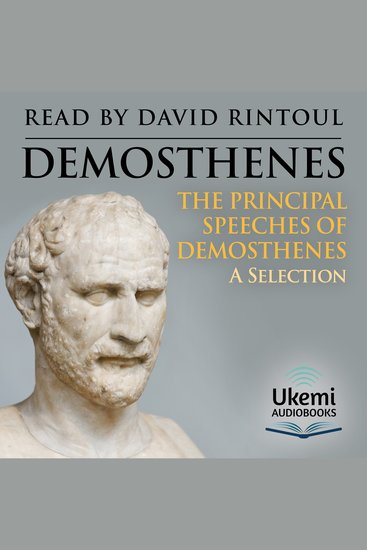
    Demosthenes (384-322 BCE) is regarded as one of the greatest orators of Classical times. This view has persisted through the centuries even though his rousing speeches warning of the dangers of Macedonian expansion - firstly guided by Philip II and then Alexander the Great - failed to stem the course of continued military success. 
     
    A contemporary of Plato and Aristotle, it is said that Demosthenes undertook arduous measures to cure himself of a stammer by speaking with pebbles in his mouth and perfecting breath control. Starting as a speech writer, he made his mark at an unusually young age (for the time), delivering his first major public speech at the age of 30, advising Athens to build its naval fleet as a defence against the Persians. In fact, it was the ambition of Philip of Macedon that would prove the principal threat. This was recognised by Demosthenes, as shown by the main speeches included in this collection. 
     
    In the 'Three Olynthiac Orations', Demosthenes outlined the tactics of Philip’s aggression towards Olynthus, an ally of Athens. He urged support for the smaller state, but his words went unheeded until it was too late. Demosthenes’s increasingly unrestrained language - at one point he calls Philip ‘a barbarian’ - did not endear him to the Macedonian regime. 
     
    The 'Olynthiac Orations' are followed by the 'Three Philippics', which chart further military activity by the aforementioned Philip. In between the second and third 'Philippics' comes ‘On the Peace’: a speech given during a short diplomatic space engineered by Philip, but which Demosthenes clearly highlighted as an armistice rather than anything permanent. This ‘Philip’ section ends with ‘The Oration on the Letter'. Philip sent a letter to Athens, which implied that war, again, was imminent. Demosthenes responded with characteristic boldness. 
     
    The final speech on this recording is ‘On the Crown’, addressing a very different matter. The Athenian statesman Ctesiphon proposed that Demosthenes should be honoured with the ‘golden crown’ for his service to the city. This was opposed by Aeschines, a long-standing enemy of Demosthenes in Athenian politics. In the court case that followed (330 BCE), Demosthenes successfully defended Ctesiphon in a speech later described as ‘the greatest speech of the greatest orator in the world'. 
     
    Each of the orations in this collection is preceded with an introduction setting the scene, and outlining the context in which they were delivered. This also gives a concise picture of Athens at this difficult point in its history. Eight years later, when in danger of being captured and imprisoned by the young Alexander who was angered by decades of eloquent and unrestrained opposition, Demosthenes committed suicide. All the speeches are prefaced by the historical setting. Translations by Arthur Wallace Pickard and Charles Rann Kennedy.
    Zum Buch
  • America: Standing Strong - cover

    America: Standing Strong

    Robert J. Emery

    • 0
    • 0
    • 0
    America: Standing Strong, from award-winning author Robert J. Emery (www.robertjemeryauthor.com) 
    In 1920, while campaigning for the office of president, Warren G. Harding said in a campaign speech, “America’s present need is not heroics, but healing; not nostrums, but normalcy.” 
    That is where America finds itself today. 
    “America: Standing Strong” brings together investigative reporters, scholars, scientists, philosophers, medical professionals, elected officials across the political spectrum and an endless string of quotes from respected voices, past and present, to examine the events of recent years, not what we already know, but what we may not, or have yet to acknowledge, in our quest for reformation. Every voice counts. 
     
    Zum Buch
  • Operation Sea Lion Succeeds - Britain Falls to Nazi Germany (Alternate History) - cover

    Operation Sea Lion Succeeds -...

    Marcus Draysun

    • 0
    • 0
    • 0
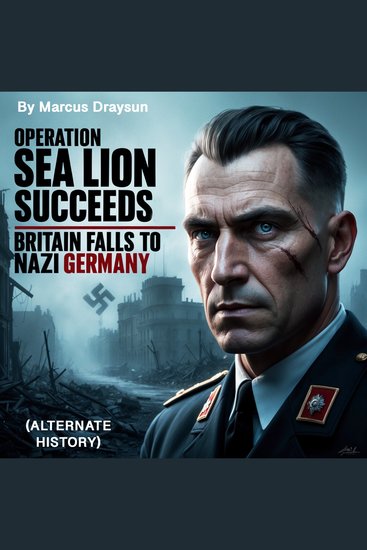
    The real Operation Sea Lion was fraught with logistical challenges, poor planning, and the formidable defenses of the British military. However, in this alternate history, key factors aligned to turn Hitler’s gamble into a shocking success. The fall of Britain was not inevitable, but a series of strategic shifts, political missteps, and military breakthroughs paved the way for an event that would alter the course of history forever. 
    One of the most significant changes was a decisive shift in Germany’s air strategy. Instead of squandering resources on bombing civilian targets, the Luftwaffe focused relentlessly on eliminating the Royal Air Force. A more coordinated assault on British radar stations, airfields, and aircraft production facilities crippled Britain’s ability to defend its skies. With the RAF severely weakened, the Germans gained air superiority far earlier than in reality, making an amphibious invasion far more feasible. 
    German naval strategy also played a critical role. In this timeline, the Kriegsmarine, instead of being vastly outmatched by the Royal Navy, benefited from increased coordination with the Luftwaffe and U-boat support. The Channel crossing was still risky, but a well-timed offensive, bolstered by deception tactics and a more aggressive submarine campaign, created an opening for German forces to land successfully on British shores.
    Zum Buch