Rejoignez-nous pour un voyage dans le monde des livres!
Ajouter ce livre à l'électronique
Grey
Ecrivez un nouveau commentaire Default profile 50px
Grey
Abonnez-vous pour lire le livre complet ou lisez les premières pages gratuitement!
All characters reduced
A Thousand-Mile Walk to the Gulf (With Original Drawings & Photographs) - Enriched edition Adventure Memoirs Travel Sketches & Wilderness Studies - cover

A Thousand-Mile Walk to the Gulf (With Original Drawings & Photographs) - Enriched edition Adventure Memoirs Travel Sketches & Wilderness Studies

John Muir

Maison d'édition: DigiCat

  • 0
  • 0
  • 0

Synopsis

In "A Thousand-Mile Walk to the Gulf," John Muir recounts his transformative journey from Indiana to the Gulf of Mexico, showcasing his profound connection with nature through vivid descriptions that reflect both Romantic and Transcendentalist literary influences. The narrative intertwines his observations of diverse landscapes, flora, and fauna with meditative reflections on the natural world, articulating Muir's deep-seated belief in the intrinsic value of wilderness. As one of the earliest accounts of an American nature trek, this work serves as a precursor to environmental literature and promotes an advocacy for conservation that resonates powerfully in today's ecological discourse. John Muir, often referred to as the "Father of the National Parks," was instrumental in the early conservation movement in the United States. His lifelong commitment to nature and the establishment of places like Yosemite National Park stemmed from his own experiences wandering through America's landscapes. This personal adventure not only shaped his environmental philosophy but also inspired generations to appreciate and protect the beauty of their surroundings. For readers captivated by the wonders of nature or those seeking a deeper understanding of our environment's significance, this book is a compelling blend of travelogue and ecological insight. Muir's eloquence and passion invite readers to join him on his journey, urging us to reflect on our relationship with the natural world.

In this enriched edition, we have carefully created added value for your reading experience:
- A succinct Introduction situates the work's timeless appeal and themes.
- The Synopsis outlines the central plot, highlighting key developments without spoiling critical twists.
- A detailed Historical Context immerses you in the era's events and influences that shaped the writing.
- An Author Biography reveals milestones in the author's life, illuminating the personal insights behind the text.
- A thorough Analysis dissects symbols, motifs, and character arcs to unearth underlying meanings.
- Reflection questions prompt you to engage personally with the work's messages, connecting them to modern life.
- Hand‐picked Memorable Quotes shine a spotlight on moments of literary brilliance.
- Interactive footnotes clarify unusual references, historical allusions, and archaic phrases for an effortless, more informed read.
Disponible depuis: 06/12/2023.
Longueur d'impression: 275 pages.


D'autres livres qui pourraient vous intéresser

  • Private Pilot Blueprint - cover

    Private Pilot Blueprint

    Jason Schappert

    • 0
    • 0
    • 0
    Jason's objective for this book is to impart to others all that he wishes somebody would have let him know when he began his confidential pilot flight preparing so others can try not to misstep the same way he made that cost him time and cash. You'll have the option to apply the down to earth devices in this book to finish your Confidential Pilot Testament significantly quicker while turning into a protected, capable pilot. Take notes and follow intently as Jason assists you with capitalizing on your flight preparing. 
    Would you like to turn into a pilot and you don't know where to begin? The Confidential Pilot Diagram is your conclusive guide to starting your flight process. We'll respond to every one of your inquiries concerning everything from the preparation prerequisites to choosing a flight school and how to continue to grow your points of view once you become a pilot. With MzeroA, you'll gain all that you want to be aware from optimal design to Zulu time. Figuring out how to apply your aeronautical information is the way to turning into a protected pilot and partaking in each flight. We'll share tips that have helped huge number of understudies very much like you accomplish their flight dreams.
    Voir livre
  • Global hydrogen trade to meet the 15°C climate goal: Part I – Trade outlook for 2050 and way forward - cover

    Global hydrogen trade to meet...

    Irena International Renewable...

    • 0
    • 0
    • 0
    This report explores key actions and milestones in relation to market creation, infrastructure and regulation, certification, technology, cost gaps and financing.
    Voir livre
  • The Shocking Truth about Medical Innovations - cover

    The Shocking Truth about Medical...

    Zoey Fraisers

    • 0
    • 0
    • 0
    Medical innovation has long been a driving force behind longer life expectancy, improved quality of life, and the eradication of once-deadly diseases. From antibiotics and vaccines to robotic surgery and gene editing, the rapid advancement of medical technology has saved countless lives. Yet, behind every breakthrough lies a complex web of ethical dilemmas, financial motivations, and unforeseen consequences. While many medical innovations deliver on their promise, others have caused more harm than good, raising critical questions about the true cost of progress.  
      
    History has shown that not all medical advancements are as beneficial as they seem at first glance. Some treatments that were once hailed as revolutionary later proved to be disastrous. For example, the introduction of thalidomide in the late 1950s as a treatment for morning sickness led to severe birth defects in thousands of newborns. Likewise, the opioid crisis, fueled by the aggressive marketing of painkillers as “safe and non-addictive,” has devastated millions of lives worldwide. These examples highlight the darker side of medical innovation—where rushed approvals, corporate interests, and inadequate regulation can turn hopeful breakthroughs into public health disasters.  
      
    At the heart of this issue is the tension between progress and safety. In the race to bring new treatments and technologies to market, are we sacrificing patient well-being in favor of speed and profit? The pharmaceutical industry, medical device manufacturers, and even hospitals often prioritize financial gain over patient outcomes. Meanwhile, regulatory agencies such as the FDA and the World Health Organization struggle to keep up with the sheer volume of new developments, sometimes failing to catch risks before they reach the public. 
    Voir livre
  • Urban Policy and Governance - Challenges and Solutions - cover

    Urban Policy and Governance -...

    Lyric Vale

    • 0
    • 0
    • 0
    Urban policy and governance are central to shaping the future of cities worldwide. As urban areas continue to expand, the challenges faced by city leaders, policymakers, and residents grow ever more complex. Urban policy refers to the strategies, frameworks, and regulations that guide the development and management of cities. It encompasses everything from housing and infrastructure to social equity, environmental sustainability, and economic growth. Governance, on the other hand, focuses on the decision-making processes, institutions, and actors responsible for implementing these policies. Effective urban governance ensures that cities function smoothly and equitably while addressing the diverse needs of their populations. 
    The rapid pace of urbanization has been a defining feature of the 21st century, with over half of the world's population now living in cities. This urban shift presents numerous challenges, including overcrowding, resource scarcity, environmental degradation, and social inequality. However, it also creates opportunities for innovation and progress. A well-crafted urban policy can harness the potential of urbanization to improve quality of life, create economic opportunities, and foster sustainability. 
    Urban governance is shaped by various factors, including political, economic, and social dynamics. At its core, it involves coordinating efforts among multiple stakeholders, such as local governments, private sector entities, civil society groups, and international organizations. The collaboration between these actors is crucial to addressing the complex and interconnected issues that cities face. Effective governance must be inclusive, transparent, and accountable to ensure that all voices, particularly those of marginalized communities, are heard and considered in decision-making processes.
    Voir livre
  • Clash at Sunday Creek: Rum Romanism & Rebellion in Corning and Rendville - cover

    Clash at Sunday Creek: Rum...

    Jobie Joseph Siemer

    • 0
    • 0
    • 0
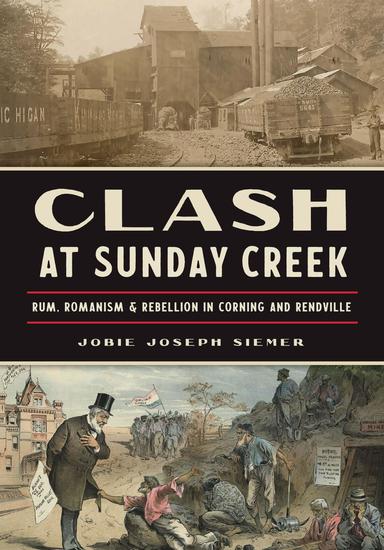
    The Tombstone of Early Ohio   Southeast Ohio's Little Cities of Black Diamonds was a rugged region in the 1800s. Nowhere was this truer than in Corning and Rendville, mining towns reminiscent of the Wild West era. Gun duels, scandals, lynchings, and murders plagued these places, as intrepid European immigrants and tenacious Black miners relied on raw grit to survive rowdy saloons and perilous coal mines. These impoverished workers also took bold stands against affluent mine operators, leading to intense clashes with the Ohio National Guard./ Author and former Green Beret Jobie Siemer reveals stories of formidable union conflicts and the unyielding resilience of miners whose faith was a beacon in a chaotic struggle to restore order to Sunday Creek./
    Voir livre
  • Younger Dryas Period The: The History of the Earth’s Drastic Climate Change at the End of the Pleistocene Era - cover

    Younger Dryas Period The: The...

    Editors Charles River

    • 0
    • 0
    • 0
    From about 12,900 to 11,700 before present (BP), near Ice Age conditions returned to the Northern Hemisphere of the planet. It was a sudden shift from the warm temperatures that had prevailed for nearly 2,000 years. This period is referred to by archaeologists, geologists, and earth scientists as the Greenland Stadial, but it is more commonly known as the Younger Dryas. The Younger Dryas marked the end of the last glacial period, the end of the Pleistocene Era, and the beginning of the Holocene Era, which is the current era. It was a period of great change, when climate change happened quite quickly, directly affecting the flora, fauna, and humans of the Northern Hemisphere in the process. The impact on the human populations was perhaps most important because, in some places, it virtually destroyed emerging cultures, while in other places, it might have propelled humans to develop new survival traits and technologies later used to move humanity into the Neolithic era. Although scholars now know quite a bit about the Younger Dryas, many elements of it are still debated. Other aspects serve as a predictor of what humans can expect in the future. 
    	There is, however, still plenty of information about the Younger Dryas that remains unknown or open to debate. Not all scholars agree on the dates of the Younger Dryas or how long it lasted. Even more controversial are the alternate theories about what caused the Younger Dryas and the effect it had on the Northern Hemisphere’s bio-populations. This book examines the background of the Younger Dryas, its effects on bio-populations, and how it contributed to the emergence of the Neolithic Era. Alternative theories will be examined and compared to more standard ideas currently prevailing in academia.
    Voir livre