Begleiten Sie uns auf eine literarische Weltreise!
Buch zum Bücherregal hinzufügen
Grey
Einen neuen Kommentar schreiben Default profile 50px
Grey
Jetzt das ganze Buch im Abo oder die ersten Seiten gratis lesen!
All characters reduced
Paradise Lost - cover

Paradise Lost

John Milton

Verlag: BookRix

  • 0
  • 0
  • 0

Beschreibung

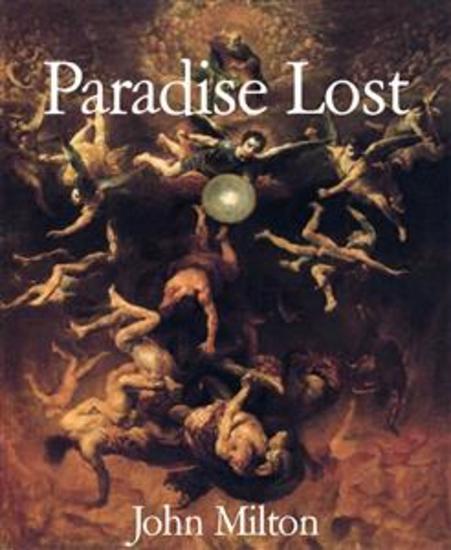
Paradise Lost is an epic poem in blank verse by the English poet John Milton. The poem concerns the Biblical story of the Fall of Man: the temptation of Adam and Eve by the fallen angel Satan and their expulsion from the Garden of Eden. Milton's purpose, stated in Book I, is to "justify the ways of God to men". Milton's story has two narrative arcs, one about Satan and the other following Adam and Eve. It begins after Satan and the other rebel angels have been defeated and banished to Hell, or, as it is also called in the poem, Tartarus. In Pandemonium, Satan employs his rhetorical skill to organize his followers; he is aided by Mammon and Beelzebub. Belial and Moloch are also present. At the end of the debate, Satan volunteers to poison the newly created Earth and God's new and most favored creation, Mankind. He braves the dangers of the Abyss alone in a manner reminiscent of Odysseus or Aeneas. After an arduous traversal of the Chaos outside Hell, he enters God's new material World, and later the Garden of Eden.

At several points in the poem, an Angelic War over Heaven is recounted from different perspectives. Satan's rebellion follows the epic convention of large-scale warfare. The battles between the faithful angels and Satan's forces take place over three days. At the final battle, the Son of God single-handedly defeats the entire legion of angelic rebels and banishes them from Heaven. Following this purge, God creates the World, culminating in his creation of Adam and Eve. While God gave Adam and Eve total freedom and power to rule over all creation, He gave them one explicit command: not to eat from the Tree of the knowledge of good and evil on penalty of death.

The story of Adam and Eve's temptation and fall is a fundamentally different, new kind of epic: a domestic one. Adam and Eve are presented for the first time[citation needed] in Christian literature as having a full relationship while still being without sin. They have passions and distinct personalities. Satan, disguised in the form of a serpent, successfully tempts Eve to eat from the Tree by preying on her vanity and tricking her with rhetoric. Adam, learning that Eve has sinned, knowingly commits the same sin. He declares to Eve that since she was made from his flesh, they are bound to one another ‒ if she dies, he must also die. In this manner, Milton portrays Adam as a heroic figure, but also as a greater sinner than Eve, as he is aware that what he is doing is wrong. After eating the fruit, Adam and Eve have lustful sex. At first, Adam is convinced that Eve was right in thinking that eating the fruit would be beneficial. However, they soon fall asleep and have terrible nightmares, and after they awake, they experience guilt and shame for the first time. Realizing that they have committed a terrible act against God, they engage in mutual recrimination.
Verfügbar seit: 19.12.2023.
Drucklänge: 321 Seiten.

Weitere Bücher, die Sie mögen werden

  • A Life Sentience - cover

    A Life Sentience

    David Catford

    • 0
    • 0
    • 0
    This  poetic book tells the story of David, a farmer born in 1960s Australia who was expected to carry on his family’s traditions on the land. We follow his life from birth to an imagined death, spanning a turbulent time when small rural communities across Australia collapsed.
     
    David’s  plans are upended in the 1990s as the country suffers deregulation of the grain markets and the onset of a devastating ten-year drought. He and farmers like him have their lives forever changed, swept away by harsh economic forces and drought as family farms shut down.
     
    The  book captures in verse the destruction of a cherished way of life for David, his neighbours, and rural towns. It recounts the tragedy of dreams broken when long-held farming traditions become unsustainable. By  telling one man’s story, it memorializes the wider loss of community 
    and livelihood faced by farming families across Australia in recent decades.
    Zum Buch
  • Selected poems of Fenton Johnson - cover

    Selected poems of Fenton Johnson

    Fenton Johnson

    • 0
    • 0
    • 0
    Fenton was born on May 7th' 1888 in the American state of Chicago. He represented the Harlem Renaissance writers in the early 20th century, and self-published three poetry collections: A Little Dreaming in 1913, Visions of the Dusk in 1915, and Songs of the Soil in 1916. Having made quite a name as a poet, essayist, author, editor and educator, he expired in 1958.
    Zum Buch
  • When Can We Be Soft? - Poems of Female Resilience - cover

    When Can We Be Soft? - Poems of...

    Bobbie Isabel

    • 0
    • 0
    • 0
    In this debut poetry collection, Bobbie Isabel explores the pressure women face to constantly be strong, and the exploitation they endure when the world will not let them be soft. Employing a combination of free verse and more traditional forms, Bobbie expresses the female perspective of strength and resilience through pain, trauma, and ultimately hope. Within poetic expression, she has found her voice, as the poem "Keeping Silent" says, that speaks for the little girl she was, that comforts her tormented adolescent self, and that fortifies the broken woman she has been with boundaries of empathy and compassion for who she was at each stage and what she lived, understanding that her tears were not silent but rather screams of injustice. 
    This collection of poetry comes from a place of pain; even the poems of hope grew from those ashes. Therefore, there will be subjects some will find difficult to read.
    Zum Buch
  • The Poetry of Edwin Arlington Robinson - Three time Pultizer prize winner and four time Nobel prize nominee A true legend - cover

    The Poetry of Edwin Arlington...

    Edwin Arlington Robinson

    • 0
    • 0
    • 0
    Edwin Arlington Robinson was born on the 22nd December 1869 in Tide in Lincoln County, Maine.  
    His childhood was described by him as ‘stark and unhappy’.  His name was drawn out of a hat from a fellow vacationer from Arlington Massachusetts when fellow holiday makers decided that his parents had waited long enough at 6 months to name him.  It was a name he despised and reflects the station to which his parents had placed him; their great hope at his birth were that he was a girl to complement their two sons. 
    His pessimistic mood carried him to adulthood and a doomed encounter with Emma Loehen Shepherd who constantly encouraged his poetry.  Edwin was thought too young to be her companion and so his elder, middle brother, Herman was assigned to her.  It was a great blow to Edwin and during their marriage on February 12th, 1890, he stayed home and wrote ‘Cortege’ 
    In the fall of 1891 Edwin entered Harvard, taking classes in English, French and Shakespeare.  He felt at ease with the Ivy League and made great efforts to be published in one of the Harvard literary journals.  Indeed, the Harvard Advocate published ‘Ballade of a Ship’ but then his career appeared to stall.  His father died and although he returned to Harvard for a second year it was to be his last but also the start of some life-long friendships. 
    In 1893 he returned to Gardiner Maine as the man of the household.  Herman by this time had become an alcoholic, having suffered business failures, and was now to become estranged from Emma. 
    Edwin began farming whilst he wrote and quickly developed a close relationship with Emma who had now moved back to Gardiner after Herman’s death with her children. 
    Although he proposed twice, he was rejected and in consequence moved to New York to start afresh. 
    But it was a salutary experience. Although surrounded by artists he had little money and life was difficult. 
    In 1896 he published his own book, ‘The Torrent and the Night Before’, paying 100 dollars for 500 copies.  Edwin wanted it to be a surprise for his Mother, but days before its arrival she died of diphtheria. 
    His second volume, ‘The Children of the Night’, had a wider circulation.  At the behest of President Roosevelt, whose son was an avid admirer, he was given a job in 1905 at the New York Customs Office although it appears his real job was “to help American letters”. 
    Either way his success began to widen and his influence prosper.  During the 1920s he won the Pulitzer Prize for Poetry on three separate occasions. In 1922 for ‘Collected Poems’ again in 1925 for ‘The Man Who Died Twice’ and finally in 1928 for ‘Tristram’. 
    During the last twenty years of his life he became a regular summer resident at the MacDowell Colony in New Hampshire, where he became the object of fascination by several women.  But he never married. 
    Edwin Arlington Robinson died of cancer on the 6th April 1935 in the New York Hospital in New York. He was 65.
    Zum Buch
  • Antony and Cleopatra - cover

    Antony and Cleopatra

    William Shakespeare

    • 0
    • 0
    • 0
    Antony and Cleopatra is one of William Shakespeare's most powerful and emotionally charged tragedies—a sweeping drama of passion, politics, loyalty, and betrayal set against the grandeur of the ancient world. Blending historical events with poetic brilliance, Shakespeare brings to life the tumultuous romance between Mark Antony, a Roman general, and Cleopatra, the captivating Queen of Egypt.
    
    At the center of the play is a love affair that defies reason, duty, and empire. Antony, one of Rome's triumvirs and a celebrated military leader, becomes enthralled by Cleopatra's charisma and allure. Their relationship, intense and all-consuming, places Antony at odds with his responsibilities to Rome and his political alliances. As tensions rise between Antony and his rival Octavius Caesar, the personal and political become inseparably intertwined.
    
    Cleopatra is portrayed as complex and commanding—passionate, strategic, theatrical, and fiercely proud. Her dynamic with Antony is marked by devotion and volatility, tenderness and manipulation. Together, they create a partnership that is both intoxicating and destructive, as ambition and emotion collide on a global stage.
    
    Shakespeare masterfully contrasts the disciplined, duty-bound world of Rome with the sensual, opulent atmosphere of Egypt. Through this contrast, the play explores themes of power, identity, honor, sacrifice, and the struggle between public obligation and private desire. The shifting landscapes—from battlefields to royal courts—mirror the instability of the characters' fortunes and the fragile nature of political authority.
    
    As war looms and allegiances fracture, Antony's decisions lead him toward inevitable tragedy. Cleopatra, faced with defeat and humiliation, must choose her own destiny in a world dominated by imperial ambition. Their story becomes not only a tale of romantic devotion but also a meditation on legacy, mortality, and the cost of greatness.
    
    Rich in poetic language and dramatic intensity, Antony and Cleopatra remains one of Shakespeare's most mature and complex works. It is a timeless exploration of love and power at their most magnificent and destructive—an epic tragedy that continues to captivate readers and audiences with its emotional depth and historical grandeur.
    Zum Buch
  • A Rhyme A Dozen ― The Rain - 12 Poets 12 Poems 1 Topic - cover

    A Rhyme A Dozen ― The Rain - 12...

    Frances Ledwidge, Ivor Gurney,...

    • 0
    • 0
    • 0
    ‘A dime a dozen’ as known in America, is perhaps equal to the English ‘cheap as chips’ but whatever the lingua franca of your choice in this series we hereby submit ‘A Rhyme a Dozen’ as 12 poems on many given subjects that are a well-rounded gathering, maybe even an essential guide, from the knowing pens of classic poets and their beautifully spoken verse to the comfort of your ears. 
    1 - A Rhyme a Dozen - 12 Poets, 12 Poems, 1 Topic.  The Rain - An Introduction 
    2 - A Rainy Day in April by Francis Ledwidge 
    3 - April Rain by Mathilde Blind 
    4 - The Summer Rain by Henry David Thoreau 
    5 - Rain Music by Joseph Semon Cotter 
    6 - The Rainy Season by Mirabai 
    7 - The Rainy Day by Tagore 
    8 - Rainy Midnight by Ivor Gurney 
    9 - All Day It Has Rained by Alun Lewis 
    10 - Spring Rain by Sara Teasdale 
    11 - Rain by Edward Thomas 
    12 - Bells in the Rain by Elinor Wylie 
    13 - Rain on a Grave by Thomas Hardy
    Zum Buch