Begleiten Sie uns auf eine literarische Weltreise!
Buch zum Bücherregal hinzufügen
Grey
Einen neuen Kommentar schreiben Default profile 50px
Grey
Jetzt das ganze Buch im Abo oder die ersten Seiten gratis lesen!
All characters reduced
Areopagitica - Enriched edition A Speech for the Liberty of Unlicensed Printing to the Parliament of England - cover

Areopagitica - Enriched edition A Speech for the Liberty of Unlicensed Printing to the Parliament of England

John Milton

Verlag: DigiCat

  • 0
  • 0
  • 0

Beschreibung

In his seminal work, Areopagitica, John Milton fervently advocates for the freedom of speech and the press in a compelling blend of eloquent prose and impassioned rhetoric. Written during the early 17th century amidst stringent censorship in England, the text marries classical philosophy with contemporary political thought, drawing heavily on the influence of the ancient Areopagus—the council of Athens. Milton masterfully articulates the perils of censorship, arguing that the suppression of ideas is detrimental not only to individual liberty but also to the pursuit of truth, embodying the spirit of the Enlightenment that was beginning to take root in Europe. John Milton, a towering figure of English literature and a staunch advocate for republicanism, was personally affected by the political tumult of his era, which included the English Civil War and the subsequent Commonwealth. His own experiences with censorship, including his arrest for writing against the monarchy, shaped his views and infused Areopagitica with both passion and urgency. Milton's deep-rooted belief in the power of education and reason motivated him to challenge the establishment and defend intellectual freedom. Areopagitica remains an essential read for anyone interested in the foundations of free speech and literature's role in societal progress. Milton's argument resonates powerfully in today's context, encouraging readers to reflect on the importance of open dialogue and the dangers that arise when speech is curtailed. This text serves not only as a historical document but also as a timeless call to safeguard the liberties that underpin democratic societies.

In this enriched edition, we have carefully created added value for your reading experience:
- A succinct Introduction situates the work's timeless appeal and themes.
- The Synopsis outlines the central plot, highlighting key developments without spoiling critical twists.
- A detailed Historical Context immerses you in the era's events and influences that shaped the writing.
- An Author Biography reveals milestones in the author's life, illuminating the personal insights behind the text.
- A thorough Analysis dissects symbols, motifs, and character arcs to unearth underlying meanings.
- Reflection questions prompt you to engage personally with the work's messages, connecting them to modern life.
- Hand‐picked Memorable Quotes shine a spotlight on moments of literary brilliance.
- Interactive footnotes clarify unusual references, historical allusions, and archaic phrases for an effortless, more informed read.
Verfügbar seit: 15.09.2022.
Drucklänge: 45 Seiten.
Weitere Bücher, die Sie mögen werden

  • Roman Mythology - Tales From the Roman Pantheon - cover

    Roman Mythology - Tales From the...

    Adam Andino

    • 0
    • 0
    • 0
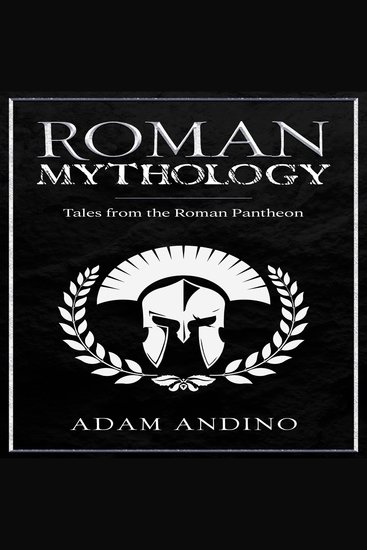
    ROMAN MYTHOLOGY 
    Why did the Roman Empire fall? 
    The theories are numerous, including the rise of Islam, lead in the drinking water, inflation with other economic problems, and even allowing vandals and barbarians to have positions of power. By far the most popular and widely believed is the rise of Christianity. Beforehand, Rome’s main religion was polytheistic, or involved the worshiping of many gods. It was the lifeblood of the Roman belief systems and culture. This culture dated back thousands of years, as far back enough to when the Etruscans were in power. 
    What was once the religion of Ancient Rome is now referred to Roman mythology and is the focus of this book. Inside, you will discover how the Ancient Romans lived and worshipped the many Gods and Goddesses they believed in. Also included are the most famous and interesting stories to emerge from the Roman pantheon that still captivate us today! 
    Inside, you will learn about:The 12 Main Gods of the Roman PantheonThe Creatures, Monsters, and Heroes of Roman MythologyLife in Ancient RomeHow the Gods Were WorshippedThe Founding of RomeAeneas and the Founding of LatiumJupiter and the BeeBacchus and AriadnePluto and the River StyxMuch, Much More! 
    So, what are you waiting for? 
    Scroll up and hit "Buy Now" to discover the fascinating world of Roman Mythology today!
    Zum Buch
  • Hekate - Goddess of Witches - cover

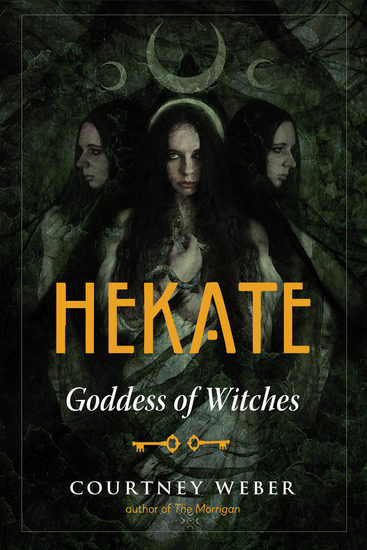
    Hekate - Goddess of Witches

    Courtney Weber

    • 0
    • 6
    • 0
    Learn the myths and legends behind this beloved goddess plus practices and suggestions for making Hekate part of your spiritual path. Courtney Weber (author of Brigid and The Morrigan) offers an informed, accessible journey through the lore and history of Hekate, the ancient goddess of crossroads, ghosts, and witchcraft, and reflects on Hekate’s relevance today. Tools and techniques for incorporating this goddess into your personal journey round out the book.  Similar to her other works, Weber strikes a balance between the scholarly and the spiritual. Her exploration of Hekate combines solid research with practical, modern applications. The spiritual content is accessible to anyone with an interest in witchcraft, regardless of their faith or background.   Each chapter focuses on a different aspect of Hekate, exploring original mythology, historical context, and contemporary connotations, concluding with spells and personal rituals. The final chapter is a grimoire full of rituals, offerings, and other practices designed to help readers align themselves with this extraordinary goddess. The book also explores magickal ethics, what it means to be a witch in the twenty-first century, and best practices for successful witchcraft.
    Zum Buch
  • Seven Steps to Managing Your Aging Memory - What's Normal What's Not and What to Do About It Second Edition - cover

    Seven Steps to Managing Your...

    MD Andrew E. Budson, PsyD...

    • 0
    • 0
    • 0
    As you age, you may find yourself worrying about your memory. Where did I put those car keys? What time was my appointment? What was her name again? With more than 41 million Americans over the age of 65 in the United States, the question becomes how much (or, perhaps, what type) of memory loss is to be expected as one gets older and what should trigger a visit to the doctor. 


    Seven Steps to Managing Your Aging Memory addresses these key concerns and more, such as: 


    ● What are the signs that suggest your memory problems are more than just part of normal aging? 


    ● Is it normal to have concerns about your memory? 


    ● What are the markers of mild cognitive impairment, dementia, Alzheimer's, and other brain diseases? 


    ● How should you talk about your memory concerns to your doctor? What should your doctor do to evaluate your memory? 


    ● Which healthcare professional(s) should you see? What medicines, alternative therapies, diets, and exercises actually work to improve your memory? What other resources are available when dealing with memory loss?
    Zum Buch
  • The Rise of Nazi Germany - How Hitler Seized Power and Led Europe into Conflict - cover

    The Rise of Nazi Germany - How...

    Sage Winters

    • 0
    • 0
    • 0
    The rise of Nazi Germany is a tale deeply rooted in the tumultuous conditions following World War I, when Germany was thrust into a period of economic collapse, social disarray, and political chaos. The Treaty of Versailles, signed in 1919, aimed to punish Germany for its role in the war, imposing harsh reparations and territorial losses that humiliated the nation. This punitive treaty left the German people feeling betrayed, their economy in ruins, and their national pride shattered. The Weimar Republic, established in 1919, was meant to provide a democratic alternative, but it struggled from the outset. Political extremism, rampant inflation, and unemployment crippled the fledgling democracy, leaving it vulnerable to authoritarian ideologies. 
      
    Amid this backdrop of suffering and instability, Adolf Hitler emerged as a figure who would exploit the widespread discontent. Born in Austria in 1889, Hitler’s early life was marked by struggle and obscurity. He moved to Munich in the early 1910s, where he became involved in nationalist politics. His service in World War I, where he was wounded, further shaped his worldview, and he developed a deep sense of resentment toward the Treaty of Versailles, which he believed had unfairly punished Germany. Hitler’s fervent nationalism, combined with a distorted racial ideology, began to form the core of his future political movement. 
      
    In the early 1920s, Hitler joined the National Socialist German Workers' Party (NSDAP), a small but growing political group. His powerful oratory skills and intense charisma quickly made him the party’s leader. Hitler’s ability to tap into the frustration and fear of the German people gave him a platform to spread his ideas of racial superiority, anti-Semitism, and militaristic expansion. His rise coincided with the economic devastation caused by the Great Depression, which further destabilized Germany and provided fertile ground for Nazi propaganda.
    Zum Buch
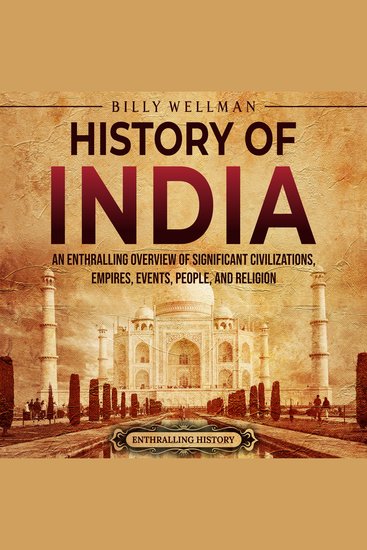
  • History of India: An Enthralling Overview of Significant Civilizations Empires Events People and Religion - cover

    History of India: An Enthralling...

    Billy Wellman

    • 0
    • 0
    • 0
    “Incredible India” is the slogan of India’s official tourism campaign—and it’s true!  
    India has an amazing history, from some of the world’s earliest civilizations to its contemporary high-tech culture and a huge diversity of religions, arts, and people. 
    This book takes you all the way from India’s prehistoric beginnings at Mohenjo-daro to the development of Buddhism and the Maurya Empire, the Hindu empires of the Middle Ages, the Mughals who brought Islam to the mix (and created the Taj Mahal), the British Raj, and finally the fight for independence and the modern yet ageless India of today. 
    On the way, you’ll find out some fascinating facts about Indian culture, history, and historical figures. Here is just a glimpse of what you can discover in this book: 
    ·      How National Highway 1 goes all the way back to the Mauryan Empire! 
    ·      The importance of nonviolence in Indian culture 
    ·      How just 20,000 British officials ruled a population of millions 
    ·      How the illiterate emperor Akbar headed a huge revival of art and scholarship, mixing Hindu, Muslim, Jain, and even Christian influences 
    ·      Why only ten of the eleven Sikh gurus were actual people—and who the eleventh guru is 
    ·      How India exported Buddhism to the world 
    ·      India’s intense artistic heritage, from rock-cut temples and acutely observant Mughal miniatures to Anish Kapoor’s contemporary abstracts 
    ·      Why a Sikh maharaja ended up as an English landowner and friend of Queen Victoria 
    ·      And so much more! 
    Scroll up and click the “add to cart” button to begin learning about Indian history today!
    Zum Buch
  • Fantasies of Nina Simone - cover

    Fantasies of Nina Simone

    Jordan Alexander Stein

    • 0
    • 0
    • 0
    Since her death in 2003, Nina Simone has been the subject of an astonishing number of rereleased, remastered, and remixed albums and compilations as well as biographies, films, viral memes, samples, and soundtracks. In Fantasies of Nina Simone, Jordan Alexander Stein examines the space between our collective and individual fantasies about Simone the performer, civil rights activist, and icon, and her own fantasies about herself. Stein outlines how Simone gave voice to personal fantasies through releasing dozens of covers of her white male contemporaries. With her covers of George Harrison, the Bee Gees, Bob Dylan, and others, Simone explored and claimed the power and perspective that come with race and gender privilege. Looking at examples from Simone's four-decade genre-bending career—from songbook standards, jazz, and pop to folk, junkanoo, and reggae—and at her work's many uptakes and afterlives, Stein mobilizes the psychoanalytic concept of fantasy to build a black feminist history with and for this multifaceted performing artist.
    Zum Buch